Medical Thermometer
Fast, consistent temperature screening remains essential in clinics, hospitals, pharmacies, laboratories, and workplace health checkpoints. When selecting a Medical Thermometer, buyers typically look beyond basic readings and focus on measurement method, response time, user workflow, hygiene, and whether the device fits clinical or general-purpose use.
This category brings together contact and non-contact thermometer options for body temperature measurement, with examples suited to forehead, temporal artery, and standard digital measurement workflows. It can also help purchasing teams compare compact handheld units with devices designed for repeated screening in professional environments.
Choosing the right thermometer format for the application
The first decision is usually the measurement approach. Contact digital thermometers are often preferred where direct measurement and simple operation are required, while non-contact infrared models are useful when fast screening, reduced physical contact, or higher throughput is important.
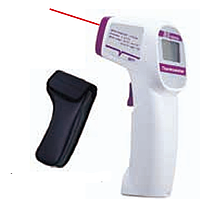
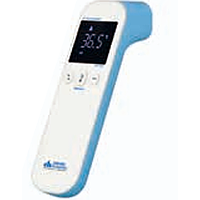
For example, the OMRON MC-246 Digital Thermometer is a classic digital option for routine body temperature measurement, while products such as the DaiHan THE19 and DaiHan The01 support non-contact forehead-style use at a short measuring distance. For higher-speed temporal scanning, the EXERGEN TAT-2000C is representative of the temporal artery format used in healthcare environments where quick readings matter.
Common thermometer types found in this category
Within this selection, buyers will generally encounter several practical device groups. Each one supports a slightly different operating scenario, even when all are used for temperature screening or basic patient monitoring.
- Digital contact thermometers for straightforward body temperature checks and routine personal or clinical use.
- Non-contact infrared thermometers for forehead or body screening at short distance, especially useful in reception areas or multi-user settings.
- Temporal artery thermometers that measure surface temperature over the temporal artery and are often chosen for fast clinical workflow.
- Dual-purpose IR models that may support both body and surface/object measurements, depending on the device.
Some models in this category are clearly healthcare-focused, while others sit closer to a broader infrared temperature measurement ecosystem. If you also need general-purpose non-contact temperature tools for process or industrial surfaces, it may be helpful to compare with OMEGA instruments used across wider temperature measurement applications.
Key selection criteria for B2B purchasing teams
In a professional setting, specifications should be reviewed in the context of actual use. A device with a fast response time may improve screening flow, but the preferred choice still depends on target distance, expected accuracy range, user training, and whether the device is intended for repeated patient-facing use.
Short-distance non-contact models such as the DaiHan The01 and THE19 are practical where operators need quick checks without probe contact. Meanwhile, the EXERGEN TAT-2000C stands out for very fast temporal readings, and the OMEGA IR200 illustrates a body and forehead IR style that also includes memory and alarm-oriented usability features.
Buyers should also check power format, display readability, and environmental operating conditions. In higher-volume use, battery type, ease of handling, and error indication can affect uptime and operator consistency just as much as nominal accuracy figures.
Accuracy, response time, and workflow considerations
Temperature devices are often compared on headline accuracy, but workflow suitability is equally important. In healthcare screening, a slightly different user process can influence repeatability, so it is important to match the thermometer type with the intended measurement point and operating protocol.
Contact digital units such as the OMRON MC-246 are well suited to simple, direct measurement routines. Non-contact models like the DaiHan units and the OMEGA IR200 are often chosen where fast throughput, easier sanitation routines, or minimal disturbance is desirable. Temporal artery designs such as the EXERGEN TAT-2000C can support rapid use while maintaining a healthcare-specific measurement method.
Where procurement teams are setting up broader patient monitoring kits, thermometer selection is often considered alongside devices such as a blood pressure monitor or a blood glucose meter, depending on the care environment.
Representative products and manufacturer options
This category includes products from recognized names such as OMRON, EXERGEN, DaiHan, and OMEGA. Each serves a slightly different need profile rather than competing on exactly the same use case.
OMRON is a familiar choice for compact digital thermometer requirements. EXERGEN is relevant when temporal artery measurement is preferred. DaiHan provides non-contact healthcare IR thermometer options with short targeting distance and straightforward handheld form factors. OMEGA appears in both healthcare-adjacent IR body thermometry and broader infrared temperature measurement, which can be useful for organizations that source across multiple technical departments.
For users exploring adjacent healthcare measurement devices beyond thermometry, the broader product mix may also include categories such as weight management and body fat scale products for wellness, clinical, or occupational health programs.
When a medical thermometer overlaps with broader IR measurement needs
Not every infrared thermometer is used in exactly the same way. A body temperature device is designed around human temperature ranges and screening workflow, while a wider-range infrared thermometer may target equipment, surfaces, or process checks instead. That distinction matters during purchasing, especially when product names appear similar.
For instance, the OMEGA OS1300-161 is an infrared thermometer with adjustable emissivity and a much wider temperature range intended for non-medical measurement scenarios. It is relevant here mainly as a reminder that buyers should distinguish between body temperature devices and broader IR tools before placing orders for healthcare use.
Practical buying guidance for clinics, labs, and institutions
If the priority is routine personal or bedside measurement, a digital contact model can be a sensible starting point. If the requirement is rapid front-desk screening or repeated use across many individuals, a non-contact or temporal artery design may offer a better balance of speed and handling.
Institutional buyers should also think about cleaning procedure, operator consistency, battery replacement, display visibility, and whether memory or alarm functions are useful in the workflow. In many cases, the best choice is not the most feature-heavy unit, but the one that fits the intended screening method reliably and can be used correctly by staff on a daily basis.
Find a thermometer that matches the intended use
A good thermometer category page should do more than list models—it should help narrow the field based on how the device will actually be used. Whether you are comparing a simple digital thermometer, a non-contact forehead unit, or a temporal artery device for faster screening, the right selection depends on measurement method, environment, and user workflow.
By reviewing the differences between contact, non-contact, and temporal formats, buyers can make a more informed decision for healthcare, occupational screening, or general medical support applications. This makes it easier to select equipment that fits day-to-day practice instead of choosing only by headline specifications.
Get exclusive volume discounts, bulk pricing updates, and new product alerts delivered directly to your inbox.
By subscribing, you agree to our Terms of Service and Privacy Policy.
Direct access to our certified experts