Cable cutters are different from regular cutters. They are thicker, cut larger, and work with harder materials. Therefore, just a few incorrect uses can easily chip the edges.
Initially, you might see small chips, but with continued use, these chips will spread, resulting in a less clean cut. You'll have to press harder, and the wire will be struck before stopping. The cutting feel will no longer be as smooth as it was initially.
The good news is that not every case requires replacement. If you assess the condition correctly and handle it carefully, you can often restore the cutting parts at home.
Understanding the condition of a chipped tongue correctly
Not all chips are the same. This is something many people overlook, leading to sharpening the pliers without improving their performance.
With cable cutters, chips usually appear when cutting the wrong material or cutting at an off-angle. The edge of the blade is slightly chipped, creating a small break point. When pressing down, the force is no longer evenly distributed, so the wire is easily crushed. If the chip is only on the surface and hasn't penetrated deep into the blade, you can resharpen it to smooth the cut edge. This case is quite simple to fix.
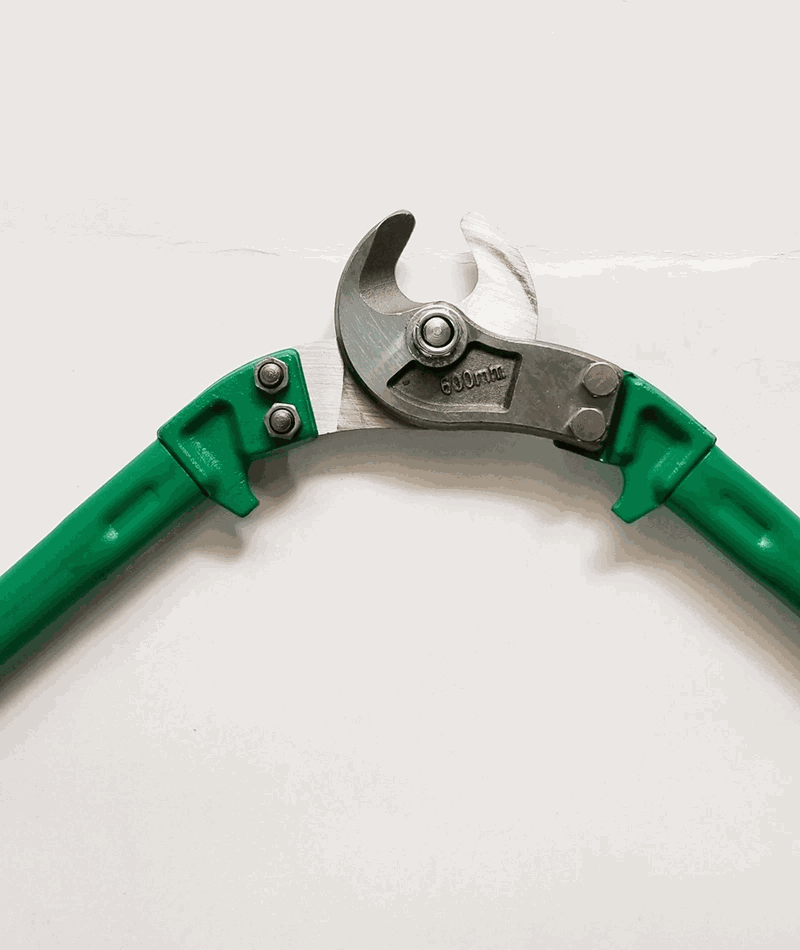
Conversely, if the chipping is significant, distorting the original shape of the blade, sharpening will no longer be effective. The two jaws will then have difficulty aligning precisely, and the cutting force will be noticeably reduced. With cable cutters, even a small deviation is enough to result in an unsatisfactory cut.
If you are considering switching to a more suitable type, you can check out the cable cutter models here: EMIN cable cutters
Preparation before grinding
A fine file or grinding stone is a suitable choice. Additionally, you will need a clean cloth, soapy water to clean the surface, and some lubricant for the finishing step.
If the pliers show signs of slight rust, it should be treated beforehand to avoid affecting the grinding action.
Clean and secure the pliers
Before sharpening, clean off any dirt and old oil from the pliers. Dry them completely to prevent slippage.
Extend both jaws and secure the handles. When the blades are held firmly in a stable position, you will have better control over the force and direction of sharpening. This is a small step, but it directly affects accuracy.
How to sharpen to repair chips while maintaining the blade's shape
The key is the sharpening angle. Each cable cutter has a specific blade angle to optimize cutting force. You need to maintain this angle throughout the process.
Position the file at the established angle and pull in a fixed direction. Move evenly from the inside out. Avoid pulling back and forth as this can easily create an uneven blade surface.
Focus on the chipped area. The goal is to smooth the cut edge, not to thin the entire blade. Just sharpen enough to remove the chipped spot.
Why can't it cut even after grinding?
In many cases, sharpening doesn't improve the results, or even makes things worse. The cause often lies in the way you're using it.
Using too much force can inadvertently alter the angle of the blade. Over-sharpening thins the edge and reduces its necessary hardness. Additionally, if the pliers aren't securely fixed, the sharpening line can easily become uneven.
With cable cutters, even small errors can have a significant impact because the cutting force requires high precision. This is why slow, controlled operation is necessary.
After finishing, try cutting with a soft wire first and observe whether the cut is clean, whether it's crushed, or if there are any excess edges. If the result isn't satisfactory, you can sharpen it a few more times. Avoid sharpening continuously for a long time as it's easy to oversharpen.
After checking the sharpened blade, wipe away any remaining metal shavings, and apply a small amount of oil to the blade and joint. Open and close the pliers a few times to distribute the oil evenly; this helps the pliers operate more smoothly and prevents rust later.
Read more:
Ratchet cable cutters are the most popular and widely used today
What are cable cutters? What is their structure? How are cable cutters used in daily life?
When should you stop and replace the pliers?
Not all pliers should be salvaged. With cable cutters, the precision of the blades directly affects work efficiency.
If the blades are deeply chipped, the jaws no longer fit together, or the cutting remains blunt even after sharpening, continued use is not guaranteed. In this case, choosing a pair of pliers that suits your needs is more sensible. You can check out the various cable cutter models available at EMIN to choose one that matches your wire cross-section and frequency of use.
Most blade chipping is due to improper use. Cutting excessively hard materials, crimping incorrectly, or using the pliers for the wrong purpose all reduce blade lifespan.
With just a few adjustments to your routine, you'll find that the pliers retain their sharpness longer and require less frequent rework.
Chipping of the blades is a common problem with cable cutters. If the chipping is minor, you can easily fix it at home with the right methods. When the damage is beyond repair, stopping at the right time will save you time and prevent disruption to your work.