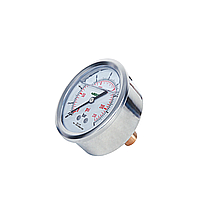
Single Pressure Analog Gauge
In many industrial systems, pressure has to be checked quickly, locally, and without relying on a power supply. That is why the Single Pressure Analog Gauge remains a practical choice for pumps, compressors, gas lines, hydraulic circuits, water treatment skids, and general process equipment. A clear dial and pointer still provide an immediate reading that operators and maintenance teams can trust during routine inspection or troubleshooting.
For B2B buyers, the real question is usually not whether an analog gauge is useful, but which type fits the process conditions, mounting layout, and pressure range. This category focuses on single-point pressure measurement, where one process connection and one measured value are all that is required for daily monitoring and equipment protection.
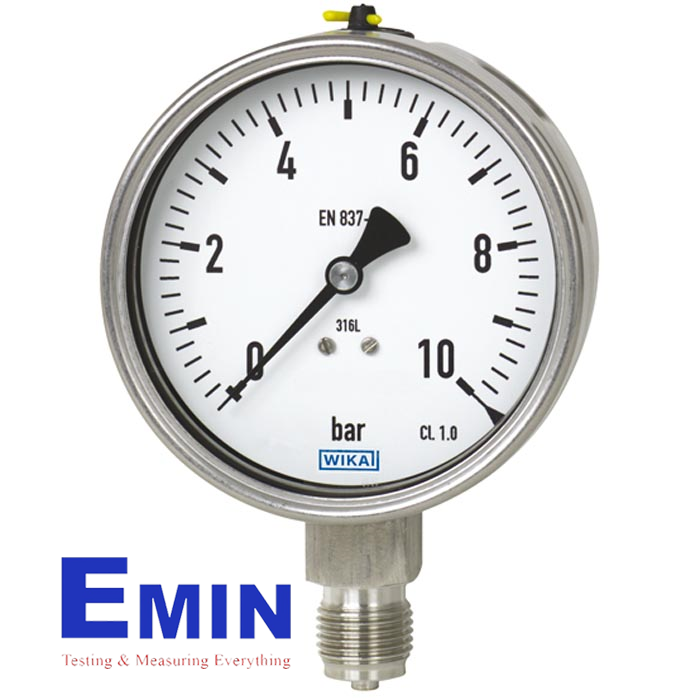
Where single pressure analog gauges are commonly used
A single pressure analog gauge is designed to indicate the pressure at one point in a system. In practice, this makes it suitable for applications where operators need a straightforward visual reference rather than data logging or electronic output. Typical installations include compressed air networks, boiler and steam auxiliaries, water lines, hydraulic equipment, general machinery, and gas service panels.
These gauges are especially useful in environments where simplicity matters. Because they do not require external power for basic indication, they are often selected for local panel mounting, machine-side installation, or backup indication in broader instrumentation systems. If the application requires more advanced local electronics, a single pressure digital gauge may be worth comparing.
How analog pressure indication works in practice
Most industrial analog pressure gauges use a mechanical sensing element that responds to process pressure and converts that movement into pointer rotation on a dial. This approach is widely used because it is easy to read, familiar to technicians, and effective for continuous visual monitoring. In many plants, analog gauges remain the first instrument checked during commissioning, startup, and preventive maintenance.
The main benefit of this format is speed of interpretation. A pointer immediately shows whether the system is within the expected operating band, rising abnormally, or dropping below target pressure. For many production and utility systems, that simple visual cue is more valuable than a more complex display.
What to consider when selecting a gauge
Choosing the right model depends on more than just the maximum pressure value. Buyers should also consider pressure range, dial size, mounting style, connection size, case material, wetted materials, and the type of media in contact with the instrument. Readability at the installation point is important as well, particularly on crowded panels or equipment with limited viewing angles.
Mounting configuration is one of the most practical selection points. Lower or bottom mount designs are common when the gauge is installed directly on a pipeline or manifold, while back mount versions are often preferred for panel integration. Material choice also matters: stainless or INOX case construction is often selected for tougher industrial environments, while window type and process connection details influence durability and fit.
When local indication alone is not enough, users may also consider a digital pressure switch for switching and control functions within the same measurement workflow.
Examples from WIKA and Dwyer in this category
This category includes representative products from established manufacturers such as WIKA and Dwyer, both commonly specified in industrial pressure measurement. Their products illustrate how analog gauges can be matched to very different operating ranges and installation needs without overcomplicating the instrument choice.
For example, WIKA 232.50 models in this category show configurations such as 1 Bar(Psi) and 6 Bar(Psi) with 100 mm dial size and lower mount connection, as well as a 60 Bar(Psi) version with a 63 mm dial and back mount arrangement. These examples are relevant for users looking for robust local indication across lower and higher pressure ranges in general process service.
Dwyer LPG3 series models in the listing highlight the low pressure side of the category. Variants such as LPG3-D9922N and LPG3-D9942N cover 5 psi service with bottom or back connection, while LPG3-D8622N, LPG3-D8642N, LPG3-D8422N, and LPG3-D8442N illustrate ranges in inH₂O for finer low-pressure monitoring. This type of gauge is often suitable where small pressure changes must be observed more clearly than with a broad high-pressure scale.
Understanding range, accuracy, and readability
One of the most common mistakes in gauge selection is choosing a full-scale range that is too high for the normal operating point. When the usual process pressure sits too close to zero on the dial, small fluctuations become harder to see. In general, a well-matched range improves readability and makes it easier for operators to detect trends or abnormal conditions.
Accuracy class should be interpreted alongside the application. For routine visual monitoring, standard industrial accuracy may be fully appropriate. In lower-pressure applications, products such as the Dwyer LPG3 series in this category show how a 2.5 in dial and defined accuracy specification can support clearer observation of gases and liquids where subtle changes matter.
If the task is not single-point pressure but pressure difference across a filter, fan, or cleanroom barrier, a differential pressure analog gauge is usually the more suitable instrument.
Typical installation considerations
Even a well-chosen gauge can underperform if installation details are overlooked. Buyers should confirm whether the process requires bottom, lower, or back connection; whether the dial must be read from the front of a panel or the side of a machine; and whether vibration, pulsation, or aggressive ambient conditions may affect visibility and service life. These practical factors often determine whether the selected gauge remains easy to read over time.
It is also important to verify media compatibility and process connection standards before ordering. In this category, listed examples include connections such as 1/4 in NPT male and 1/2 in NPT lower mount, which shows why fitting compatibility should be checked early in the procurement process. For plants standardizing across multiple assets, keeping dial size and mounting style consistent can also simplify maintenance and replacement planning.
When this category is the right fit
Single pressure analog gauges are best suited to applications where the requirement is local visual indication of one pressure point, with straightforward installation and minimal operating complexity. They are often chosen for machine builders, maintenance teams, utilities, OEM panels, and industrial users who value fast visual confirmation during operation or inspection.
If your process needs electronic output, alarm logic, data transmission, or more advanced display functions, other pressure instrumentation categories may be more appropriate. But for direct, dependable, easy-to-read pressure indication, analog gauges continue to play an important role across industrial environments.
Final notes for buyers
The right analog gauge should match the actual process range, mounting arrangement, and media conditions rather than just the general application name. Reviewing these points early helps narrow the selection quickly and reduces the risk of ordering a gauge that is difficult to read, awkward to install, or poorly matched to the process.
This category brings together practical options for single-point pressure monitoring, including standard industrial ranges and low-pressure models from brands such as WIKA and Dwyer. If you are comparing dial size, mount type, or pressure scale for a specific machine or line, this is a useful starting point for selecting a gauge that fits the job without unnecessary complexity.
Get exclusive volume discounts, bulk pricing updates, and new product alerts delivered directly to your inbox.
By subscribing, you agree to our Terms of Service and Privacy Policy.
Direct access to our certified experts