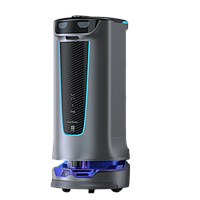
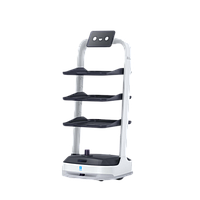
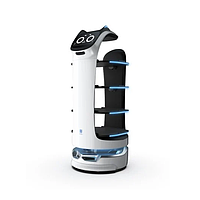
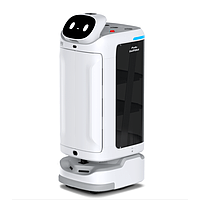
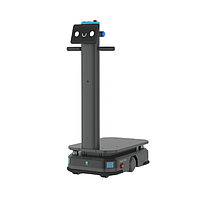
Delivery Robots
In factories, hospitals, hotels, and large commercial buildings, moving items from one point to another can take more time and labor than many teams expect. When transport tasks are repetitive, route-based, and predictable, delivery robots can help streamline internal logistics while reducing manual handling and improving process consistency.
This category focuses on robotic systems designed to carry, transport, or support the movement of materials in structured indoor environments. Whether the goal is to optimize last-meter delivery, support service operations, or build a smarter automation workflow, delivery robots are increasingly relevant in modern B2B operations.
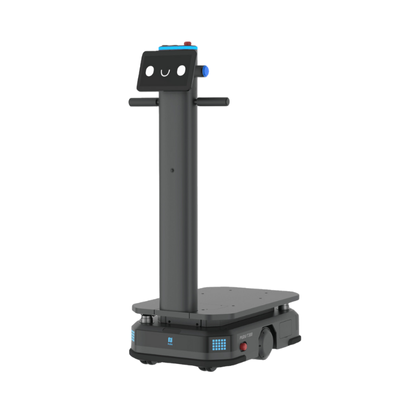
Where delivery robots fit in real operations
Delivery robots are commonly used where items need to be moved frequently between fixed or semi-fixed points. Typical examples include transporting documents, meals, tools, components, consumables, or small loads between departments, production cells, service counters, or storage areas. In these use cases, the robot becomes part of an organized internal transport flow rather than a standalone machine.
Compared with manual movement, the main advantage is not only labor reduction. A well-chosen solution can also support repeatable material flow, reduce unnecessary walking time, and improve traceability in environments where timing and route discipline matter. This makes the category relevant for both industrial and service-oriented automation projects.
Common applications for delivery robots
Search intent around this category often comes from businesses looking for practical deployment options. In industrial environments, delivery robots can support the movement of parts, tools, work-in-progress items, or packaged goods between workstations and storage areas. In healthcare or hospitality settings, they may assist with room-to-room transport, internal supply delivery, or service support tasks.
The right application depends on the payload, route complexity, traffic conditions, and how the robot will interact with staff and surrounding equipment. Some organizations also evaluate this category alongside related service automation systems such as assistant robots when comparing human-facing support functions with back-end transport roles.
Key factors when selecting a delivery robot
Choosing the right model starts with the transport task itself. Buyers should first define what the robot needs to carry, how often it will run, what type of facility layout it must navigate, and whether it will operate in shared spaces with people, carts, or other mobile systems. These practical questions usually matter more than broad marketing claims.
Important selection criteria include payload capacity, operating path, lifting or handling method, space constraints, and integration with the broader workflow. For example, if the application involves not only movement but also load handling, a robotic arm or lifting mechanism may be relevant. This is where product-level evaluation becomes important, especially in facilities that need more than simple point-to-point transport.
Example product within the category ecosystem
One representative product from Tân Hưng Hà is the Tân Hưng Hà RS013N Robot, specified with a maximum lifting capacity of 13 kg. Based on the available context, this is a robotic lifting arm rather than a generic cart-style transporter, so its role may be more suitable in automated handling cells, pick-and-place support, or transfer tasks that require controlled lifting within a delivery or material movement workflow.
This distinction is important for B2B buyers. Not every product associated with internal transport is designed in the same way. Some systems focus on mobile movement, while others support the loading, unloading, or transfer stage. Reviewing the actual task sequence helps determine whether a lifting robot, a mobile platform, or a combination of systems is the better fit.
How delivery robots relate to broader robotics projects
Delivery robots are often part of a wider automation strategy rather than an isolated purchase. In many facilities, transport automation connects with digital scheduling, warehouse flow, service operations, or internal production logistics. As a result, technical teams often evaluate this category alongside adjacent robotics segments depending on the environment and business objective.
For example, operations that focus on hygiene and autonomous facility support may also consider cleaning robots. Projects in public-facing spaces such as hotels, campuses, or healthcare environments may compare delivery functions with service interaction use cases. Looking at the surrounding robotics ecosystem helps buyers avoid selecting a platform that solves only one step of a larger process.
Operational considerations before deployment
Before implementation, it is useful to review the physical environment in detail. Floor conditions, corridor width, elevator access, doorways, human traffic, and loading zones all influence deployment success. Even when a robot is technically suitable on paper, operational constraints in the facility can strongly affect performance and user acceptance.
Another important factor is workflow ownership. Delivery robots work best when routes, pickup points, drop-off procedures, and exception handling are clearly defined. In other words, the technology should align with a stable process. Businesses exploring advanced mobility in harsher or less structured environments may also look into exploration robots for different mission profiles.
Who should consider this category
This category is relevant for manufacturers, logistics planners, facility managers, healthcare operators, hospitality businesses, and system integrators looking to improve internal transport efficiency. It is especially useful where repetitive movement creates bottlenecks, staff time is absorbed by non-core delivery tasks, or process standardization is becoming a priority.
It can also be a strong starting point for companies in the early stages of robotics adoption. Delivery-focused automation is often easier to evaluate than highly customized robotic production systems because the task is concrete: move defined items between known locations with predictable frequency and handling requirements.
Closing perspective
When internal transport becomes a recurring operational burden, delivery robots offer a practical path toward smarter workflow automation. The most effective choice depends on the real movement task, the handling method, and the environment in which the system will operate.
By assessing payload, route structure, facility conditions, and process integration together, buyers can narrow the category to solutions that are technically relevant and operationally realistic. That approach leads to better long-term value than choosing a robot based only on headline specifications.
Get exclusive volume discounts, bulk pricing updates, and new product alerts delivered directly to your inbox.
By subscribing, you agree to our Terms of Service and Privacy Policy.
Direct access to our certified experts