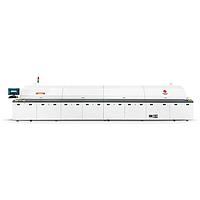
Semiconductor Reflow Oven
Stable thermal profiles, controlled atmosphere, and repeatable conveyor performance all matter when soldering advanced semiconductor packages. In high-mix and precision-driven production lines, the right Semiconductor Reflow Oven helps maintain process consistency while supporting tighter control over temperature deviation, nitrogen use, and line integration.
This category focuses on reflow systems designed for semiconductor packaging applications where thermal uniformity, process traceability, and clean operation are part of everyday manufacturing requirements. Whether you are comparing heating zone configurations or reviewing automation features such as PC+PLC control and MES communication, the goal is to match oven capability to package type, throughput target, and factory infrastructure.
Why reflow control matters in semiconductor packaging
Reflow in semiconductor packaging is more demanding than general electronics assembly because package structures, substrate materials, and thermal sensitivity can vary significantly. A controlled profile is needed to support proper solder wetting, reduce thermal stress, and keep temperature variation across the process window within acceptable limits.
In this environment, ovens with multiple heating zones, controlled cooling, and nitrogen-capable operation are commonly selected to improve repeatability. For manufacturers running advanced packaging processes, a reflow platform is not just a heating device; it is part of a broader process chain that may also include surface preparation equipment such as plasma cleaning before thermal joining.
Key features to review before selecting a system
A practical evaluation usually starts with the thermal architecture. The number of heating zones affects how precisely the process can be shaped across preheat, soak, reflow, and cooling stages. In this category, representative systems include 8-zone, 10-zone, and 13-zone configurations, giving buyers a useful range for matching line complexity and thermal process requirements.
It is also important to review temperature control accuracy, conveyor stability, cooling structure, and atmosphere management. Several models in this category are built around PC+PLC control, support forced water cooling, and provide full nitrogen filling. Functions such as data storage, UPS-based power failure protection, and standard communication protocols can be relevant for plants that need stronger production monitoring and connection to factory systems.
Typical configuration range in this category
The listed systems illustrate different production needs rather than a one-size-fits-all solution. The Suneast SEMI-08N offers an 8 heating zone, 16 module configuration, while the Suneast SEMI-10N expands to 10 heating zones and 20 modules. For lines requiring a longer heating section and broader process flexibility, the Suneast SEMI-13N provides 13 heating zones and 26 heating modules.
Across these examples, the operating temperature range reaches up to 320℃, and the conveyor design supports continuous processing with adjustable direction and speed. This makes the category relevant for users comparing thermal capacity, line footprint, and process control depth rather than only looking at nominal power or physical dimensions.
When to choose more heating zones
More heating zones are generally useful when the product mix includes packages with tighter thermal tolerances, more complex mass distribution, or process recipes that benefit from finer profile shaping. A longer thermal path can help manufacturers build smoother ramps and transitions, which may improve consistency from lot to lot when the process is properly validated.
For simpler requirements or lines with space constraints, a compact configuration may still be the better fit. The right choice depends on the balance between throughput, package sensitivity, and the level of profile refinement needed in production. If your process also includes thermal correction after assembly, it may be useful to review related warpage adjustment equipment within the same packaging workflow.
Nitrogen atmosphere, cooling, and process stability
For many semiconductor packaging applications, nitrogen reflow is selected to help reduce oxidation and support cleaner, more stable soldering conditions. The reflow ovens shown in this category include full nitrogen filling capability, while other thermal equipment in the broader lineup may also support oxygen monitoring and low-oxygen process control depending on the application.
Cooling performance is just as important as heating performance. Forced water cooling zones help the process transition in a controlled way after peak temperature, which can influence joint quality and package stress. In production environments where thermal history is critical, the interaction between heating zones, atmosphere control, and cooling design should be reviewed as a complete process system.
Brand and product examples available here
This category currently highlights equipment from Suneast, including the Suneast SEMI-08N, SEMI-10N, and SEMI-13N semiconductor reflow ovens. These systems reflect a clear focus on semiconductor packaging use cases, with features such as multi-zone heating, forced water cooling, Windows-based operating interface, and standard factory communication support.
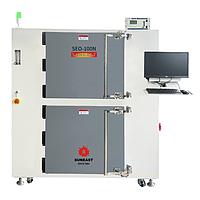
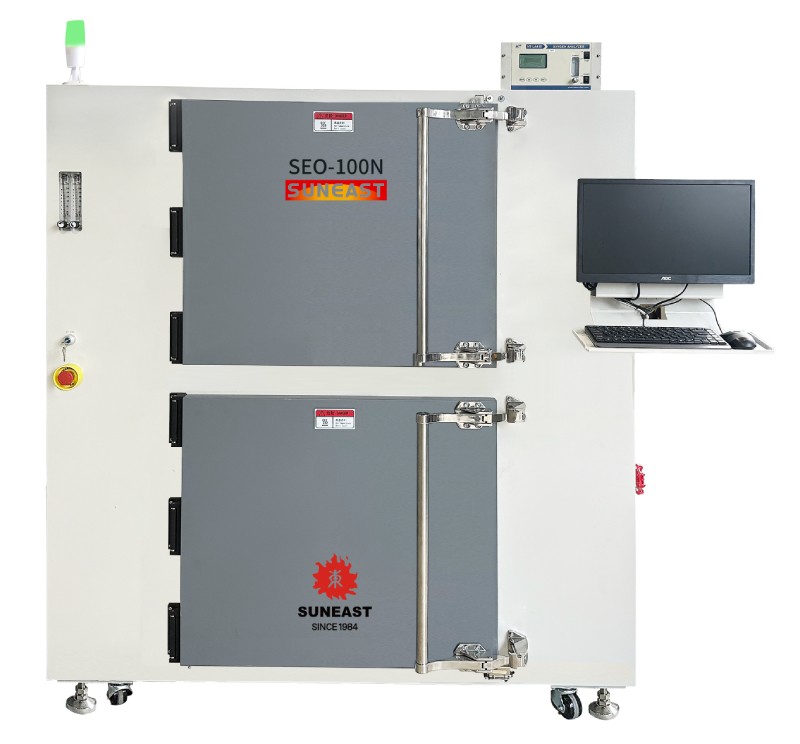
For operations that also require batch-style thermal processing rather than inline reflow, the Suneast SEO-100N semiconductor oven may be relevant as a complementary option. It is better understood as part of the wider thermal processing ecosystem, not a substitute for inline reflow where conveyorized profile control is the main requirement.
How this category fits into a semiconductor packaging line
A semiconductor reflow oven typically sits within a broader process sequence that can include cleaning, bonding, thermal joining, and post-process correction. Depending on package structure and line design, manufacturers may compare this equipment alongside TCB bonder systems or other packaging tools to build a more complete production setup.
Because process compatibility matters, it is useful to evaluate not only the oven itself but also factory utilities, exhaust requirements, cooling water availability, recipe management, and communication with MES or other production systems. This helps reduce integration issues and supports more reliable ramp-up from engineering to mass production.
Choosing the right semiconductor reflow oven for your process
The best fit usually comes from aligning heating zone configuration, cooling method, nitrogen requirements, and control architecture with the actual package and throughput target. A smaller line may prioritize footprint and practical operation, while a more demanding process may need additional zones, tighter control, and stronger integration features.
If you are comparing systems in this category, focus on process stability first and then review how each model supports your line conditions. With the right setup, a semiconductor reflow oven becomes a dependable part of a packaging workflow that values consistency, traceability, and controlled thermal performance.
Get exclusive volume discounts, bulk pricing updates, and new product alerts delivered directly to your inbox.
By subscribing, you agree to our Terms of Service and Privacy Policy.
Direct access to our certified experts