
Complex Programmable Logic Devices
When a design needs deterministic logic, fast startup, and reliable hardware control without the overhead of a full processor-based architecture, Complex Programmable Logic Devices remain a practical choice. They are widely used in embedded systems, industrial electronics, communications hardware, and interface control where stable timing and configurable logic are essential.
On this page, you can explore CPLD options for applications ranging from legacy 5 V designs to newer low-voltage embedded platforms. The category includes devices from established semiconductor suppliers, with a mix of compact logic densities, different package styles, and device families suited to control logic, glue logic, bus interfacing, and system integration tasks.
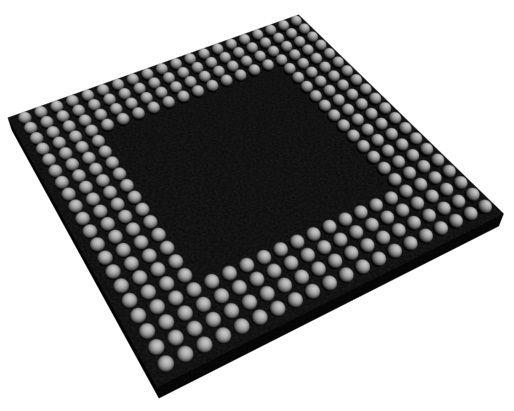
Where CPLDs fit in embedded hardware design
A CPLD is often selected when engineers need predictable logic behavior and non-volatile or fast-available configuration for core control functions. In many embedded systems, CPLDs are used to consolidate discrete logic, manage address decoding, translate interfaces, or implement state machines that must respond consistently at power-up.
Compared with a general-purpose processor, a CPLD is focused on hardware logic execution rather than software flexibility. Compared with larger programmable logic platforms, it is typically chosen for moderate logic complexity, simpler implementation, and efficient control of fixed digital tasks. In broader architectures, CPLDs may also work alongside central processing units or dedicated control devices when a design needs both software and hardware-level determinism.
Typical applications for Complex Programmable Logic Devices
CPLDs are commonly used in systems where multiple digital signals must be coordinated with low latency and repeatable timing. Typical examples include industrial controllers, communications boards, instrumentation interfaces, legacy equipment maintenance, and embedded products that need custom control logic without redesigning an ASIC.
They are also useful in mixed architectures where the CPLD handles startup logic, signal routing, or protocol adaptation while other devices perform processing or computation. In performance-oriented designs, engineers may combine them with digital signal processors and controllers to separate deterministic hardware tasks from algorithmic workloads.
How to evaluate devices in this category
The right part usually depends on the balance between logic resources, I/O count, voltage requirements, package constraints, and lifecycle considerations. For straightforward control logic, designers may prioritize macrocell count and available pins. For denser signal management or board-level integration, package format and total I/O become more important.
Voltage compatibility is another key selection factor. This category includes examples suited to traditional 5 V environments as well as lower-voltage designs. For instance, Altera devices such as the EPM7032QC44-15T and 5962-8946901YC illustrate options for classic logic implementations, while parts like the EPM7064AEUI49-4 reflect needs in lower-voltage digital systems.
In addition, engineers should consider operating environment, board space, and whether the device is supporting a new design or sustaining an installed platform. For projects involving broader programmable logic ecosystems, it can also be useful to review related components such as FPGA configuration memory when the architecture extends beyond CPLD-only logic.
Representative product families and examples
This category includes devices from suppliers such as Lattice Semiconductor, Altera, and Infineon. Each brand is associated with product lines that are commonly considered for control logic, interface logic, and embedded board support functions.
Examples from Lattice Semiconductor include the LC4256C-75TN100C, LC4256C-75TN100I, and LC4256C-75TN176I, which are often relevant when a design needs moderate programmable logic capacity in established CPLD families. Other listed Lattice parts such as M4A3-32/32-10VNI, M4A3-32/32-12JI, and ISPLSI5256VA-100LB272 show the breadth of packaging and logic options available for different board-level requirements.
The category also features Infineon PAL22V10CF10JC, which is relevant in designs that still rely on programmable logic components for compact control functions. For applications that require a higher I/O count within programmable logic, the Lattice Semiconductor LCMXO2-4000HE-5BG256I highlights how some listed devices can support more signal connectivity in embedded electronic systems.
CPLDs in relation to other programmable logic options
Although CPLDs are programmable logic devices, they serve a different role from some adjacent technologies. They are often preferred for control-oriented logic, deterministic startup behavior, and compact hardware integration, while larger programmable platforms may be chosen for more complex parallel logic or heavier data-path processing.
In practical sourcing and design decisions, engineers sometimes compare CPLDs with electronically erasable programmable logic devices or with other embedded logic categories depending on system age, configuration method, and required logic density. Understanding this distinction helps narrow down the shortlist faster and avoid selecting an oversized solution for a relatively fixed control task.
What matters for industrial and long-lifecycle procurement
For B2B buyers, the selection process is often about more than pure logic capacity. Package compatibility, replacement planning, voltage matching, and fit with existing board designs can be just as important, especially in maintenance, retrofit, or long-service industrial equipment. Legacy systems may require parts aligned with older electrical standards, while new developments often prioritize integration density and power efficiency.
It is also helpful to review the target device in the context of the complete embedded architecture rather than as a standalone part. A CPLD may be handling interface glue logic, startup sequencing, or subsystem coordination, so the most suitable option is usually the one that matches the system-level role cleanly instead of simply offering the largest logic resource count.
Choosing the right CPLD for your application
If your project needs stable digital control, customizable logic, and efficient integration into an embedded design, this category provides a focused starting point. Shortlisting should begin with required I/O, logic complexity, supply voltage, package constraints, and the expected operating environment. From there, comparing relevant product families from Altera, Lattice Semiconductor, and Infineon can help narrow the selection to devices that fit both the technical and procurement requirements.
Whether you are supporting an existing platform or developing a new embedded board, CPLDs continue to offer a useful middle ground between fixed-function logic and more complex programmable architectures. Reviewing the available devices in this category can help identify the right component for deterministic control, signal management, and practical embedded hardware design.
Get exclusive volume discounts, bulk pricing updates, and new product alerts delivered directly to your inbox.
By subscribing, you agree to our Terms of Service and Privacy Policy.
Direct access to our certified experts