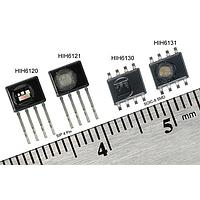
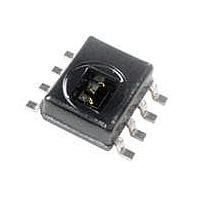
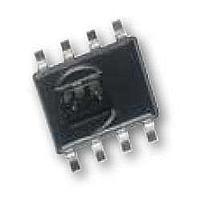
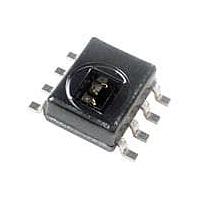
Board Mount Humidity Sensors
Reliable humidity measurement often starts at the PCB level, especially in compact electronics, HVAC controls, building automation, medical devices, and embedded monitoring systems. When engineers need stable sensing in a space-saving format, Board Mount Humidity Sensors provide a practical way to capture ambient moisture data directly inside the equipment architecture.
On this page, you can explore board-level humidity sensing components designed for integration into electronic assemblies rather than standalone field instruments. These devices are commonly selected when system designers need repeatable environmental feedback for control logic, data logging, protection functions, or combined temperature and humidity monitoring.
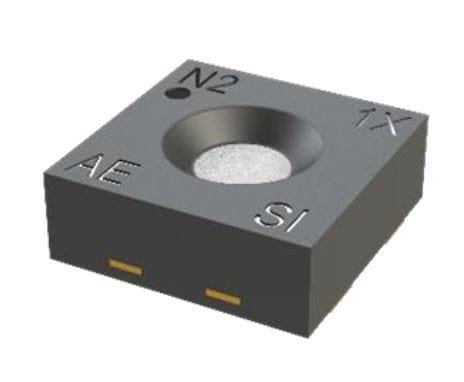
Why board mount humidity sensors matter in embedded designs
Humidity is not just a comfort parameter. In many industrial and commercial systems, moisture affects product quality, enclosure conditions, condensation risk, sensor fusion logic, and long-term reliability of electronics. A board-mounted sensor makes it possible to monitor these conditions continuously without adding bulky external instrumentation.
Compared with larger probe-style devices, these components are better suited to compact control boards, portable equipment, networked devices, and OEM assemblies. They are often used where designers want direct integration with microcontrollers, signal conditioning circuits, or digital communication buses.
Typical applications across industry
Board-level humidity sensing is used in a wide range of environments, from indoor air monitoring and smart appliances to industrial cabinets and test equipment. In electronics that operate across changing ambient conditions, humidity data can support fan control, alarm thresholds, compensation algorithms, and maintenance planning.
Many designs also benefit from combined temperature and humidity measurement in a single package. That is why parts such as Honeywell HIH9131-021-001S, HIH9130-021-001S, and HIH9130-021-001 are relevant for systems that need a more complete view of environmental conditions while keeping board space under control.
For broader environmental monitoring projects, humidity sensing may be used alongside related technologies such as DO sensors or turbidity sensors, depending on whether the application is focused on air quality, process control, or water analysis.
Common output types and interface considerations
One of the main selection points is how the sensor communicates with the rest of the system. In this category, buyers will find both analog-output and digital-output devices, with digital serial interfaces being especially useful in modern embedded designs. Options in the listed products include I2C, SPI, and serial 2-wire style communication, which can simplify integration into controller-based platforms.
For example, Honeywell HIH9130-000-001S is presented as a digital serial SPI humidity/temperature device, while Honeywell HIH9131-021-001S and HIH9130-021-001S use I2C. An alternative design path may involve temperature-focused components such as the Analog Devices AD7415ARTZ-0 or TMP37GS where humidity is monitored elsewhere in the system but thermal information remains equally important for environmental control.
When comparing interfaces, engineers should consider bus availability, firmware complexity, noise environment, response time expectations, and how many sensors will share the same controller. In some designs, a digital interface improves robustness and calibration handling; in others, a simpler analog signal path may fit legacy hardware more easily.
Representative manufacturers and product examples
Several established component brands appear in this category, including Honeywell, Analog Devices, and Amphenol. These names are familiar in electronic sensing and control applications, and their products can serve different integration preferences depending on interface type, package style, and whether temperature sensing is also required.
Examples include the Amphenol EHRH-2-I-F-1 humidity sensor for straightforward moisture measurement, as well as multi-parameter options from Honeywell’s HIH9130 and HIH9131 family entries listed here. Analog Devices parts such as ADM1034ARQ-REEL7, ADM1032ARZ-REEL, ADM1031ARQ, and ADM1030ARQ also appear in the category and may be evaluated when buyers are reviewing board-level sensing and monitoring components for embedded control electronics.
The product mix suggests that this category is useful not only for dedicated humidity monitoring, but also for broader environmental and thermal management architectures on the PCB. That can be valuable when selecting parts for gateways, industrial electronics, room controllers, portable instruments, or connected monitoring nodes.
How to choose the right board mount humidity sensor
A good selection process usually starts with the application environment. Buyers should review whether the sensor will operate in indoor ambient air, a semi-sealed enclosure, or near heat-generating components that may influence local readings. Placement on the board matters because airflow, heat sources, protective housings, and contamination can all affect measurement quality.
Next, look at the signal interface, package constraints, supply voltage compatibility, and whether humidity-only sensing is enough. In many systems, a combined humidity/temperature sensor reduces design complexity and supports better compensation logic. If the device will be used in a networked or low-power embedded platform, digital communication may be preferred for cleaner system integration.
It is also worth thinking about the wider sensing ecosystem. Some projects combine humidity with liquid-phase or process monitoring technologies such as chlorine sensors or free ion sensors when the system spans multiple environmental parameters.
Board-level integration tips for better measurement results
Even a capable sensor can deliver poor data if board integration is not considered carefully. Humidity sensors should be located away from components that create localized heat, such as power regulators, processors, or high-current paths. Excess heat can shift the sensor’s local environment and reduce the usefulness of the reading.
Mechanical layout is also important. Designers often try to place the sensing element where air exchange is possible while still protecting the PCB from dust, splashes, or handling damage. In enclosures with limited airflow, the response of the overall system may depend as much on mechanical design as on the sensor itself.
During qualification, it is helpful to validate the sensor under real operating conditions rather than relying only on bench measurements. That includes checking performance during startup, thermal cycling, changing airflow conditions, and any cleaning or manufacturing processes that could influence long-term behavior.
What buyers typically compare on this category page
For procurement teams and design engineers, the most practical comparison points are usually communication method, sensing function, package format, and fit with the target electronics platform. Some buyers come to this category looking for a simple humidity component, while others specifically need a humidity and temperature sensor to reduce part count and simplify assembly.
Another common purchasing consideration is alignment with approved vendor lists or existing design ecosystems. If your project already uses components from Honeywell, Analog Devices, or Amphenol, staying within a familiar supplier base can make sourcing, validation, and long-term support more straightforward.
This category is therefore useful both for early-stage design selection and for replacement or second-round evaluation when refining a production-ready BOM.
Final thoughts
Choosing the right board-mounted humidity sensing component is ultimately about matching measurement needs to the realities of the PCB, enclosure, and control system. Whether you need a compact humidity-only device or a combined digital temperature and humidity solution, the products in this category support a wide range of embedded monitoring and control applications.
By comparing interface options, integration requirements, and representative parts from established manufacturers, buyers can narrow the shortlist more efficiently and select sensors that fit both technical and sourcing requirements. For applications where environmental data plays a direct role in reliability, efficiency, or process visibility, a well-chosen board mount sensor can become a small but important part of the overall system design.
Get exclusive volume discounts, bulk pricing updates, and new product alerts delivered directly to your inbox.
By subscribing, you agree to our Terms of Service and Privacy Policy.
Direct access to our certified experts