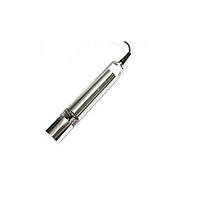
TBD Turbidity Sensors
Water quality monitoring often depends on one deceptively simple question: how clear is the liquid being measured, and how consistently can that condition be tracked over time? In industrial water treatment, environmental monitoring, aquaculture, and field analysis, turbidity is one of the key indicators used to evaluate suspended particles, process stability, and overall system condition. This category brings together TBD Turbidity Sensors for applications that require continuous, reliable measurement in both clean and challenging media.
Depending on the installation point and measurement objective, users may need a compact optical sensor for online monitoring, a digital sensor for integration into a field platform, or a multi-parameter probe that combines turbidity with temperature or chlorophyll measurement. That is why the selection of turbidity sensors is not only about range, but also about optical principle, output type, maintenance needs, and the environment in which the sensor will operate.

Where turbidity sensors are used
Turbidity measurement is widely used wherever suspended solids, cloudiness, or particle concentration can affect process quality or environmental compliance. Typical use cases include drinking water treatment, wastewater processes, raw water intake monitoring, surface water studies, and portable or fixed monitoring stations deployed in rivers, lakes, or coastal areas.
In some installations, turbidity is used as a direct control variable. In others, it is part of a broader water quality strategy alongside parameters such as dissolved oxygen, chlorine, or solids concentration. For related measurement needs, users often also review DO sensors or SS, MLSS sensors when building a more complete monitoring setup.
Common sensor types in this category
The products in this category cover several practical sensor formats. Some are designed for fixed online measurement with analog and digital outputs, while others are built for field deployment, data logging, or integration into multi-parameter environmental instruments. Optical turbidity sensing may rely on backscattering or diffusion-based infrared measurement, depending on the design and intended range.
For example, the Probest PTU-800 Turbidity Online Analyzer is positioned for continuous process measurement across a wide NTU range and includes common industrial communication and signal options. The Jumo ecoLine NTU Optical sensor for turbidity measurements provides another route for optical turbidity monitoring in applications where a compact sensor format and established factory configuration are beneficial.
Examples from leading manufacturers
This category includes products from established manufacturers such as Jumo, JFE, Aqualabo, and Probest. Each brand supports different application priorities, from online plant instrumentation to environmental field measurement and digital water quality platforms.
JFE models in this range illustrate how turbidity sensing can be combined with broader environmental monitoring. The JFE ATU75W2-USB wide sensing range turbidity sensor with wiper is designed for turbidity measurement with data logging capability, while the JFE ACLW2-USB and JFE ACLW2-CAR/CAD combine chlorophyll and turbidity in a single probe. These multi-parameter options can be useful where users need to correlate optical water clarity with biological activity. If chlorination control is also part of the system, it may be useful to compare with chlorine sensors in related water treatment applications.
How to choose the right turbidity sensor
A suitable selection usually starts with the expected measurement range and the nature of the liquid. Clean water applications and treated water loops may require sensitivity at low NTU values, while wastewater or environmental sediment monitoring may demand a much wider operating range and stronger resistance to fouling. It is also important to consider whether the reference is expressed in NTU, FTU, or concentration-related values used in a specific application context.
Output and installation requirements matter just as much. Some users need 4-20 mA outputs for PLC or SCADA integration, while others prioritize Modbus RS485, SDI-12, RS-232C, USB logging, or compact cable-based deployment. Aqualabo NTU Turbidity digital sensors, for example, are relevant where digital field integration and rugged submerged operation are part of the project requirement. In contrast, an analyzer-style solution may be more suitable where the sensor and transmitter are used together in a fixed industrial installation.
Maintenance should also be evaluated early. In long-term deployment, optical surfaces can be affected by biofouling or particle buildup, so features such as a wiper system, accessible calibration methods, and sensor material compatibility can influence both accuracy and lifecycle cost. Pressure rating, cable length, and enclosure protection are additional practical details that should match the installation environment.
Single-parameter and multi-parameter monitoring
Not every project needs a standalone turbidity-only device. In many environmental and research-oriented installations, a multi-parameter approach provides better insight into water conditions. Sensors such as the JFE ACLW2-CAR/CAD and ACLW2-USB combine turbidity with chlorophyll and temperature, which can help users detect broader changes in water quality rather than observing turbidity in isolation.
That said, a dedicated optical turbidity sensor is often the better choice for process control, alarm handling, and integration into treatment systems where turbidity is the primary monitored variable. The best option depends on whether the application is focused on compliance, process optimization, field investigation, or long-term environmental observation.
Important technical points to review before ordering
Before selecting a model, it is useful to confirm several basic criteria: measurement range, response behavior, output signal, operating temperature, cable or connector format, and the required degree of protection for submersion or outdoor installation. Sensor body material is also relevant, especially in freshwater, marine, or chemically demanding environments.
Users comparing options in this category will also notice differences in communication interface, calibration approach, and integrated electronics. Some products support transmitter-based installations with relays and analog outputs, while others are sensor-focused devices intended for host systems, portable platforms, or logged field studies. Matching the sensor architecture to the rest of the measurement chain helps avoid unnecessary adapters, integration delays, or maintenance issues later on.
Choosing with the application in mind
There is no single turbidity sensor that fits every process. A low-range optical sensor may be ideal for treated water quality control, while a broader-range submerged sensor may be more appropriate for raw water, environmental monitoring, or mixed-liquor conditions. Where fouling is expected, a sensor with cleaning support can improve stability. Where unattended deployment is important, data logging and low-power operation may become the deciding factors.
This category is intended to help engineers, system integrators, and technical buyers compare turbidity sensing solutions based on real application needs rather than on specifications alone. By reviewing the measurement principle, range, communication method, and installation format together, it becomes easier to identify the right product for both the process and the instrumentation architecture around it.
For projects involving water treatment, environmental observation, or online water quality control, TBD Turbidity Sensors provide a practical foundation for consistent optical monitoring. If you are narrowing down options, focus first on the medium, range, signal interface, and maintenance conditions you expect in the field. That usually leads to a faster and more reliable product choice than comparing model names alone.
Get exclusive volume discounts, bulk pricing updates, and new product alerts delivered directly to your inbox.
By subscribing, you agree to our Terms of Service and Privacy Policy.
Direct access to our certified experts