Hot Bar Bonding
When fine-pitch interconnections, flex circuits, and heat-sensitive assemblies need repeatable joining quality, process stability becomes just as important as raw speed. In these environments, Hot Bar Bonding is widely used to create controlled soldered connections through precise temperature, pressure, and timing, making it suitable for advanced electronics manufacturing and automated assembly workflows.
Within a modern assembly and inspection line, this process is often selected for applications where conventional soldering approaches may be less suitable for delicate flex-to-board or flex-to-flex connections. The category brings together equipment and solutions designed to improve bonding consistency, support higher throughput, and integrate more effectively with upstream placement and downstream inspection stages.
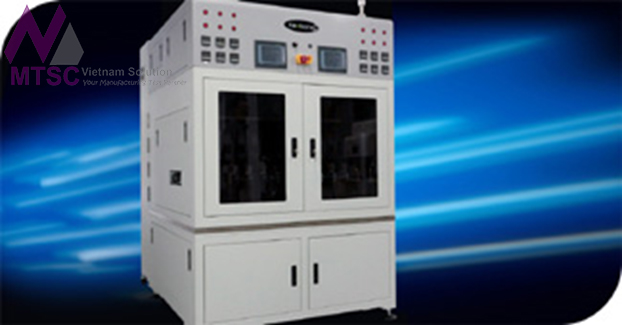
Where hot bar bonding fits in electronics assembly
Hot bar bonding is typically applied when manufacturers need a localized thermal process with tight control over the bonding interface. Rather than heating a broad area, the system focuses thermal energy at the joint while managing pressure and dwell time, which helps support stable interconnect quality on compact or precision assemblies.
This makes the process relevant for flex circuit assembly, soldering of fine interconnects, and production environments that demand repeatability across many cycles. In automated lines, hot bar bonding is not an isolated station; it usually works alongside material handling, positioning, process verification, and final quality checks.
Why automation matters for bonding performance
As production volumes increase, semi-automatic methods can create bottlenecks through operator dependency, variation in setup, and inconsistent cycle times. Automated hot bar bonding platforms are designed to reduce these issues by standardizing the bonding sequence and maintaining more stable process parameters from one unit to the next.
Automation also improves line-level coordination. For manufacturers building complete production cells, related equipment such as conveyor systems and automatic workpiece feeding solutions can help create a smoother flow of carriers, panels, or assemblies into and out of the bonding stage.
Important process factors to evaluate
Choosing a hot bar bonding solution usually starts with the application itself: substrate type, joint geometry, thermal sensitivity, required throughput, and the degree of process traceability expected on the line. From there, buyers often compare how well a platform controls the three core variables of the process: temperature control, bonding pressure, and positional accuracy.
For many electronics manufacturers, closed-loop control is especially important because it helps the machine follow the intended solder profile more consistently. Pressure management also plays a major role in bond quality, particularly when working with delicate materials or assemblies that require uniform force distribution during heating.
Another practical consideration is integration. A machine may need to match carrier sizes, line architecture, and takt-time requirements already defined elsewhere in the factory. If post-process verification is part of the workflow, pairing the bonding stage with a vision inspection system can support defect detection and process confirmation without disrupting line efficiency.
An example platform for high-throughput production
One representative solution in this category is the Universal Instruments Flexbond Hot Bar Bonding Platform. This system is positioned as a high-throughput automated platform for advanced flex circuit and other hot bar interconnect applications, with an architecture intended for full-process integration in volume manufacturing.
According to the provided product context, Flexbond is designed to work with the Fuzion platform for integrated operations such as flux transfer, accurate placement, and hot bar soldering. It also emphasizes dual-zone parallel processing, programmable closed-loop temperature control, and configurable bonding head arrangements to support productivity and process control in demanding assembly environments.
For buyers assessing equipment at the line level, these characteristics are often more meaningful than headline speed alone. A platform that combines throughput with stable thermal control and adaptable handling can be more valuable than a faster system that is harder to integrate or maintain consistently over time.
Brand context and solution ecosystem
Universal Instruments is one of the manufacturers featured in this category, and its presence is relevant for users looking at automated interconnect and electronics assembly solutions rather than standalone bench processes. In practice, many B2B buyers evaluate not only the bonding station itself, but also the surrounding ecosystem for placement, handling, and production scalability.
This broader view is especially important when the bonding process is part of a larger assembly strategy. A solution that fits cleanly into an automated line can simplify commissioning, reduce manual intervention, and make it easier to scale from pilot production to higher output requirements.
How to compare solutions for your production line
A useful way to compare hot bar bonding equipment is to look beyond brochure-level specifications and focus on operational fit. Start by checking whether the platform supports your part size range, heating method, required pressure window, and expected process repeatability. Then consider how easily it can integrate with handling systems, placement steps, and inspection requirements already planned for the line.
It is also worth evaluating maintenance access, floor space, and the level of automation needed for your current and future production mix. In some projects, the best choice is not the most complex platform, but the one that delivers reliable control, stable output, and a practical path to line integration.
For operations that include electrical verification after assembly, related categories such as Flying Probe Tester may also become relevant depending on the product and quality plan. The exact configuration will vary by application, but the general goal remains the same: create a bonding process that is repeatable, scalable, and aligned with downstream quality expectations.
Supporting consistent quality in advanced interconnect applications
Hot bar bonding is most valuable when it is treated as a controlled manufacturing process rather than a single machine purchase. The right solution should help manufacturers manage thermal input, force, and alignment with enough consistency to support sensitive assemblies and production targets at the same time.
Whether the requirement is higher throughput, more stable flex interconnect processing, or smoother integration into an automated line, this category is intended to support a more informed equipment selection process. Reviewing the available platforms and their integration potential is a practical first step toward building a more reliable and efficient bonding workflow.
Get exclusive volume discounts, bulk pricing updates, and new product alerts delivered directly to your inbox.
By subscribing, you agree to our Terms of Service and Privacy Policy.
Direct access to our certified experts