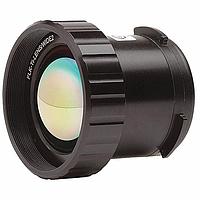
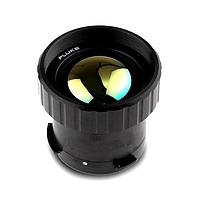
Lens & Accessories for Thermal Camera
Choosing the right optics can make a major difference in thermal inspection work. In many applications, the camera body is only part of the solution; the lens determines how much of the scene you can capture, how close you can inspect small targets, and how safely you can measure from a distance. For maintenance teams, utilities, manufacturing engineers, and reliability specialists, Lens & Accessories for Thermal Camera products help adapt a thermal imager to the task instead of forcing one setup to fit every job.
This category focuses on practical thermal camera accessories that extend inspection range, widen the field of view, or support close-up analysis of small components. It is especially relevant for users working with interchangeable-lens thermal systems, where matching the lens to the inspection objective can improve image usability and reduce unnecessary retakes in the field.
Why lens selection matters in thermal imaging
A thermal camera does not simply “see heat” in a generic way. The lens influences field of view, working distance, and the apparent size of the target in the image. That directly affects whether a technician can isolate a hot connection in a switchboard, scan a large wall area, or inspect a compact electronic part without losing detail.
In real maintenance workflows, one lens type rarely covers everything. A wide-angle lens is useful when the operator is close to a large asset or confined by space. A telephoto lens is often preferred when the target is far away, elevated, or unsafe to approach. For very small targets, a macro option can help reveal thermal patterns that would otherwise occupy too few pixels for meaningful analysis.
Common accessory types in this category
This category mainly includes interchangeable infrared lenses and related optical accessories for compatible thermal cameras. While specific compatibility always needs to be checked at product level, the products listed here show the main use cases clearly: telephoto lenses for distance inspections, wide-angle lenses for larger scenes at short range, and macro-style optics for close inspection of small components.
Examples from FLUKE illustrate this well. Models such as the FLUKE FLK-LENS/TELE2 Telephoto Infrared Smart Lens and FLUKE TI480/401U-4XTELE are intended for longer-range work, while options like FLUKE FLK-LENS/WIDE2 and FLUKE TI480/401U-WIDE support broader scene capture. For fine-detail thermal inspection, the FLUKE FLK-LENS/25MAC2 25 Micron Macro Infrared Smart Lens is representative of the close-up end of the range.
When to use telephoto, wide-angle, or macro thermal lenses
Telephoto lenses for distant or inaccessible targets
Telephoto thermal lenses are commonly selected when the object is far away or when the operator must maintain a safe distance. This is typical in power distribution, overhead assets, rotating machinery behind guarding, or elevated process equipment. Narrower viewing angles help concentrate the image on the area of interest, making distant hot spots easier to isolate.
Products such as FLUKE TI400U-2XTELE, FLUKE TI400U-4XTELE, FLUKE TI480/401U-2XTELE, and FLUKE TIX1000 4X TELE reflect this use case. In practice, these options are useful when standard optics do not provide enough target coverage at the required working distance.
Wide-angle lenses for large equipment in tight spaces
Wide-angle accessories are valuable when the technician cannot step back far enough to frame the full target. This often happens in electrical rooms, mechanical spaces, building diagnostics, and production lines where surrounding equipment limits positioning. A wider lens can capture more of the asset without moving farther away.
Examples include FLUKE TI400U-WIDE, FLUKE TI480/401U-WIDE, and FLUKE FLK-LENS/WIDE2. These products are well suited for larger panels, walls, ceilings, and equipment fronts where the inspection goal is to compare thermal distribution across a broader area rather than isolate a distant point target.
Macro lenses for small-component thermal analysis
When the inspection target is physically small, close-up thermal optics become more relevant. Macro infrared lenses are used for electronics, PCB diagnostics, fine mechanical parts, and laboratory analysis where a standard lens may not resolve enough target detail. The objective is not simply to move closer, but to image small thermal features more effectively at the proper focus distance.
The FLUKE FLK-LENS/25MAC2 is a clear example of this accessory type. For users performing failure analysis or precision thermal troubleshooting, macro capability can be an important complement to standard field inspection lenses.
How to choose the right thermal camera accessory
The most important selection factor is the inspection scenario, not just the camera model. Start by considering the target size, normal inspection distance, and how much of the scene must fit within the frame. If you often inspect remote assets, a telephoto lens may be more effective. If you work in constrained environments or need full-asset context, a wide-angle lens may be the better match.
Compatibility is equally important. Many products in this category are designed for specific thermal camera families, such as Ti300U, TI400U, TI480U, TI401U, or TiX1060-related systems referenced in the product list. Before ordering, verify that the lens is intended for the exact platform in use. If you are still selecting the imaging device itself, it may also help to review handheld thermal imaging camera options or compare with fixed thermal imaging camera solutions for continuous monitoring applications.
Typical applications across industry
Interchangeable thermal lenses are used across a wide range of industrial and commercial environments. In electrical maintenance, telephoto optics support safer inspection of energized assets that cannot be approached closely. In mechanical condition monitoring, they help evaluate bearings, couplings, motors, and process equipment from practical stand-off distances. In facility diagnostics, wide-angle lenses can be more efficient for walls, roofs, HVAC surfaces, and larger structural areas.
For R&D, electronics troubleshooting, and quality inspection, macro accessories become especially useful when the thermal signature is concentrated in a small area. This makes the category relevant not only for field maintenance teams but also for engineering, validation, and technical service workflows.
Brand ecosystem and product compatibility considerations
Within thermal imaging, accessory ecosystems often follow manufacturer-specific camera platforms. FLIR and FLUKE are both recognized names in the thermal imaging space, but lens interchangeability should never be assumed across brands or even across camera series from the same brand. The product page remains the right place to confirm fit, mounting type, and intended camera family.
The examples in this category are strongly centered on FLUKE thermal camera lens options, including Smart Lens variants, wide-angle accessories, and telephoto configurations for selected camera series. That makes this page particularly useful for buyers who already operate compatible FLUKE imagers and want to extend inspection capability without changing the whole camera platform.
Related product paths for a complete thermal imaging setup
Lenses and accessories are often purchased as part of a broader inspection workflow rather than as standalone items. Some users begin with the camera platform and later add optics as new use cases appear; others define the inspection requirement first and then choose a compatible camera-lens combination. If your workflow involves static thermal monitoring, it may be worth comparing this category with benchtop thermal camera solutions or mobile and fixed alternatives depending on deployment needs.
For teams already using interchangeable thermal imagers, the value of this category lies in expanding flexibility. Instead of compromising on inspection distance or scene coverage, the right accessory can help align the thermal system with the actual operating environment.
Final thoughts
Thermal imaging performance depends on more than detector specifications alone. The right lens or accessory helps determine whether a thermal camera is optimized for long-distance inspection, wide-scene capture, or close-up fault analysis. By selecting optics that match the target size, working distance, and application context, buyers can make better use of their existing thermal imaging equipment and support more reliable inspection results over time.
Get exclusive volume discounts, bulk pricing updates, and new product alerts delivered directly to your inbox.
By subscribing, you agree to our Terms of Service and Privacy Policy.
Direct access to our certified experts