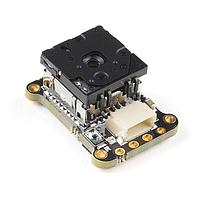
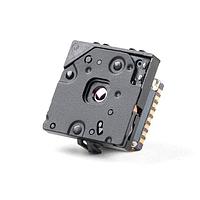
Thermal imaging sensor
When a project needs non-contact temperature awareness without the size, cost, or complexity of a full camera system, compact thermal sensing hardware becomes a practical choice. Thermal imaging sensors are widely used in embedded systems, robotics, industrial monitoring, and smart devices where detecting heat patterns matters more than producing a detailed visual image.
Compared with larger thermal instruments, this category is especially relevant for designers who need lightweight modules, board-level integration, and straightforward interfaces for development. It can support everything from presence and hotspot detection to thermal mapping in compact equipment, especially where space and power constraints are important.
Where thermal imaging sensors fit in real applications
In many industrial and engineering environments, the goal is not always to capture a high-resolution thermal image for inspection reports. Instead, the need may be to identify abnormal heating, monitor temperature distribution, or provide thermal input to a control system. That is where embedded thermal modules and compact sensors are often more suitable.
These devices are commonly considered for occupancy detection, machine condition monitoring, battery and electronics temperature observation, HVAC research, automation prototypes, and mobile platforms. If the application requires a self-contained instrument for field diagnostics, a handheld thermal imaging camera may be the better fit, while sensor modules are typically preferred for integration into custom hardware or OEM designs.
Typical formats in this category
This category includes different thermal sensing approaches, from very compact infrared arrays to small thermal camera modules intended for direct integration. Some products are optimized for development environments, while others are built around lightweight sensing for robotic or space-limited systems.
For example, the SparkFun SEN-16465 Thermal Imaging Module FLIR Lepton 2.5 represents a compact module approach suited to embedded development, while the SparkFun DEV-17544 PureThermal Mini Pro with FLIR Lepton 3.5 is more aligned with users who want a ready-to-use thermal camera module in a small format. On the Terabee side, products such as the TR-EVO-T90 and TR-EVO-T90-USB show how low-mass thermal sensing can be applied in robotics and system-level thermal awareness.
Key selection criteria for engineers and buyers
The right choice usually depends on how the thermal data will be used inside the final system. Resolution is one of the first filters. Lower pixel arrays can be enough for motion, occupancy, or general hotspot detection, while higher-resolution modules are more suitable when the application needs finer thermal detail or improved scene interpretation.
Temperature range, sensitivity, interface type, physical dimensions, and integration method also matter. A socket-connected module can be attractive for prototyping, while USB or UART variants may simplify data acquisition and software development. In compact assemblies, even small differences in module footprint or weight can influence enclosure design, mounting options, and thermal performance of the complete device.
It is also important to match the sensor to the actual measurement task. If the project needs broad thermal awareness across a scene, a thermal imaging sensor is a good direction. If the requirement is more specialized, such as a permanently installed monitoring point in a machine or process line, it may be worth comparing against a fixed thermal imaging camera designed for continuous installation.
Examples from SparkFun and Terabee
SparkFun products in this category are often relevant for prototyping, embedded development, and maker-to-professional transition projects. The SEN-16465 FLIR Lepton 2.5 module offers a very compact thermal imaging building block, while the DEV-17544 PureThermal Mini Pro with FLIR Lepton 3.5 provides a higher-resolution option for users who need more detailed thermal output in a development-friendly form.
Terabee brings a different perspective with lightweight thermal sensing solutions such as the TR-EVO-T90, TR-EVO-T90-UART, and TR-EVO-T90-USB. These are relevant when thermal data needs to be incorporated into robotic navigation, occupancy analytics, or compact smart systems where wide field coverage and easy interfacing are priorities.
Rather than choosing by brand alone, it is usually better to compare module size, interface preference, thermal resolution, and intended system architecture. That makes the selection process more aligned with integration effort and application performance.
Thermal imaging sensor vs. other thermal camera categories
Not every thermal product serves the same role in a measurement workflow. Sensor modules are often selected when the user is building a device, integrating thermal feedback into electronics, or developing an OEM solution. In contrast, stand-alone tools are better suited to inspection, maintenance, and reporting tasks.
For laboratory or workstation analysis, a benchtop thermal camera may be more appropriate. For portable accessories that connect to compact platforms, users may also consider a mobile thermal camera depending on the workflow. This distinction helps narrow down whether the priority is integration, mobility, or measurement convenience.
What to consider before integration
Before final selection, it is worth reviewing how the thermal sensor will interact with the rest of the system. Mounting position, field of view, target distance, environmental exposure, and data processing requirements can all affect usable results. Even a capable module can underperform if the optical path, enclosure window, or software filtering is not considered early in the design phase.
Engineers should also think about calibration expectations and the level of temperature accuracy actually required. In some applications, relative temperature changes are more valuable than precise absolute readings. In others, the ability to detect a thermal anomaly quickly is the main goal, making update rate, field coverage, and system response more important than image detail alone.
Choosing the right thermal sensing approach
This category is most useful for teams looking for compact thermal perception rather than a traditional inspection instrument. Whether the need is a small module for embedded development or a lightweight sensor for robotics and automation, the available options from SparkFun and Terabee illustrate a range of integration styles and thermal data capabilities.
By focusing on application needs such as resolution, interface, package size, and installation method, buyers can select a thermal imaging sensor that fits both the technical design and the wider system architecture. A clear understanding of the intended use case will usually lead to a better choice than simply comparing headline specifications.
Get exclusive volume discounts, bulk pricing updates, and new product alerts delivered directly to your inbox.
By subscribing, you agree to our Terms of Service and Privacy Policy.
Direct access to our certified experts