Textile abrasion resistance tester is the ability of a fabric or other textile material to withstand repeated mechanical friction without excessive wear or damage. During normal use, textile surfaces may rub against other fabrics, product components, or surrounding objects. Over time, this contact can change the appearance and performance of the material.
Evaluating abrasion resistance is therefore an important part of textile quality control. It helps manufacturers, laboratories, and product teams understand how a material responds to repeated wear and supports more appropriate material selection for its intended application.
What happens when textiles undergo abrasion?
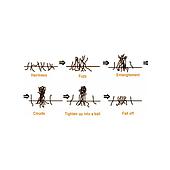
Abrasion occurs when a textile is repeatedly rubbed against another material or surface. The visible and functional effects can vary by textile construction, material, finish, and end use. Common changes observed during abrasion testing may include surface damage, material loss, fading, a lighter-looking surface, or pilling.
These changes can affect a textile product’s appearance, perceived quality, and serviceability. For this reason, abrasion resistance should not be considered as an isolated feature. Test observations need to be evaluated in the context of the product, the selected test method, and the required endpoint.
Why Is a Fabric Abrasion Tester Needed ?
A fabric abrasion meter helps businesses and testing laboratories understand how materials respond to repeated friction. This provides a basis for evaluating textile product quality and supports more effective material selection and use.
Different applications may have different requirements for abrasion resistance. Therefore, not all fabrics should be evaluated under the same test conditions. The choice of test method, number of cycles, and observation criteria should be appropriate for the specific testing requirements of the product.
Common textile abrasion resistance methods
Many approaches are used to assess wear resistance, including flat abrasion, curved abrasion, and rotational abrasion. Two commonly used methods are the Martindale method and the Taber method. Both subject a specimen to mechanical rubbing, but their motion and contact arrangements differ.
Martindale abrasion test
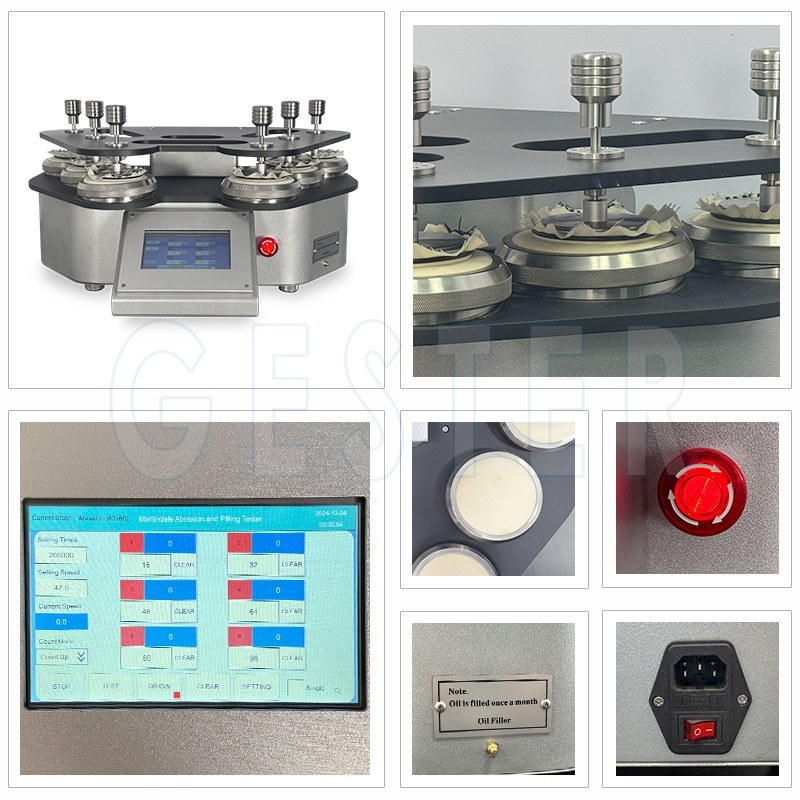
The Martindale abrasion test is a flat abrasion method performed with a Martindale Abrasion Tester. A circular specimen is mounted in a specimen holder and brought into contact with an abrasive material, commonly described as a standard fabric, under a specified load.
During the test, the specimen moves relative to the abrasive in a Lissajous pattern. The specimen holder can rotate freely around its axis, helping expose the sample to wear in multiple directions. This multi-directional rubbing is useful for evaluating how the textile surface responds to repeated contact across the test area.
The test result is associated with the condition of the sample after a total number of rubbing cycles, such as the point at which the specimen reaches the defined damage or breakage endpoint. The applicable test requirements determine the specimen preparation, load, abrasive, assessment criteria, and stopping condition.
Taber wear test
The Taber wear test uses a Taber abrasion testing machine with a specimen mounted on a horizontal platform. Grinding wheels apply pressure to the sample while it rotates. The two wheels are arranged to act on the test surface in opposing directions, creating a controlled wear action.
In the described procedure, the specimen is prepared with a central hole and secured to the platform. H18 grinding wheels are installed on the support arms, and wear is observed throughout the specified test period. Surface debris may be removed with a brush during the test so the sample condition can be examined.
For this method, the required number of revolutions and the endpoint are set according to the relevant testing requirement. Observations may focus on the condition of the surface and the number of revolutions recorded when the specified endpoint is reached.
Choosing the right approach for textile quality control
The results from Martindale and Taber tests reflect the behavior of a sample under their respective test conditions and should not be considered direct substitutes for one another. The type of abrasive material, applied load, motion, number of cycles, and end-point criteria can all affect the final assessment.
To compare samples consistently, the same test method, test conditions, and evaluation criteria should be used. Clearly documenting observations such as damage, color changes, or pilling also makes the textile quality inspection process more transparent and better supported by evidence.
Fabric abrasion resistance tester is used to evaluate a material's resistance to wear caused by repeated friction. The Martindale method produces multidirectional abrasion through a Lissajous motion, while the Taber method uses abrasive wheels applied to a rotating specimen. Selecting the appropriate method for the intended application and carefully controlling the test conditions are essential for consistent textile evaluation.