Your multimeter may display 220–230V, yet equipment still overheats, a UPS repeatedly switches modes, a motor produces a humming sound, or electronic systems restart unexpectedly. In situations like these, the voltage reading may only reflect part of the actual operating condition.
A 220V Reading Does Not Necessarily Mean the Power Supply Is Healthy
When measuring AC voltage, a multimeter typically displays the RMS (Root Mean Square) value, which represents the equivalent energy level of alternating current. This parameter is sufficient to confirm that power is present and whether the voltage remains within an acceptable range, but it does not fully describe how the power source performs under load.
Two locations that measure 220V may still have completely different power supply conditions. One system may operate normally, while another causes equipment to run hotter, shortens component lifespan, or produces intermittent faults.
The difference often lies in factors that standard multimeters do not directly show, such as waveform distortion, high-frequency noise, short-duration voltage fluctuations, or instantaneous changes caused by load variations.
These conditions are becoming increasingly common as variable frequency drives (VFDs), switching power supplies, high-power LED lighting, UPS systems, and electronically controlled equipment become standard components in residential and industrial electrical networks.
Why Does the Measurement Look Correct While the Equipment Behaves Abnormally?
Not every multimeter measures True RMS. Many entry-level models estimate RMS values from average measurements under the assumption that the waveform is a pure sine wave. Under normal utility power conditions, the error is usually negligible.
However, when power passes through an inverter, UPS, or electronic loads that distort the waveform, the display may still remain around 220V even though the actual power conditions have changed.
That is why electrical maintenance technicians rarely draw conclusions from a single voltage measurement alone. Load current, frequency, changes over time, and actual equipment operating conditions are typically evaluated together to avoid misdiagnosis.
No-Load Measurements Can Be Misleading
Voltage may appear completely normal when equipment is turned off, yet drop significantly once the system begins operating under load.
Aging outlets, oxidized terminals, insufficient tightening torque, or undersized conductors often remain hidden when little or no current is flowing. The meter still displays 220V, and everything appears normal.
But once an air conditioner, water heater, pump, or another high-power load starts operating, increased contact resistance can create localized voltage drops. Equipment then receives less stable power even though measurements at the outlet still show no obvious warning signs.
This is also why certain electrical faults only appear in the evening, during peak demand periods, or when multiple devices operate simultaneously.
Interpret Measurements in Context Rather Than Relying on a Single Number
A voltage value only becomes meaningful when evaluated under actual load conditions.
If voltage remains nearly unchanged while current consumption increases, operating temperature rises, or faults occur periodically, the issue may no longer be insufficient voltage but rather power quality, poor electrical contact, or load characteristics.
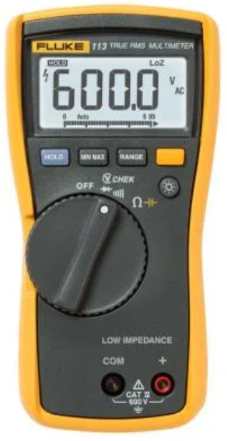
A digital multimeter remains an effective tool for quick diagnostics. However, for modern electrical systems, the key question is not only “How many volts are present?” but also “How does that voltage behave when the equipment is actually operating?”
Frequently Asked Questions (FAQs)
The multimeter shows 220V, but the equipment still performs poorly or operates intermittently. What should be checked first?
If measured voltage remains within the normal range but the equipment behaves abnormally, perform measurements under load instead of testing while the device is off. In addition to voltage, check current consumption, connector temperature, outlet condition, wiring integrity, and whether the issue appears only at certain operating times. In many cases, instability only becomes visible when current demand increases.
Does equipment perform better when voltage is closer to exactly 220V ?
Most modern equipment is designed to operate within a voltage range and does not require exactly 220V. Performance also depends on voltage stability, electrical noise, contact condition, and load characteristics. A stable power source with minimal fluctuation can sometimes perform better than one that constantly varies around the nominal value.
Can a non–True RMS multimeter still be used for residential electrical measurements ?
Yes. It works well for most basic residential tasks such as confirming power availability, measuring outlet voltage, or performing quick supply checks. However, when measuring systems containing inverters, UPS units, high-power LED drivers, or electronically controlled loads, measurement error may increase if the waveform is no longer sinusoidal.
Why do voltage readings differ between no-load and operating conditions ?
When no load is connected, current flow is minimal, so poor electrical contacts are difficult to detect. Once equipment starts drawing current, resistance at connectors, outlets, or conductors can create voltage drop. This explains why some systems appear normal during static measurements but develop issues during actual operation.
Can a multimeter fully evaluate power quality ?
A multimeter is suitable for quick inspection but cannot replace comprehensive power quality analysis. To investigate waveform distortion, voltage fluctuation, transient voltage drops, or nonlinear loads, dedicated instruments or time-based measurements are usually required.
Equipment overheats even though voltage appears stable. Could the power supply still be the cause ?
Possibly, but not always. Excessive temperature may also result from mechanical load, cooling issues, poor electrical contact, component quality, or unusually high current draw. In practical maintenance work, stable voltage combined with rising current is often a more important warning sign.
How often should an electrical system be checked if abnormal behavior occurs frequently ?
If faults appear intermittently or only during periods of high load, measurements should be repeated under those exact conditions rather than at random times. For continuously operating systems or installations with high-power equipment, periodic inspection of connectors, outlets, and actual load conditions is often more valuable than routine voltage checks alone.
Related Articles
Tips for Measuring 220V Current with a Multimeter That Many People Overlook
A Detailed Guide to Measuring Three-Phase Power Safely and Correctly Using a Multimeter
Top 5 Best Multimeters Around the $40–50 Price Range in 2026
Why Are RMS and True RMS Among the Most Preferred Measurement Features in Multimeters ?