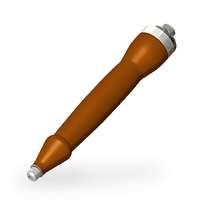
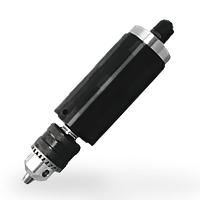
Indicating torque screwdrivers
Consistent fastening matters wherever threaded parts must be assembled without over-tightening or under-tightening. In electronics, precision mechanics, maintenance work, and light industrial assembly, the right torque tool helps improve repeatability, reduce damage to components, and support better quality control. This is where indicating torque screwdrivers become especially useful.
Within this category, buyers typically look for tools that provide controlled torque application in compact screwdriver form. These tools are well suited to fastening small screws, working in confined spaces, and supporting operators who need a clear, repeatable tightening process across production, service, or laboratory environments.
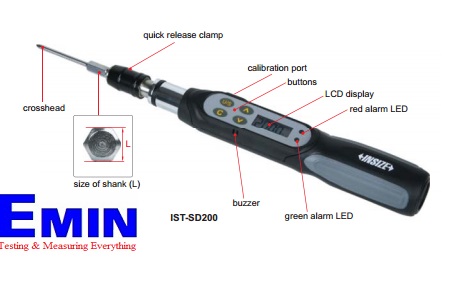
Where indicating torque screwdrivers fit in assembly work
Unlike general hand screwdrivers, torque-controlled screwdrivers are selected when the fastening value itself is part of the process requirement. They are commonly used when screw tension must stay within a defined range to protect threads, housings, connectors, or sensitive assemblies. This is particularly important for products with small fasteners, plastic parts, ESD-sensitive components, or service procedures that require repeatable tightening.
In the broader field of assembly tools, these screwdrivers complement other fastening equipment rather than replacing it. For example, technicians may still use a hex wrench set or a socket wrench set for larger hardware, while torque screwdrivers remain the preferred option for lower-torque screw applications where control and consistency are more critical than raw leverage.
Why torque indication is important
The main value of an indicating design is feedback during the tightening process. Instead of relying only on operator feel, the tool helps the user approach a target torque more consistently. That reduces variation between operators and helps standardize assembly quality across shifts, stations, or service teams.
This matters in practical terms. Too little torque can lead to loose assemblies, vibration-related failures, or electrical contact issues. Too much torque can strip threads, crack plastic enclosures, deform parts, or overstress delicate components. A repeatable torque method is often one of the simplest ways to improve assembly reliability without changing the product design itself.
Typical selection factors for this category
When choosing an indicating torque screwdriver, the first point is usually the required torque range. The tools shown in this category illustrate several working ranges, from lower values suitable for light fastening to higher values for more demanding screw applications. Selecting a tool too close to the extreme upper or lower end of its range may reduce usability, so buyers often start by identifying the normal production torque and then choosing a model that comfortably covers it.
Another key factor is interface and handling. Several featured tools use a 1/4" F/Hex driver format, which supports common bit-based workflows. Physical size and weight also matter when operators perform repetitive tasks or work in compact assemblies. In ESD-sensitive environments, an ESD-safe torque screwdriver can be relevant to help align the tool choice with workstation protection requirements.
- Torque range: Match the tool to the actual fastening requirement, not just the broadest available range.
- Drive format: Check compatibility with existing bits and assembly procedures.
- ESD considerations: Important in electronics and static-sensitive production areas.
- Tool size: Shorter, lighter tools may be easier to use in bench assembly and confined spaces.
- Process consistency: Choose a tool style that supports operator repeatability.
Examples available in this range
This category includes representative models from Mountz, a recognized name in torque control for assembly applications. Examples include the Mountz FG-20i ESD, FG-40i ESD, and FG-125i ESD series, covering progressively higher torque requirements. These models help illustrate how buyers can choose between compact low-torque fastening and applications that need a broader or stronger torque capability.
For lower-torque work, the FG-20i ESD range is suited to finer screw applications where smaller fasteners and more delicate assemblies are involved. The FG-40i ESD occupies a practical middle range for many bench assembly tasks, while the FG-125i ESD supports higher torque requirements in screwdriver-based fastening. The listed color labels should be treated mainly as model identification details rather than performance differences on their own.
How these tools support electronics and precision assembly
Many buyers searching this category are working with assemblies that cannot tolerate excessive fastening force. In such cases, indicating torque screwdrivers are often used for device housings, terminals, compact mechanical fixtures, and other screw joints where torque consistency contributes directly to product quality. ESD-design variants are also relevant for electronics manufacturing and repair benches where electrostatic protection is part of the process.
These tools can also fit inspection, maintenance, and rework tasks. A technician may need to tighten replacement parts to a controlled value during servicing, or verify that a fastening process follows a documented procedure. In these environments, torque indication helps bridge the gap between a simple manual tool and a more complex powered assembly system.
Comparing brands and tool ecosystems
Although the products highlighted here focus on Mountz models, buyers often evaluate torque tools in the context of a broader fastening ecosystem. Depending on process requirements, brands such as Tohnichi, CEDAR, KANON, HIOS, and WERA may also come into consideration for related assembly workflows, operator preference, or tool standardization across a facility.
In practice, the best choice depends less on brand visibility and more on application fit: torque level, sensitivity of the product being assembled, operator frequency of use, and compatibility with existing bits or accessories. For workshops and maintenance teams, it may also make sense to review nearby categories such as repair kit options when building a more complete service setup.
Choosing the right tool for your process
A good starting point is to define the actual screw size, target torque, material being fastened, and the consequence of over-torque or under-torque in your application. That helps narrow the tool choice much faster than comparing models only by name. If the process involves delicate electronics or repeated bench work, features such as compact form factor and ESD suitability may be just as important as the torque range itself.
It is also useful to think about who will use the tool and how often. For occasional maintenance, a straightforward manual solution may be sufficient. For repetitive assembly, the priority usually shifts toward operator consistency, reduced fatigue, and easier integration into a standard work procedure.
Final thoughts
For fastening jobs where torque control is part of product quality, indicating torque screwdrivers offer a practical balance between precision, simplicity, and everyday usability. They are especially valuable in assembly and service work involving small fasteners, sensitive materials, or documented tightening requirements.
By selecting the torque range and tool format that match the real application, buyers can improve repeatability and reduce fastening-related errors. If you are comparing options in this category, the listed Mountz FG-20i ESD, FG-40i ESD, and FG-125i ESD models provide a useful reference point for understanding different torque levels within manual precision fastening.
Get exclusive volume discounts, bulk pricing updates, and new product alerts delivered directly to your inbox.
By subscribing, you agree to our Terms of Service and Privacy Policy.
Direct access to our certified experts