
Needle Scaler
Removing rust, scale, old paint, or welding residue is often more demanding than it first appears, especially on uneven metal surfaces, corners, and weld seams. In these situations, a needle scaler offers a practical pneumatic solution for maintenance teams, fabrication workshops, ship repair, steel structure cleaning, and general industrial surface preparation.
Compared with manual scraping or basic brushing, this tool uses repeated impact from bundled steel needles to break up deposits while following the contours of the workpiece. That makes it especially useful where flat sanding tools are less effective and where fast, repeatable cleaning matters in daily production or repair work.
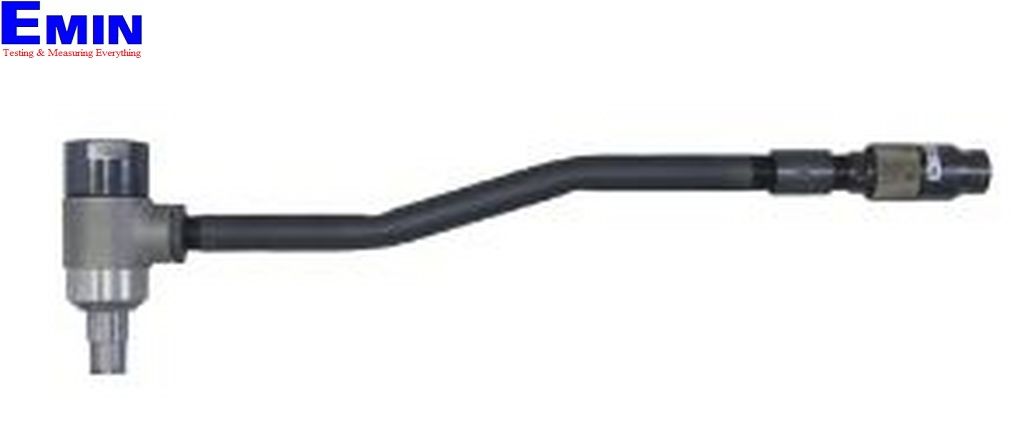
Where needle scalers are commonly used
Needle scalers are widely selected for jobs that involve rust removal, descaling, paint stripping, slag cleaning, and weld seam preparation. Because the needles can reach irregular profiles, they are suitable for structural steel, tanks, frames, pipes, cast surfaces, and metal assemblies that are difficult to clean with broad abrasive contact.
They are also relevant in maintenance environments where portability is important and compressed air is already available. In a workshop that also uses tools such as an air grinder for finishing or deburring, a needle scaler typically fits earlier in the workflow as a heavy-duty surface cleaning step.
How pneumatic needle scalers work in practice
The operating principle is straightforward: compressed air drives an internal mechanism that rapidly moves a set of steel needles against the surface. Instead of cutting like a grinder, the tool works through repeated impact, helping remove brittle contamination while adapting to rough or uneven geometry.
This impact-based action makes the tool effective on corrosion, mill scale, and residue that may be difficult to remove uniformly by hand. Straight and pistol-grip designs each have their place depending on access, operator posture, and the orientation of the target area.
Choosing the right type for the job
Selection usually starts with the work surface and how long the tool will be used per shift. A compact model may be easier to control for light rust removal or shorter maintenance tasks, while a heavier-duty version with more needles can support faster material removal on larger or tougher surfaces.
Among the products in this category, the AIRTEC 211 Pistol Needle Scaler and AIRTEC 212 Pistol Needle Scaler are examples of pistol-style tools suited to general cleaning work, while the AIRTEC 210 Straight Needle Scaler may be more convenient where tool reach and working angle are key considerations. For users comparing brands, options from AIRTEC, KAWASAKI, TOPTUL, and YATO cover different handling preferences and task intensity levels.
For related cleaning and impact tasks, some users may also compare needle scalers with flux chippers or scaling hammers. Models such as the AIRTEC 205 Air Flux Chipper, KAWASAKI KPT-F6 Flux Chipper, or Kawasaki KPT-S2 Scaling Hammer are part of the wider pneumatic surface-treatment ecosystem, but they serve somewhat different removal patterns and working styles.
What to evaluate before buying
For industrial buyers, selection should not focus on model name alone. It is more useful to review the tool in terms of air pressure requirement, air consumption, weight, form factor, blow rate, and the intended duty level in real operating conditions. These factors affect both cleaning performance and the suitability of the tool for the available compressor system.
Weight and vibration are particularly important where operators use the tool repeatedly throughout the day. A lighter unit may reduce fatigue in overhead or vertical work, while a more robust tool may be justified for tougher deposits. Noise level should also be considered when planning PPE and workshop safety procedures.
If your maintenance team already uses other pneumatic assembly tools such as air impact wrench systems or air screwdrivers, it is worth checking whether the air supply network can support another impact-based tool without pressure drop during peak use.
Representative products in this category
This category includes both dedicated needle scalers and adjacent pneumatic cleaning tools that are often evaluated for similar applications. For example, the TOPTUL KAHB3718 Air Pistol Grip Needle Scaler and TOPTUL KAHC5013 Air Needle Scaler illustrate two compact options for rust and coating removal with different handling characteristics.
For users looking at broader maintenance work, Yato YT-0990 Air hammer and YATO YT-09910 Surface Cleaner may also come into consideration, depending on whether the task is impact chipping or general surface treatment. In heavier-duty maintenance contexts, the Kawasaki KPT-J15 Jumbo Sraper is relevant where scraping action is preferred over bundled-needle scaling.
The key point is to match the tool to the surface condition, access constraints, and cleaning objective rather than assuming every pneumatic scaler behaves the same way. Even where nominal working pressure is similar, operator comfort and removal style can differ noticeably.
Safe use and maintenance considerations
In practical use, the main risks are not unique to one brand or model. The real concerns are flying debris, metal dust, high noise, and hand-arm vibration during repeated operation. Appropriate eye protection, gloves, hearing protection, and suitable respiratory protection should be part of normal workshop practice, especially in enclosed or poorly ventilated areas.
Before operation, it is sensible to inspect the needles, air connection, and hose condition, then test the tool briefly under controlled conditions. Bent or worn needles, unstable vibration, or unusual sound can indicate that maintenance is needed before the tool returns to service.
Routine lubrication, air-line checks, and timely replacement of worn components help maintain consistent performance and reduce unplanned downtime. This is particularly important in production or repair environments where pneumatic tools are used continuously across multiple shifts.
How needle scalers fit into a pneumatic tool workflow
On many industrial sites, a needle scaler is not a standalone purchase but part of a wider compressed-air tool setup. It often supports preparation work before coating, welding inspection, or further finishing. After descaling, the part may move to grinding, fastening, or assembly stages depending on the process.
That is why category-level comparison matters. Buyers planning a complete pneumatic toolkit may also review solutions such as air drill equipment for fabrication tasks alongside impact and surface-preparation tools. Looking at the workflow as a whole usually leads to a more practical purchasing decision than evaluating one tool in isolation.
Finding a suitable needle scaler for your application
This category brings together tools intended for rust removal, descaling, chipping, and related surface-cleaning work in industrial environments. Whether the priority is maneuverability, lower weight, or stronger impact action for tougher deposits, the right choice depends on the actual material condition, working position, and available air supply.
Reviewing grip style, operating demands, and maintenance needs before purchase will help narrow the range more effectively than comparing specifications line by line without application context. For workshop, fabrication, and field maintenance teams, a well-matched pneumatic surface preparation tool can improve cleaning consistency and reduce manual effort across repetitive jobs.
Get exclusive volume discounts, bulk pricing updates, and new product alerts delivered directly to your inbox.
By subscribing, you agree to our Terms of Service and Privacy Policy.
Direct access to our certified experts