Through-Hole Machine
High-mix electronics production still relies on dependable automation for leaded components, jumper wires, and other insertion tasks that are difficult to standardize by hand. In these environments, a Through-Hole Machine supports repeatable assembly quality, stable throughput, and better control over labor-intensive PCB processes, especially where traditional through-hole technology remains part of the product design.
This category focuses on equipment used to automate component insertion on printed circuit boards, helping manufacturers improve consistency while reducing manual handling. It is particularly relevant for production lines working with axial components, radial components, and jumper wires, where insertion accuracy and board quality directly affect downstream soldering and final product reliability.
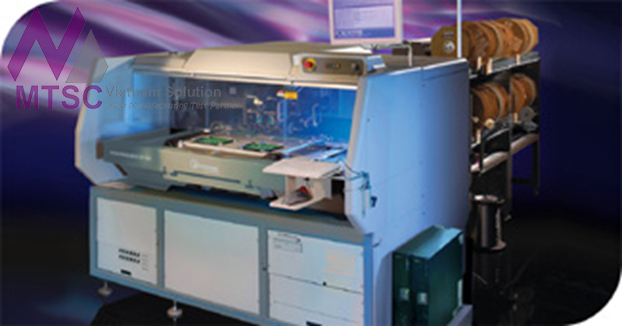
Where through-hole insertion equipment fits in electronics assembly
Even in facilities with strong SMT capability, through-hole assembly remains essential for many products that use connectors, high-reliability leaded parts, power components, or wire jumpers. Manual insertion can work for small volumes, but as output targets increase, the need for automated insertion becomes more important for maintaining productivity and reducing variation between boards.
Through-hole equipment is typically used as part of a broader electronics manufacturing workflow. After insertion, boards may continue to soldering, inspection, or repair stages, and in some production environments they may also interface with supporting processes such as soldering stations for manual touch-up or post-assembly work.
Common applications for through-hole machines
These systems are used in PCB assembly lines where repeatable lead forming, insertion positioning, and high-volume processing matter more than the flexibility of fully manual work. Typical use cases include consumer electronics, industrial control boards, power assemblies, and mixed-technology products that combine SMT with selected through-hole components.
Through-hole machines are especially useful when manufacturers want to reduce insertion defects, improve cycle times, and maintain board quality at scale. For repair-oriented or prototype environments, manual tools may still be appropriate, but once repetitive insertion becomes a production bottleneck, dedicated automation offers a more efficient path.
Representative equipment in this category
Universal Instruments is a key brand in this category, with equipment designed for different insertion tasks within the through-hole process. Rather than treating all PCB insertion jobs the same, these machines are built around specific component formats and production requirements.
The Universal Instruments Jumper Wire 88 is intended for automated jumper wire insertion from bulk input packages into printed circuit boards. It is suited to applications where wire span flexibility, low scrap, and consistent outgoing board quality are important to maintaining efficient throughput.
For axial component processing, the Universal Instruments VCD 88HT supports sequencing and insertion in a single process flow. In applications where frequent replenishment, high throughput, and a larger number of available inputs are important, this type of machine can help reduce changeover pressure and keep production moving with fewer interruptions.
The Universal Instruments Radial 88HT addresses radial component insertion with support for different span configurations. This makes it a practical fit for manufacturers handling varied radial part formats while trying to limit manual assembly effort and make better use of available floor space.
How to choose the right through-hole machine
The first selection factor is the component family you need to process. Jumper wires, axial components, and radial components require different handling methods, so machine choice should start with the actual board design and the dominant insertion tasks on the line rather than with a generic throughput target alone.
A second factor is production profile. If your operation runs repeated jobs at higher volume, a dedicated machine optimized for a specific insertion type can provide better process stability. If product mix changes frequently, it is worth paying attention to operator interface, replenishment workflow, sequencing flexibility, and how quickly the system can adapt to different board requirements.
It is also important to consider how the machine integrates with surrounding process steps. For example, boards that still require post-insertion correction or selective rework may benefit from nearby support equipment such as desoldering stations or manual soldering tools, depending on your manufacturing strategy.
Key operational benefits for B2B manufacturing
In a production environment, the value of through-hole automation goes beyond headline speed. The bigger advantage is often process consistency: fewer insertion errors, reduced dependence on manual operator skill for repetitive tasks, and more predictable quality across batches. This is especially important for OEMs, EMS providers, and industrial electronics manufacturers working to control rework rates.
Another important benefit is improved resource planning. Automated insertion equipment can reduce labor pressure in repetitive assembly steps and allow technical staff to focus on validation, inspection, or troubleshooting instead of routine manual insertion. Over time, this can support better line balance and more stable output.
Through-hole machines in mixed-technology production lines
Many modern assemblies combine SMT processes with selected through-hole operations. In that context, through-hole machines should be evaluated as part of a wider manufacturing ecosystem rather than as isolated equipment. Their effectiveness depends on how well they connect with loading and unloading practices, board handling, soldering methods, and downstream verification.
For manufacturers that also manage rework or prototype support in-house, adjacent process tools may still play a role alongside insertion automation. Depending on the product mix, teams may also work with hot air rework systems or specialized platforms for board-level correction after assembly changes.
What to review before purchasing
Before selecting equipment in this category, it helps to review board type, component format, expected throughput, input capacity needs, and the level of operator interaction your process can support. A machine that performs well in one environment may not be the best fit in another if product mix, replenishment frequency, or line layout differ significantly.
Buyers should also look at how the equipment supports quality goals, maintenance workflow, and scalability. In many cases, the best choice is not simply the fastest machine, but the one that best matches your actual insertion process, minimizes disruption, and supports reliable day-to-day production.
Final thoughts
Choosing the right through-hole automation is ultimately about matching the machine to the insertion task and the realities of your production line. Whether the priority is jumper wire insertion, axial sequencing, or radial component handling, this category helps narrow the options to equipment designed for repeatable PCB assembly in industrial environments.
If your manufacturing process still depends on leaded component placement, a well-matched through-hole solution can improve quality, reduce manual effort, and create a more stable path from insertion to final soldered assembly.
Get exclusive volume discounts, bulk pricing updates, and new product alerts delivered directly to your inbox.
By subscribing, you agree to our Terms of Service and Privacy Policy.
Direct access to our certified experts