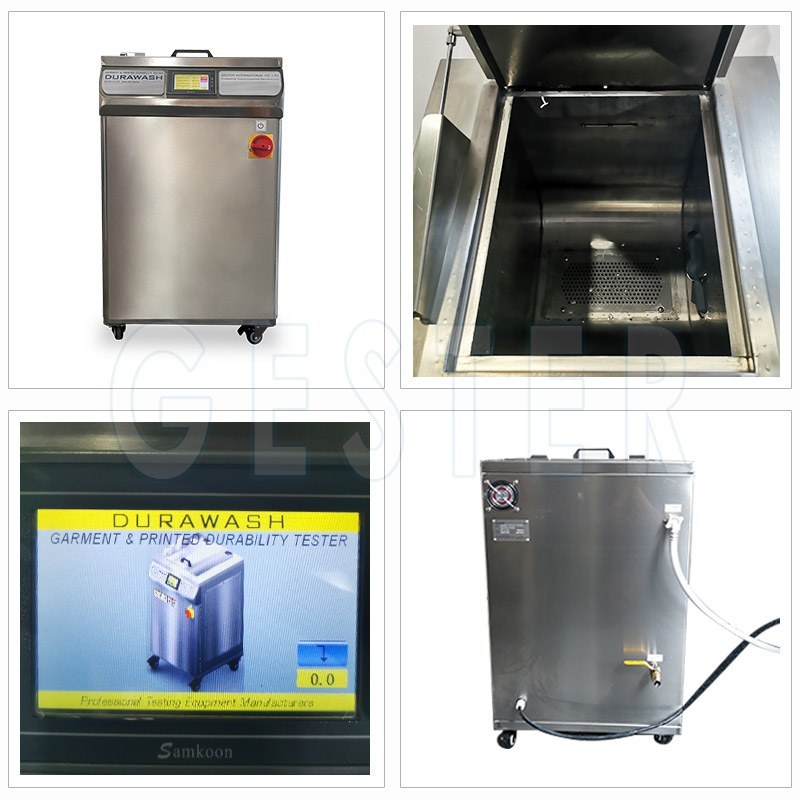
A Washing Colour Fastness Tester supports quality-control work where garments and printed fabrics need to be evaluated under a controlled washing process. In fashion and textile operations, appearance and durability must be considered together. A material may look suitable before washing but require further assessment after exposure to a defined wash cycle.
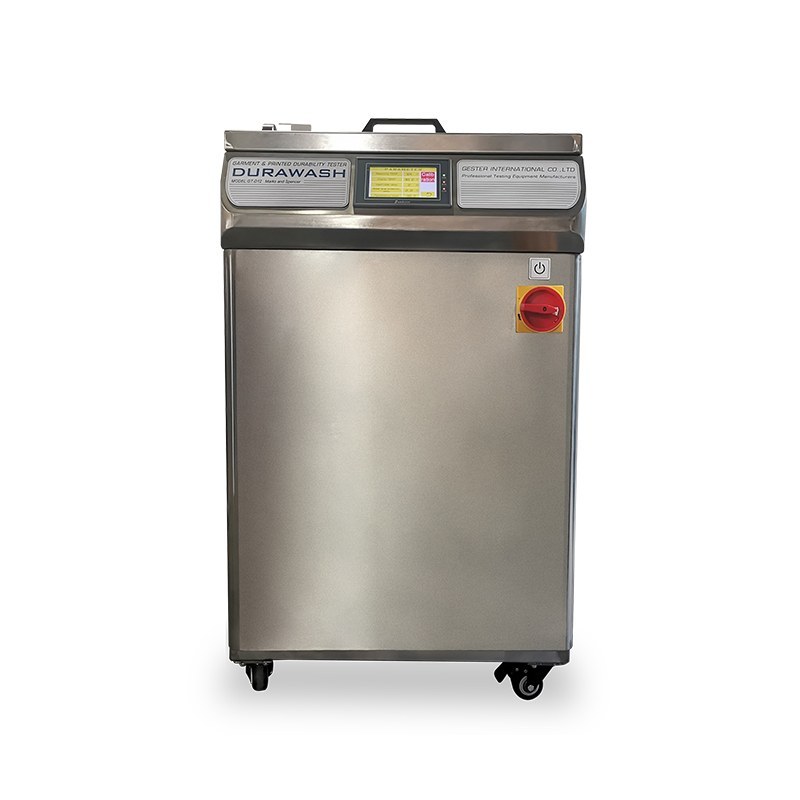
The Durawash Garment & Printed Durability Tester is presented as equipment for garment and fabric durability testing. Its process-control approach is intended to help users carry out consistent test procedures, making it useful when comparing samples, reviewing product development choices, or supporting routine quality evaluations.
Why controlled wash testing matters
Wash-related evaluation is relevant to garments, fabrics, and printed surfaces because a washing process can affect the condition of a sample. A defined test setup gives a laboratory or quality team a repeatable way to examine samples after a selected cycle rather than relying only on informal washing observations.
For textile businesses, repeatability is especially important. When the water-fill setting, temperature, test duration, and operating sequence are managed in the same way, teams can establish a clearer basis for comparing one specimen with another. This can support internal decisions throughout material selection, product development, and quality assurance.
The supplied product information associates the Durawash Garment & Printed Durability Tester with Marks and Spencer Fabric Durability (C15) and Print Durability (P5) testing requirements. Test settings should always be selected according to the applicable procedure and the organization’s own testing requirements.
Role of the Washing Colour Fastness Tester
The Washing Colour Fastness Tester is described as a solution for evaluating garment and fabric longevity through a controlled washing operation. Its process control system is a central part of this role, helping the operator set and run the relevant conditions for a test.
Rather than treating durability as a single visual judgement, a controlled workflow separates the process into manageable stages: preparing the equipment, adding water and the required washing solution, selecting test parameters, introducing the specimen at the appropriate point, and removing it when the cycle has ended. This structure can make the test easier to repeat across multiple samples.
The interface includes settings related to water injection time, water-level protection delay, and temperature range. The supplied instructions also identify a temperature calibration function. Calibration should not be adjusted without confirmation from the manufacturer, as stated in the operating guidance.
General wash-test workflow
The following overview reflects the supplied operating sequence and should be used alongside the applicable test method and equipment instructions.
- Connect the inlet pipe and ensure that the drain valve is closed.
- Switch on the equipment and add water. The water-fill amount may be managed through the water-injection-time setting, while manual control may also be available.
- Add the washing solution required for the experiment, then close the lid.
- Open the test interface and set the temperature and test duration required by the selected procedure. The source procedure illustrates settings of 50 °C and 2 minutes, while also stating that settings depend on the standard requirement.
- Return to the test interface and use the relevant controls to begin operation and heating.
- Once the selected temperature is reached, stop the equipment, open the cover, and place the specimen inside.
- Close the cover and start the programmed running stage.
- When the set time is reached, the machine stops automatically. The sample can then be removed for the next test operation or assessment stage.
Considerations for quality-control teams
A useful test record should identify the sample, the washing solution used, the chosen temperature, water-fill approach, duration, and the procedure followed. Recording these details helps preserve the context needed when results are reviewed later or when the same evaluation must be repeated.
Teams should also distinguish between operating parameters and acceptance criteria. The tester helps carry out a controlled wash process, but the applicable test method and the organization’s quality requirements determine how the resulting sample condition is assessed.
By combining controlled settings with a defined workflow, the Washing Colour Fastness Tester can support a more systematic approach to garment and printed-fabric durability testing. This makes it a relevant tool for textile quality-control activities focused on consistent evaluation and documented processes.