That is why laboratory vibration tests do not merely simulate vibration but also aim to identify the most critical frequency ranges before the product is released to the market.
How is the resonant frequency formed?
Every object possesses a natural frequency of vibration, determined by its mass, stiffness, shape, and the way its components are interconnected.
External vibration sources continuously transfer energy to the product. Across most of the frequency range, this generates only minor oscillations with negligible impact on the structure. The situation changes, however, when the excitation frequency matches the natural frequency. Instead of dissipating, energy accumulates with each cycle, causing the vibration amplitude to rise rapidly. Within a short time, the stress at vulnerable points begins to exceed the material's load-bearing capacity.
This phenomenon is called resonance.
Why is just a very narrow frequency band enough to damage the product?
Many people assume that a product will only fail if the vibration is sufficiently intense. In reality, the acceleration level is not the sole factor determining durability.
An electronic circuit board might withstand hours of testing at 20 Hz or 80 Hz, yet suffer cracked component leads when the frequency sweeps to around 46 Hz. Similarly, a plastic housing assembly may remain stable across most of the frequency range but begin to vibrate violently when the excitation hits the structure's own resonant frequency.
This occurs because each vibration cycle continuously adds energy to the specific point undergoing the most intense oscillation. This cumulative process causes the vibration amplitude to increase manifold beyond normal levels. The structure does not fail during the initial cycle; instead, it undergoes progressive fatigue over time until cracks appear or joints break apart.
This explains why many defects only surface during laboratory testing, even after the product has passed standard inspections.
Even a very small change is enough to shift the resonant frequency
Factors such as plastic housing thickness, screw locations, material composition, metal bar length, or the addition of a stiffening rib can all alter the natural vibration frequency of the entire structure.
Even two nearly identical versions may exhibit resonance across completely different frequency ranges. Consequently, experience and simulations serve only as references; to determine exactly how the product responds, a physical sample must be subjected to a vibration test system to sweep the entire frequency range.
A frequency sweep test is not intended to damage the product but rather to identify resonance zones and evaluate the design's stability.
During the sweep, the system gradually increases the frequency at a preset rate while monitoring the sample's response. A sudden spike in vibration amplitude signals the moment for engineers to conduct a deeper analysis of the structure, screw locations, weld points, or potential reinforcement needs.
This information is typically used to optimize the design before the product undergoes other durability tests, such as random vibration testing or vibration testing in accordance with IEC 60068-2-6.
Which vibration testing system is commonly used to determine the resonant frequency?
Stable frequency sweeping capability directly determines the quality of the test.
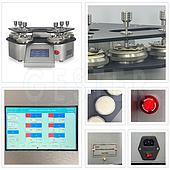
The ASLI ES-10, ASLI ES-20, and ASLI ES-30 electrodynamic vibration test systems are widely used by R&D laboratories, testing centers, and manufacturing enterprises to conduct resonance sweep tests on electronic components, industrial equipment, consumer products, and engineered packaging.

These models enable continuous sweeping across a wide frequency range, record changes in vibration amplitude over time, and facilitate the accurate identification of resonance zones prior to mass production.
After determining the resonance
While resonance testing identifies the locations most susceptible to damage, actual shipping conditions involve a wide variety of vibration types.
Consequently, after identifying resonance zones, many companies conduct vibration tests simulating transport conditions following ISTA or ASTM standards to comprehensively evaluate the durability of both the product and its packaging.
To understand why testing protocols typically begin with vibration before proceeding to drop tests, you may wish to consult the article Should Cardboard Packaging Undergo Vibration Testing or Drop Testing First?
Although these two tests serve different purposes, they are frequently combined into a single quality assessment process prior to product shipment.
It is within that very narrow frequency range that stress accumulates most rapidly; this is often the cause of cracks, broken welds, or component failures in products that previously functioned perfectly.
Identifying resonance zones early allows engineers to adjust designs during the product development phase, thereby reducing the risk of shipping damage and minimizing warranty costs after the product reaches the market.