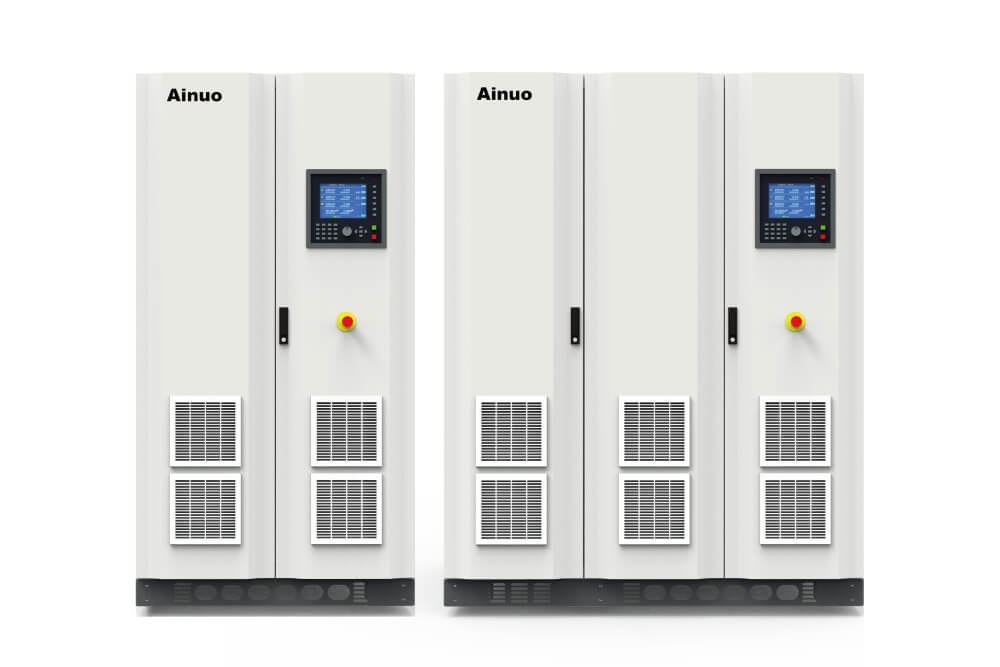
ANBGS is a regenerative grid simulator AC power supply intended for photovoltaic inverter testing. It is described as reproducing grid conditions such as voltage and frequency changes, harmonic interference, and three-phase voltage imbalance so that inverter behavior can be evaluated under controlled test conditions.
For organizations testing photovoltaic inverters, the supplied product information positions ANBGS as a tool for electrical performance, grid-adaptability, and protection-function test workflows. Its regenerative design is also intended to return excess test energy to the grid rather than dissipating it entirely as heat.
Summary: ANBGS simulates selected grid disturbances for photovoltaic inverter tests. It is specified to support voltage fluctuation, frequency deviation, harmonics, and three-phase imbalance settings. The supplied data also describes energy feedback above 95% and automated test-plan execution.
What is the ANBGS regenerative grid simulator used for?
The ANBGS regenerative grid simulator is used to create controlled AC grid conditions for testing photovoltaic inverters. Rather than relying on the conditions of an operating utility grid, a test team can set relevant disturbances and observe inverter ride-through behavior, protection response, and grid-adaptability performance.
The supplied information identifies applications involving electrical performance, grid adaptability, and protection functions. This can be useful where an inverter must be evaluated against changing voltage, frequency, harmonic content, or phase balance during development and test procedures.
Which grid conditions can ANBGS simulate for inverter testing?
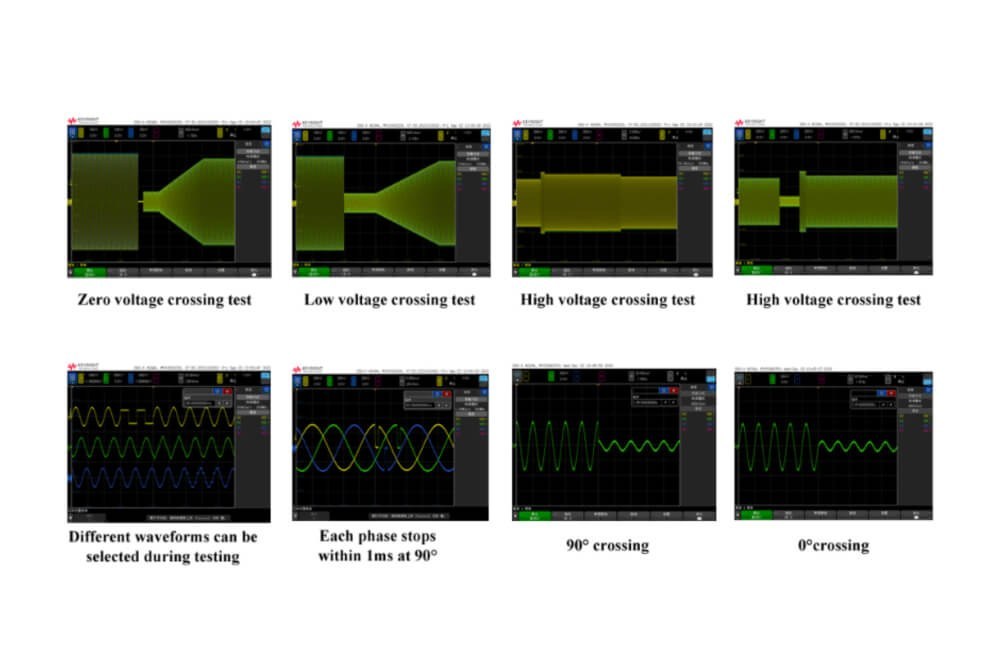
According to the supplied product data, ANBGS can simulate rated-voltage fluctuations of ±30%, frequency deviations of 2 Hz, and harmonics from the 2nd to the 50th order. It also supports continuous adjustment of three-phase voltage imbalance from 0 to 20%.
These settings address grid situations described in the source, including frequent voltage variation on long lines and harmonic interference or three-phase imbalance in industrially concentrated areas. The source further states that a voltage-drop simulation can be completed within 1 ms for low-voltage ride-through and protection testing.
| Test condition | Capability stated for ANBGS | Relevant inverter evaluation |
|---|---|---|
| Voltage variation | ±30% of rated voltage | Voltage tolerance and response during changing grid voltage |
| Frequency variation | 2 Hz deviation | Behavior under frequency changes |
| Harmonic interference | 2nd to 50th harmonics | Operation in harmonically distorted grid conditions |
| Three-phase imbalance | Continuously adjustable from 0 to 20% | Grid-adaptability testing under phase imbalance |
| Voltage drop | Simulation stated at 1 ms | Low-voltage ride-through and protection response |
How can ANBGS support photovoltaic inverter protection testing?
ANBGS is described as simulating fault conditions used to assess inverter protection functions. The supplied data specifically refers to over-voltage, under-voltage, over-frequency, and under-frequency protection checks.
In practical test planning, these simulated conditions can help a team verify whether an inverter responds as required by the applicable test procedure. The source associates this work with standards including IEC62109-1, IEC61727, IEC62116, and IEEE1547, but the applicable requirements and final compliance determination remain dependent on the full test method and assessment process.
Note: A simulated condition alone does not establish product compliance. Test configuration, measurement equipment, acceptance criteria, and the relevant standard version must be defined for each evaluation.
How does energy feedback change the test setup?
ANBGS uses energy feedback technology that is intended to feed excess electrical energy from testing back to the grid. The supplied data states an energy-feedback efficiency of more than 95%.
This approach differs from a setup that converts test energy primarily into heat. For repeated or higher-throughput inverter tests, returning energy may reduce the energy consumed by the test arrangement, subject to the actual test profile, operating conditions, and site configuration.
What automated testing functions are described for ANBGS?
The supplied information describes an intelligent testing platform with preset test plans. These plans can execute multiple test items, including electrical performance, grid adaptability, and protection-function tests, through an automated process.
The platform is also described as generating test reports in real time, comparing test data with defined standard requirements, and helping identify performance issues. Remote monitoring and cloud data storage are listed as additional functions for reviewing test progress and retrieving test data across a network.
What should be considered when selecting a regenerative grid simulator?
A regenerative grid simulator should be selected based on the disturbance types and test procedures required for the inverter under evaluation. For ANBGS, the supplied data highlights voltage and frequency variation, harmonic injection, phase-imbalance adjustment, fault simulation, energy feedback, and automated test handling as key areas to review.
It is also important to confirm that the planned measurement arrangement can support the required evaluation. The source mentions use with a high-precision power analyzer for conversion-efficiency measurement and states an error control figure of ±0.2% for that measurement arrangement.