Air shower
Controlling particles at the entry point is one of the most practical ways to protect cleanroom performance. When operators, garments, and small carried items move between uncontrolled and controlled areas, an air shower helps remove loose dust and contamination before they reach critical processes.
For facilities working in electronics, laboratory environments, pharmaceutical support areas, and other controlled production spaces, this category focuses on equipment designed to support cleaner personnel transfer. The right configuration depends on throughput, installation space, airflow performance, filtration stage, and how the air shower fits into the wider cleanroom workflow.
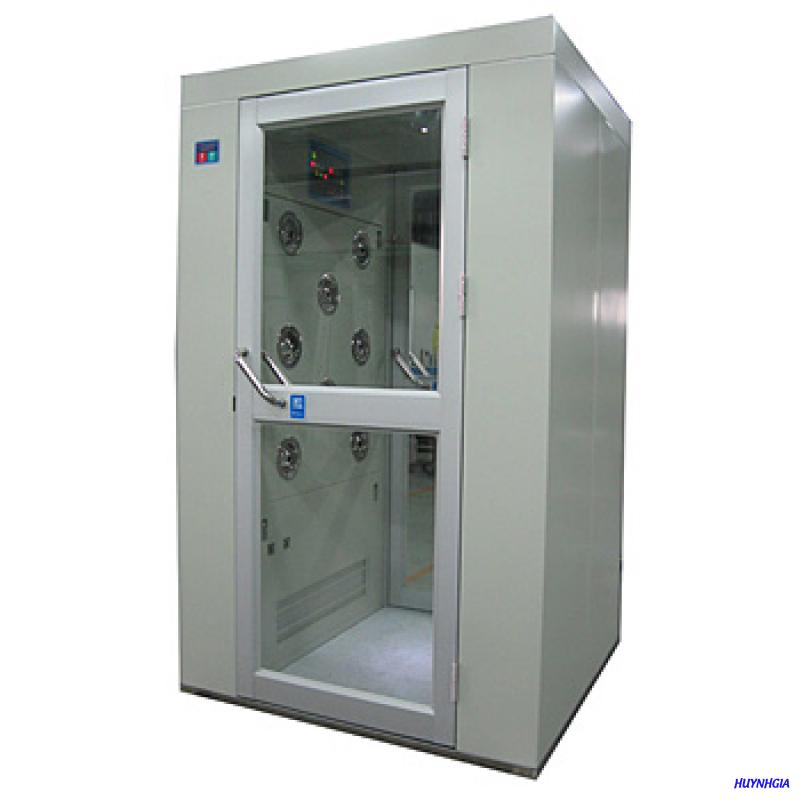
What an air shower does in a cleanroom entry sequence
An air shower is typically installed at the transition between a changing area or general production space and a cleaner zone. High-velocity air is directed through multiple nozzles to dislodge particles from garments and exposed surfaces, while filtered recirculating air helps keep contaminants from being carried further into the process area.
This type of equipment is often part of a broader contamination-control strategy rather than a standalone solution. In practice, it works best when combined with proper gowning procedures, suitable floor and surface cleaning tools, and upstream airflow control equipment such as a clean bench or a dedicated ventilation chamber where the application requires it.
Typical configurations available in this category
The products in this category illustrate several common format choices, from compact single-person units to larger pass-through systems for higher personnel flow. Smaller models are often selected for facilities with limited footprint or lower traffic, while multi-person chambers are more suitable when multiple operators need to pass during shift changes.
For example, the ESCO EAS-1A8 and ESCO EAS-1A9 models represent compact air shower formats for single-user cycles, while the ESCO EAS-2A8 and EAS-2A9 increase internal length for 2 to 3 persons per cycle. For higher throughput, the ESCO EAS-3A8 and EAS-3A9, as well as larger VAF configurations such as the V-AS3-02CT and V-AS3-03CT, show how nozzle count, chamber length, and personnel capacity scale with operational demand.
Key selection factors before choosing a model
The first point to evaluate is personnel flow. A site with occasional entry may only need a one-person chamber, but facilities with frequent gowning and shift turnover often benefit from a larger unit that reduces queuing and keeps transfer routines consistent. Internal dimensions, clear door opening, and cycle time all affect daily usability.
The second point is airflow and filtration. In this category, examples include HEPA-based systems and H14 filter configurations, with air velocity ranges suitable for particle removal from garments. Buyers should also consider nozzle arrangement, pre-filter design, and whether the unit uses recirculated filtered air in a way that aligns with the intended cleanliness level.
A third factor is power and installation compatibility. Some products are offered in 120-110V or 240-220V single-phase variants, while others use 380VAC supply. Structural materials, door interlock systems, lighting, and noise level can also influence suitability depending on the cleanroom layout and operator requirements.
Examples from leading manufacturers
This category includes solutions from ESCO, Airtech Thelong, Labconco, and VAF, each relevant to different cleanroom and controlled-environment use cases. ESCO air shower models cover several chamber lengths and electrical options, making them useful references for projects that need flexibility in occupancy and installation planning.
The Airtech Thelong ATV-FAS0101AMR1 Single-Sided Air Shower Chamber is an example of a stainless-steel-oriented construction with electric interlock and side nozzle arrangement. VAF models such as the V-AS3-01CT, V-AS3-02CT, and V-AS3-03CT highlight a practical progression from single-person to higher-capacity personnel flow, while maintaining the familiar cleanroom air shower concept.
Although this category centers on air showers, some environments may also compare them with containment-focused equipment. For powder handling or localized operator protection, a product such as the Labconco 3963621 XPert Bulk Powder Enclosure belongs to a different application class and may be more closely related to biological safety cabinets or other controlled airflow enclosures, depending on the process objective.
How to match air shower size to facility demand
A compact chamber is often enough when the main objective is controlled entry for one operator at a time. In that case, units with one-person capacity and shorter internal depth can simplify installation while still providing strong airflow through multiple nozzles and a short preset shower cycle.
Medium and large chambers become more attractive when several operators need to pass in sequence. Multi-person systems can improve throughput and reduce bottlenecks at the cleanroom entrance, especially when personnel flow per minute is a practical design constraint. This is where differences in internal work area, nozzle count, and blower capacity start to matter more than just external footprint.
If the cleanroom protocol includes regular garment care and surface maintenance, it also makes sense to look at supporting consumables such as dustcloth and mop products. These do not replace an air shower, but they help maintain the surrounding environment and reduce the particle load presented at the entry stage.
Important construction and operation details
Beyond airflow figures, buyers should review construction materials and access design. Powder-coated steel, stainless steel sections, tempered glass doors, and antimicrobial finishes can all affect durability, cleanability, and long-term suitability in controlled environments. Door layout and interlock behavior are especially important for maintaining one-way transfer discipline.
It is also worth checking practical operating details such as lighting, noise level, air shower duration, and filter replacement accessibility. These factors may seem secondary during specification, but they directly affect operator acceptance and maintenance planning over time. A unit that fits the process technically but is cumbersome to operate can still create workflow problems.
When an air shower is the right choice
An air shower is most useful when the main risk is particle carry-in by personnel at a controlled entry point. It supports cleaner transition into production or laboratory spaces, especially where gowning compliance and repeatable entry procedures are already part of the site standard.
If the application is instead focused on localized clean work, product protection at an open workstation, or source capture of powders and fumes, another category may be a better fit. In those cases, comparing the air shower with clean benches, ventilation chambers, or containment enclosures can help narrow the right equipment path.
Choosing with a process view in mind
The most effective selection usually comes from looking beyond chamber size alone. Entry frequency, available installation space, utility requirements, filtration expectations, and the surrounding cleanroom workflow should all be considered together. That approach makes it easier to choose a model that supports daily operation rather than simply matching a headline dimension.
This air shower category brings together compact and larger-capacity options from recognized manufacturers, giving buyers a practical starting point for cleanroom entry control. If you are comparing configurations, focus on occupancy, airflow design, filter class, electrical compatibility, and how the unit integrates with the rest of your contamination-control system.
Get exclusive volume discounts, bulk pricing updates, and new product alerts delivered directly to your inbox.
By subscribing, you agree to our Terms of Service and Privacy Policy.
Direct access to our certified experts