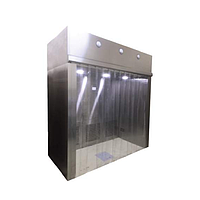
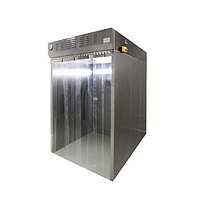
Ventilation chamber
When handling powders, nanoparticles, light chemical vapors, or other fine particulates, containment quality directly affects operator safety, sample integrity, and overall lab cleanliness. A well-matched ventilation chamber helps create a controlled working zone where airborne contaminants can be captured and filtered before they spread into the surrounding environment.
On this page, buyers can explore ventilation chamber solutions suited to cleanroom, laboratory, and technical workstation use. The available range includes compact and larger-format enclosures with built-in blower systems, ULPA filtration, and selected configurations with integrated ionization for applications where static control also matters.
Where ventilation chambers fit in controlled work environments
A ventilation chamber is commonly used when a process needs localized airflow and particulate containment without turning the entire room into the primary line of defense. In practice, these enclosures are often selected for weighing, powder transfer, sample preparation, electronics-related work, and other procedures where airborne release must be minimized at the source.
Compared with broader room-level controls, a dedicated chamber gives the operator a more defined work area and more predictable airflow behavior. Depending on the process, users may also compare this category with a clean bench when product protection is the main concern, or with biological safety cabinets when biological containment is required.
Core design features found in this category
The products highlighted here emphasize built-in airflow management rather than dependence on a separate external blower. That makes installation planning more straightforward for many labs and controlled production areas, especially where users want a self-contained enclosure with consistent filtration performance.
Several listed models also use ULPA filtration, which is relevant in applications involving very fine airborne particles. Front-mounted lighting supports visibility at the work surface, while different enclosure widths make it easier to match available floor or bench space to the actual workflow instead of oversizing the station.
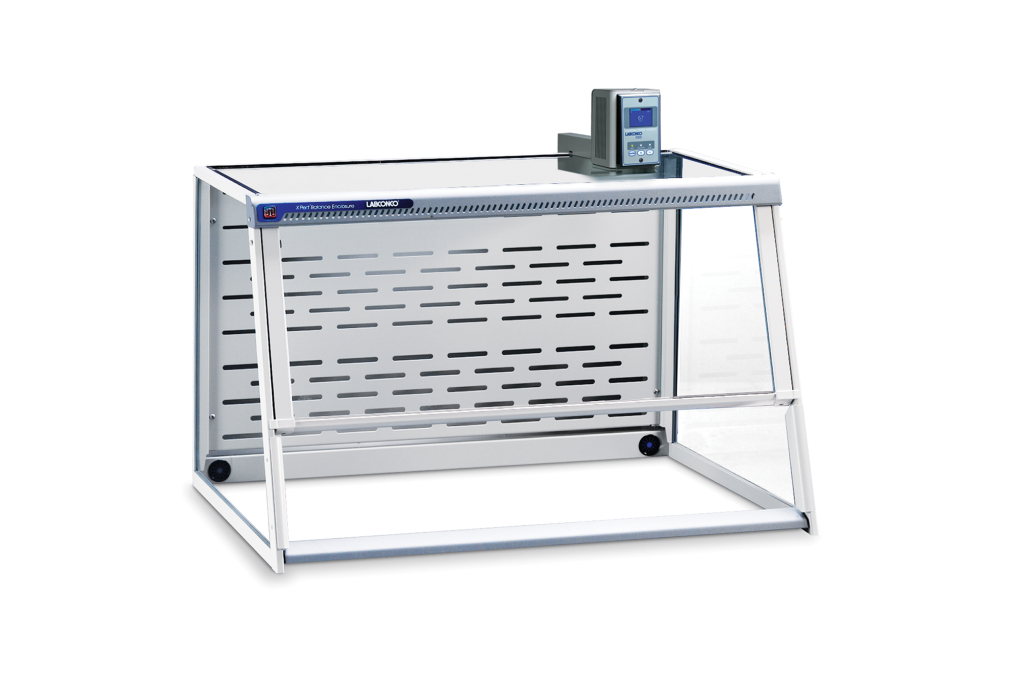
Labconco XPert Nano Enclosures as a representative solution
A major part of this category is represented by Labconco XPert Nano Enclosures. These systems are available in multiple widths, including 3', 4', 5', and 6' formats, giving buyers a practical range for small-scale handling up to wider shared work areas.
Examples include the Labconco 3887321 XPert Nano Enclosures for compact 3' applications, the Labconco 3887421 and 3887462 4' versions, and larger 5' and 6' options such as the 3887521, 3888562, 3887621, and 3888662. Some models are also offered in deeper configurations, which can be useful when the process requires more interior working depth or larger apparatus placement.
All of the featured units in this set are specified for 230 V, 50/60 Hz operation and include a built-in blower. That consistency can simplify procurement for international facilities that need standardized electrical compatibility across multiple stations.
When to choose a model with built-in ionizer
For applications involving static-sensitive materials, fine films, lightweight powders, or components that tend to attract airborne particles, a chamber with a built-in ionizer may be worth considering. Ionization can help reduce electrostatic charge accumulation, which in turn may support cleaner handling and more stable process conditions.
Within the listed range, ionizer-equipped examples include models such as the Labconco 3887362, 3887462, 3887562, 3887662, 3888562, and 3888662. Non-ionized versions remain relevant where static is not a primary concern and the main objective is airflow capture and filtered containment.
How to select the right size and depth
The most practical starting point is the usable work envelope. A 3' or 4' chamber may be sufficient for single-operator tasks, low-footprint instruments, or limited sample preparation steps. A 5' or 6' enclosure is often a better fit when handling larger trays, wider setups, multiple vessels, or processes that benefit from more lateral separation between materials and tools.
Depth matters as much as width. Standard-depth and deep versions serve different layouts, especially when users need extra reach space for fixtures, balances, or process tools. Choosing too shallow a chamber can restrict ergonomics, while choosing an oversized unit may consume valuable cleanroom or laboratory space without delivering a real process advantage.
- 3' to 4' models typically suit compact workflows and space-conscious installations.
- 5' to 6' models are often preferred for larger apparatus, wider staging areas, or collaborative use.
- Deep configurations can help when the process requires more front-to-back working space.
Compliance and environment considerations
Several featured products reference standards and conformity marks such as ANSI Z9.5, CAN/CSA C22.2, CE, ETL, Modified ASHRAE 110, and SEFA 1. For B2B buyers, these references can be useful during technical review, facility qualification, and internal safety documentation, particularly when a chamber will be used in regulated or audited environments.
Even so, model selection should still be based on the actual process risk: the type of material handled, expected particulate load, workspace layout, and maintenance planning. If upstream contamination control is also part of the project, related infrastructure such as an air shower may support cleaner personnel entry into controlled areas.
Ventilation chamber vs. other cleanroom airflow equipment
Not every controlled-air product serves the same purpose. A ventilation chamber is generally selected for localized containment and filtration around a task, while other equipment types may prioritize operator protection, product protection, or room transition control differently.
For example, if the goal is removing loose particles from garments before entering a controlled area, an air shower addresses a different stage of contamination control. If the application focuses on reducing debris and maintaining surfaces around the workspace, support items such as cleanroom dustcloth and mop products may also play a role alongside the enclosure itself.
Choosing with process fit in mind
The best ventilation chamber is usually the one that matches the real task rather than the broadest specification sheet. Buyers should consider material type, static sensitivity, required working width, available installation space, electrical compatibility, and whether deeper interior access is necessary.
In this category, the available Labconco XPert Nano Enclosure configurations provide a clear range of options for compact to larger work zones, with or without ionization. Reviewing those differences carefully can help narrow the selection to a chamber that supports both containment performance and day-to-day usability in the lab or clean controlled workspace.
Get exclusive volume discounts, bulk pricing updates, and new product alerts delivered directly to your inbox.
By subscribing, you agree to our Terms of Service and Privacy Policy.
Direct access to our certified experts