Calibrator
Accurate simulation and verification are essential when maintaining process loops, pressure instruments, temperature sensors, and field measurement systems. In industrial plants, service teams often need a practical way to source, measure, and compare signals directly at the point of use rather than removing instruments and sending them to a lab. That is where calibrator products become especially valuable.
This category brings together instruments used to check, adjust, and validate common process and test signals such as mA, voltage, resistance, temperature, and pressure. It is relevant for maintenance engineers, instrumentation technicians, utilities, OEMs, system integrators, and calibration service providers that need dependable tools for commissioning, troubleshooting, and routine verification work.
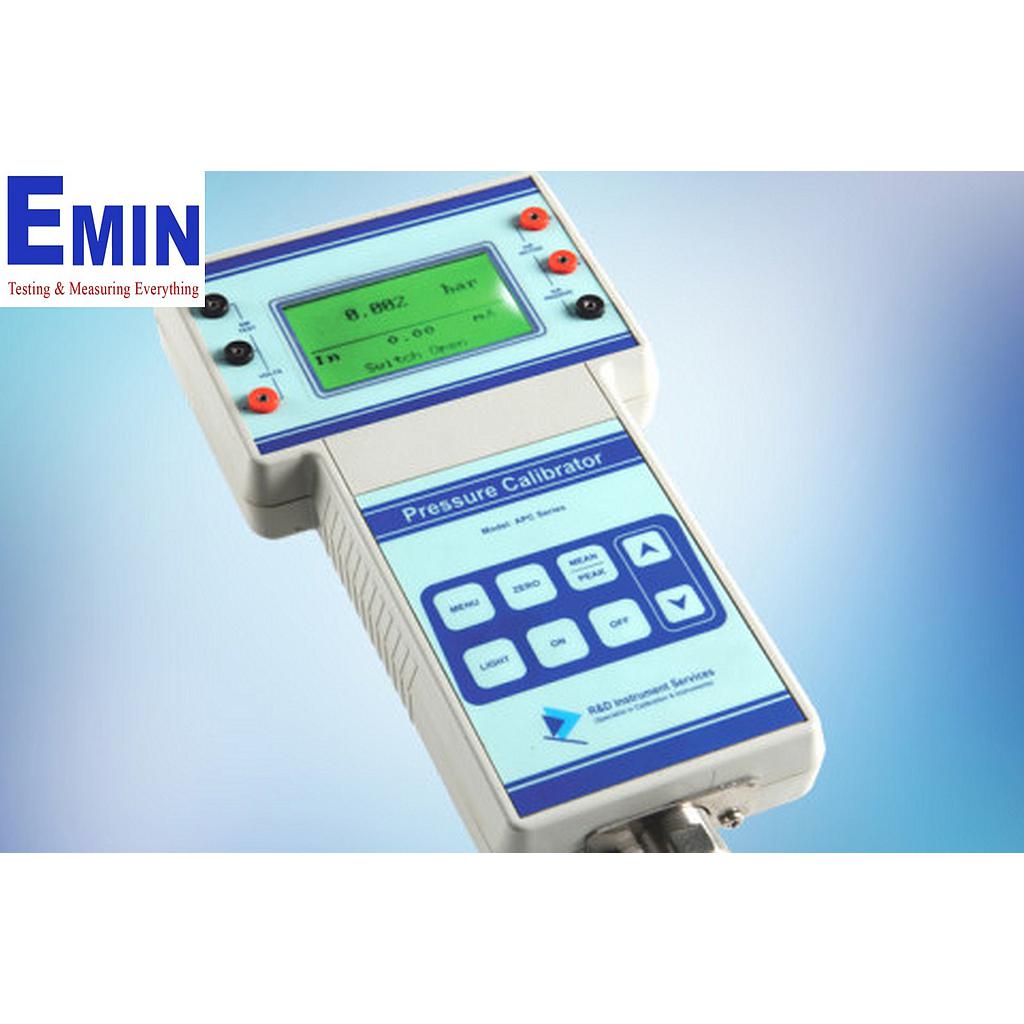
Where calibrators are typically used
Calibration work appears in many environments: factory automation panels, water treatment systems, HVAC installations, power facilities, pharmaceutical production, and general process industries. In these settings, technicians often need to confirm whether a transmitter, indicator, controller, or loop-powered device is responding correctly across its working range.
A calibrator can be used to inject a known signal into a device under test or to read and verify the output from a sensor or loop. This makes it easier to isolate faults, validate wiring, confirm scaling, and reduce downtime during startup or maintenance activities.
Main signal types covered in this category
The product range in this category supports several common calibration tasks. Some models focus on process signal calibration for mA and voltage loops, while others are designed for temperature work with thermocouples and RTDs, or for pressure generation and verification using dedicated pumps and gauges.
Typical applications include 4-20 mA loop simulation, DC voltage sourcing and measurement, resistance checking, RTD and thermocouple verification, and pressure test setup. There are also supporting devices such as resistance decade boxes, which are useful when a stable reference resistance is needed during testing or simulation.
- Loop and electrical calibration for transmitters, indicators, and control systems
- Temperature calibration for thermocouple and RTD-based instruments
- Pressure testing support using pneumatic or hydraulic test kits
- Reference components for resistance-based checking and setup
Representative products for field and bench work
Several products in this category illustrate the range of tasks engineers may need to handle. For combined measurement and loop simulation in one handheld unit, the FLUKE-787B Process Meter is an example of a tool intended for electrical troubleshooting and basic process loop work in the field.
For users who need dedicated loop capability, the FLUKE-715 Volt/mA Loop Calibrator is suited to sourcing and measuring voltage and current in control circuits. When temperature instruments are the focus, the FLUKE-724/APAC/EMEA Temperature Calibrator, FLUKE-714B/EN Thermocouple Calibrator, and FLUKE-712B/EN RTD Calibrator represent different approaches depending on whether the job involves thermocouples, RTDs, or mixed temperature signals.
Pressure-related verification is represented by the FLUKE FLK-700PTPK/APAC Pneumatic Test Pressure Kit and FLUKE FLK-700HTPK2/APAC Hydraulic Test Pressure Kit, which support pressure generation for testing connected devices. For resistance simulation, the Chauvin Arnoux BR07 Resistance Decade Box is a practical reference tool within a calibration workflow.
Choosing the right calibrator for your application
The best fit depends less on the product name and more on the signals you need to work with every day. If your tasks mainly involve transmitters, valve positioners, PLC analog I/O, or loop-powered devices, prioritize a unit that can source, simulate, and measure mA and voltage. For service teams working across multiple instrument types, a multifunction calibrator can reduce the need to carry several separate tools.
For temperature applications, selection should start with the sensor type. RTD calibration and thermocouple calibration require different signal handling, connector considerations, and supported sensor families. If pressure devices are involved, you may need a kit that combines a pump with a compatible gauge or module to create a complete test setup.
It is also worth considering working range, portability, display readability, and whether the instrument supports field-friendly functions such as loop power, step output, or ramp output. These features can save time during valve checks, control response testing, and signal tracing.
Manufacturer coverage and ecosystem considerations
This category includes products from recognized measurement and instrumentation brands such as FLUKE and Chauvin Arnoux, along with broader manufacturer coverage including Dwyer, Emerson, Fluke (Calibration), HIOKI, Mahr, MITUTOYO, OMEGA, and TESTO. In practice, brand selection often depends on the calibration workflow, required signal types, and whether the user needs a compact field tool or a more comprehensive test platform.
For many buyers, compatibility within an existing instrument ecosystem matters just as much as the basic measurement function. A technician maintaining pressure devices may prefer a setup designed to work with matching gauges or modules, while a process maintenance team may focus on standardized handheld tools for everyday loop checks across multiple sites.
Typical buying criteria for B2B users
Industrial buyers usually compare calibrators by application fit rather than by headline specifications alone. A maintenance department may need rugged handheld tools for site work, while a service provider may prioritize versatility across many customer jobs. In both cases, ease of use, traceability support, and repeatable performance are more important than having features that will never be used.
Common evaluation points include:
- Whether the instrument can measure, source, or simulate the required signal
- Support for mA loops, voltage, resistance, RTDs, thermocouples, or pressure depending on the task
- Suitability for portable field work versus workshop or lab-style use
- Accessory availability, including leads, clips, hoses, adapters, or carrying cases
- Fit with current maintenance procedures and calibration documentation practices
Why calibrators matter in maintenance and quality control
When signal accuracy drifts, the impact can appear in product quality, process stability, energy consumption, or safety-related performance. A calibrator helps teams verify instrument behavior against a known reference, making it easier to catch issues before they create larger operational problems.
In preventive maintenance programs, these tools support routine inspection and confidence in field instrumentation. During commissioning, they help confirm that sensors, transmitters, and receiving devices are scaled correctly and responding as expected. For troubleshooting, they provide a direct way to determine whether the fault is in the instrument, the loop, or the control side.
Find the right solution for your calibration workflow
This calibrator category is designed for users who need practical tools for signal verification, simulation, and instrument testing across industrial and technical environments. Whether the requirement is a compact loop calibrator, a temperature-specific handheld unit, a multifunction process calibrator, or a pressure test kit, the key is matching the device to the signal type and service scenario.
If you are comparing options, focus on the real tasks your team performs most often: loop checks, temperature sensor verification, pressure testing, or mixed process maintenance. A well-matched calibrator improves troubleshooting speed, supports more reliable measurements, and helps maintain confidence in the instruments that keep production running.
Get exclusive volume discounts, bulk pricing updates, and new product alerts delivered directly to your inbox.
By subscribing, you agree to our Terms of Service and Privacy Policy.
Direct access to our certified experts