Resistors
Precision resistance elements play an important role in calibration, circuit simulation, testing, and controlled signal conditioning. In many technical environments, the requirement is not simply to add resistance to a circuit, but to choose the right format, tolerance behavior, mounting style, and power handling for the job. This is where a focused Resistors category becomes useful for engineers, maintenance teams, laboratories, and industrial buyers who need components and resistance tools suited to practical electrical work.

Where this resistor category fits in technical applications
This category brings together resistor solutions used across both electronics design and measurement tasks. Depending on the application, the need may range from a manually adjustable resistance reference for bench work to compact resistor networks for PCB assembly, or higher-power parts for load and control functions.
For users working across related passive components, it can also be helpful to compare adjacent product groups such as capacitor solutions and inductor options. That broader view is often useful when designing, repairing, or calibrating analog and mixed-signal systems.
Typical resistor formats available for different needs
Not all resistor products serve the same purpose, even when their electrical role appears similar. Some are intended for laboratory adjustment and calibration, while others are designed for dense board-level integration or for handling elevated power dissipation in industrial equipment.
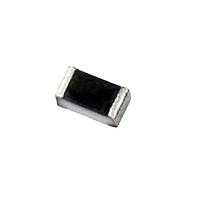
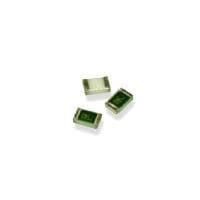
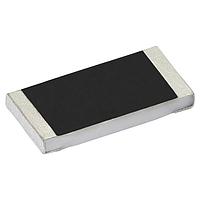
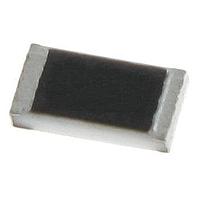
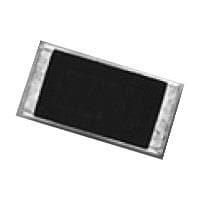
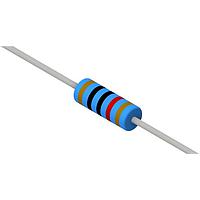
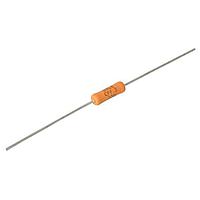
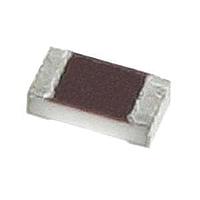
Within this category, examples from Bourns illustrate several common formats. These include thick film arrays in compact SMD packages, thin film resistor networks for improved matching characteristics, SIP and DIP network styles for through-hole assembly, and flange-mount power resistors intended for more demanding thermal conditions. For test and setup work, the Chauvin Arnoux BR07 resistance decade box offers a different kind of value by providing selectable resistance on the bench rather than permanent installation in a circuit.
Examples of products and how they are used
The Chauvin Arnoux BR07 Resistance Decade Box is a good example of a resistor product used in troubleshooting, training, calibration support, and simulation of circuit conditions. Instead of soldering fixed values into a prototype, a decade box allows technicians to dial in a resistance value quickly and observe circuit behavior before selecting a final component.
On the PCB side, parts such as the Bourns CAY10 series represent resistor arrays that help save board space and simplify placement where multiple similar resistive elements are required. Thin film network parts such as the Bourns 4116T-1 series are often selected when ratio matching, stability, or tighter control matters more than using multiple discrete components. Higher-power options like the Bourns CHF9838CBF12R5R address applications where heat dissipation and mechanical mounting are more critical than compact size alone.
How to choose the right resistor for your design or maintenance task
A practical selection process usually starts with the operating requirement rather than the part name. Buyers should first consider the target resistance value and allowable deviation, then review the expected power rating, mounting method, package style, and the environment in which the resistor will operate. For production electronics, package compatibility and assembly process are often decisive. For service and calibration work, ease of adjustment and repeatability may be more important.
It is also worth paying attention to film technology and network construction. Thick film parts are widely used for general-purpose applications and cost-efficient integration, while thin film networks are often chosen where tighter tolerance and improved temperature behavior are beneficial. When multiple channels must behave consistently, a matched network can be more suitable than several independent resistors sourced and installed separately.
Why resistor networks and arrays matter in modern assemblies
As boards become denser and more functionally integrated, resistor networks and arrays can reduce component count, streamline routing, and improve assembly efficiency. They are particularly useful in pull-up or pull-down groups, bus termination arrangements, signal conditioning paths, and applications where repeated resistance values appear across multiple channels.
Examples in this category such as the Bourns 4610X series, 2QSP16-TJ1-100LF, and CAY10 variants show how manufacturers address different installation preferences, from SIP and DIP through-hole formats to surface-mount packages. This gives design teams flexibility when supporting legacy hardware, prototyping mixed technologies, or updating products for automated assembly.
Resistor selection in calibration, repair, and industrial support
In calibration and maintenance contexts, resistor choice affects more than circuit continuity. Stability, repeatability, and predictable behavior over time are often central to whether a test setup produces meaningful results. A decade box or well-specified resistance network can support diagnostics, substitution testing, and comparative measurement workflows with less trial-and-error.
For teams sourcing across a wider ecosystem, it may also be useful to review the broader resistor range alongside related precision passive components. In industrial purchasing, this helps standardize sourcing for lab use, field service kits, and routine electronics repair while keeping selection aligned with application requirements.
Manufacturer context and sourcing considerations
Several recognized manufacturers appear in this category context, but the most relevant examples here are Chauvin Arnoux for bench-oriented resistance tools and Bourns for integrated resistor components used in electronic assemblies. Their presence highlights the mixed nature of the category: it is relevant not only to PCB designers, but also to technicians and engineers working in test, adjustment, and system support.
When evaluating options, it is generally better to focus on application fit than on brand name alone. Package type, tolerance class, thermal behavior, and intended use in the overall system will usually have a greater impact on performance and maintainability than a simple comparison of nominal resistance values.
Final thoughts
This resistor category supports a wide range of technical use cases, from circuit integration and signal conditioning to bench testing and calibration support. Whether the need is a compact array for board-level design, a matched network for more controlled channel behavior, or a resistance decade box for troubleshooting and setup, the right choice depends on how the resistor will function in the real application.
By comparing format, electrical behavior, mounting style, and use environment, buyers can narrow the selection more effectively and avoid over-specifying or under-specifying a part. A well-chosen resistor solution contributes to reliable measurement, stable circuit operation, and smoother maintenance over the life of the equipment.
Get exclusive volume discounts, bulk pricing updates, and new product alerts delivered directly to your inbox.
By subscribing, you agree to our Terms of Service and Privacy Policy.
Direct access to our certified experts