Circuit Breakers & Accessories
Reliable circuit protection is fundamental in control panels, power distribution assemblies, telecom equipment, industrial machines, and embedded electronic systems. When a fault current, overload, or short-circuit condition occurs, the right protective device helps isolate the problem quickly, reduce downstream damage, and support safer maintenance. This is why buyers often evaluate not only the breaker itself, but also the broader ecosystem of mounting style, trip behavior, current range, and installation context.
Circuit Breakers & Accessories covers a wide span of protection needs, from compact board- or panel-level devices for low-current circuits to higher-current molded case solutions used in industrial power applications. For engineers, maintenance teams, and procurement specialists, the key is matching the protection approach to the electrical load, fault profile, and operating environment rather than choosing by current rating alone.
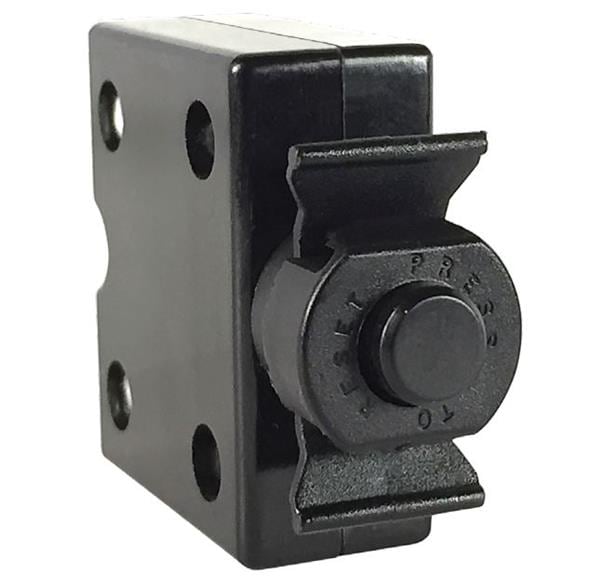
Where this category fits in real-world electrical systems
In practice, circuit breakers are used to interrupt abnormal current conditions and help maintain system continuity by limiting the impact of a fault to a smaller section of the installation. Depending on the application, that may mean protecting a DC control branch, a telecom line, an instrumentation loop, or a main AC feeder inside a switchboard.
Accessories are equally important because they support integration, operation, and maintenance. In many projects, buyers start with the breaker body but quickly need compatible items for mounting, connection, signaling, or replacement. If your requirement is more narrowly focused, you can also explore the broader circuit protection breaker range available for different electrical architectures.
Common breaker types and selection logic
The right product type depends on how the protected circuit behaves under normal and fault conditions. Thermal and thermal-magnetic designs are commonly considered when overload behavior and branch protection are the main concerns, while higher-capacity industrial breakers are often selected for distribution equipment where interrupting capability and coordination matter more.
Mounting method is also a practical selection factor. Some products in this category are intended for surface mount, through-hole, or panel-related installation, which can be relevant for compact assemblies or OEM equipment. For example, the Amphenol MUC-20PFFR-JS8C01 and Amphenol 12S-03PMMR-SF7001 illustrate how mounting style can influence integration choices in tightly designed electrical or electronic enclosures.
Examples across low-current and power-distribution applications
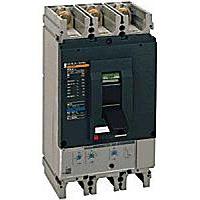
This category includes products that reflect very different protection scenarios. On the industrial power side, the ABB XT4N 250 TMA 250-2500 3p F F MCCB is representative of a molded case circuit breaker used where higher current handling, multi-pole protection, and distribution-level reliability are relevant. With a 3-pole configuration and a rated current of 250 A, it fits the kind of environment where feeder and panel protection must be assessed alongside operating voltage and short-circuit behavior.
At the other end of the spectrum, compact devices such as the ams OSRAM ESX10-TB-101-DC24V-0.5A and related variants show how breaker selection can be much more granular in low-voltage DC systems. These are the kinds of parts buyers may consider for control circuits, electronic subsystems, or dedicated protected branches where space, reset behavior, and nominal load current are central to the design.
Why accessories matter beyond the breaker itself
Breakers rarely operate in isolation inside a finished system. The surrounding hardware and compatible accessories influence serviceability, replacement time, and the ability to build a clean protection architecture. In OEM and panel-building environments, this can affect both initial assembly efficiency and long-term maintenance planning.
That is why many buyers evaluate this category as part of a wider protection ecosystem rather than a single-component purchase. Connection interfaces, mounting compatibility, and enclosure constraints all shape what can be deployed successfully. If you are comparing standalone devices against complete protection setups, it can be helpful to review related options within Circuit Breakers & Accessories from a system-level perspective.
Manufacturer context and product families
Several recognized suppliers appear in this category, each with different strengths across industrial and electronic protection needs. Amphenol is represented here with breaker-related items that highlight integration and mounting considerations, while ams OSRAM appears with compact circuit breaker models suited to more specialized electrical branches. ABB stands out in the higher-power segment, where breaker selection often involves coordination with the overall distribution design.
Bourns adds another useful perspective through circuit protection components and support tools. For example, the Bourns TBU-KE050-500-WH is not a conventional panel breaker, but it reflects how protection strategy can extend into fast-acting electronic protection at the component level. This is especially relevant for designers balancing board-level protection with broader system-level fault isolation.
How to evaluate the right option for your application
A practical selection process starts with the protected load: AC or DC, nominal current, expected inrush, and fault characteristics. From there, it is important to confirm the required number of poles, installation method, available space, and whether the product will be used in a control cabinet, field equipment, telecom assembly, or power distribution panel. For higher-current solutions, electrical endurance, mechanical endurance, and insulation or impulse withstand ratings may become more significant.
It is also worth checking whether the product you are reviewing is the breaker itself, a protection-related accessory, or a supporting part within the circuit protection chain. Some items listed in broad B2B catalogs may sit adjacent to breakers in the same purchasing workflow, so technical teams should verify role, fit, and compatibility before standardizing a part number.
Buying considerations for OEM, maintenance, and MRO teams
For OEM buyers, consistency across projects usually matters as much as the device specification itself. Standardizing on a manageable set of breaker formats can simplify panel layouts, wiring practices, spare parts planning, and field service documentation. In maintenance and MRO environments, replacement speed and compatibility with the installed base often take priority over redesign flexibility.
Lead time, approved vendor lists, and documentation requirements also shape purchasing decisions in B2B workflows. A breaker that fits the electrical requirement but complicates stocking, installation, or maintenance may not be the most efficient choice over the life of the equipment. Reviewing the category with both engineering and procurement criteria in mind typically leads to better outcomes.
Finding a better fit for your protection architecture
Choosing among circuit breakers and related accessories is ultimately about aligning protection performance with the realities of the application. A compact low-current DC branch, a machine control panel, and a 3-phase distribution assembly each call for different design priorities, even though all fall under the same protection umbrella.
By comparing device type, mounting approach, electrical duty, and manufacturer ecosystem, buyers can narrow the range more effectively and avoid mismatches later in the project. Whether you are sourcing for a new design or replacing installed protection hardware, this category provides a practical starting point for building a more robust and maintainable electrical system.
Get exclusive volume discounts, bulk pricing updates, and new product alerts delivered directly to your inbox.
By subscribing, you agree to our Terms of Service and Privacy Policy.
Direct access to our certified experts