Circular Connectors
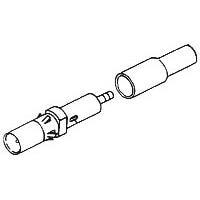
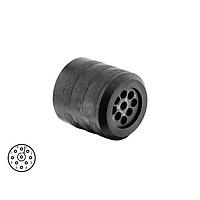
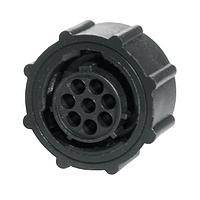
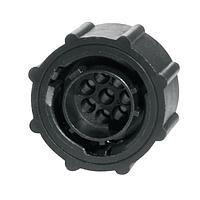
Reliable signal and power transmission often depends on a connector that can handle vibration, repeated mating cycles, and demanding installation environments without becoming the weak point in the system. In many industrial, transportation, and equipment-integration projects, Circular Connectors are selected for exactly that reason: they offer a compact interface, organized contact layouts, and a form factor that is well suited to cable-to-equipment connections.
This category brings together circular connector options used across a wide range of applications, from general equipment wiring to more rugged interconnect requirements. Whether the priority is panel-to-cable integration, field wiring, or building a complete harness strategy, understanding connector style, contact arrangement, and termination approach helps narrow the selection more efficiently.
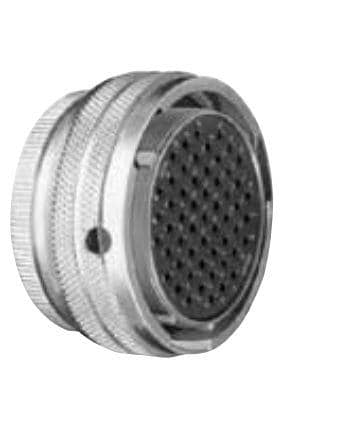
Why circular connectors remain a practical choice
The circular format is widely used because it simplifies connection geometry while supporting multiple contacts in a space-efficient design. Compared with some rectangular alternatives, a round shell can be easier to align during installation and can provide a familiar coupling style for applications where secure mating matters.
In real-world assemblies, circular connectors are often chosen when engineers need a balance of mechanical stability, manageable cable routing, and clear mating orientation. They are common in equipment that experiences movement, limited installation space, or service conditions where connectors may be disconnected and reconnected during maintenance.
Where these connectors are commonly used
Circular connectors appear in industrial machinery, transportation systems, control cabinets, test setups, and various embedded or electromechanical assemblies. They can be used for signal transmission, mixed signal-and-power layouts, or cable interfaces that need a more robust shell structure than lightweight board-level interconnects.
They are also relevant when building pre-terminated wiring systems and custom harnesses. If the project requires ready-made interconnect solutions rather than loose components, related options in cable assemblies may be worth reviewing alongside connector selection.
Typical configuration differences to consider
Not all circular connectors are intended for the same use case. Selection usually starts with the number of positions, contact gender, mounting style, and termination method. Within the products shown in this category, examples range from compact 2-position formats such as the Amphenol ACS06A16S-4PX-003-116 to higher-contact-count options like the Amphenol GTS01LCFZ32-13SW, which illustrates how circular interfaces can scale for more complex wiring needs.
Another important distinction is whether the connector is intended as a cable-mounted interface, a panel-mounted receptacle, or part of a broader interconnect family with compatible accessories and contact systems. For applications where the removable conductive element is a key consideration, it can also be helpful to review related connector contacts when planning maintenance or replacement strategies.
Amphenol options in this category
A significant portion of the featured products here comes from Amphenol, a widely specified manufacturer in the connector market. The listed range includes examples such as GTC06AF16-11S-B30-LC, JTG06A-22-21S(411), GTC030G20-7SY-LC, and 97-3108A16-11SX-417, reflecting different series and shell arrangements for varied connection requirements.
These part numbers are useful as reference points when comparing form factor, position count, and installation style within the category. Rather than choosing only by model family, buyers typically get better results by matching the connector to the application’s wiring density, mating conditions, and service environment first, then narrowing to the appropriate series.
How to choose the right circular connector
A practical selection process usually starts with the electrical and mechanical basics. Confirm how many circuits are required, whether the interface uses pin or socket contacts, and how the connector will terminate to the cable or equipment side. Shell size, coupling method, and space constraints should also be checked early, especially in tightly packaged systems.
It is equally important to think about the installation workflow. Some projects prioritize fast field replacement, while others focus on long-term fixed installation with minimal handling after assembly. When the connector must work as part of a larger equipment ecosystem, comparing adjacent interconnect formats such as keystone connectors or specialized alternatives can help confirm that circular is the most appropriate approach.
Integration within a broader connector system
Circular connectors rarely operate in isolation. They are usually part of a complete interconnection path that may include cable assemblies, backshell-related hardware, internal wiring, and mating counterparts on equipment. That broader view matters because connector performance in service depends not only on the mating interface but also on cable preparation, strain management, and correct contact selection.
For design teams standardizing across multiple devices, using a consistent connector family can simplify inventory control and service procedures. This is especially relevant in industrial and OEM environments where connectors must be sourced repeatedly for production builds, repairs, and line extensions.
What buyers often compare on category pages like this
On a sourcing page for circular connectors, most buyers are comparing a few practical factors rather than searching for a generic description. They may be looking for a specific Amphenol series, checking whether a connector is suitable for cable mounting, or narrowing choices by contact count and interface style. Models such as GTC00-28-7SY-025-LC, GTC00-28-7SY-025-B30, AIT2-28-84SC, and GTCL08AF32-64PW show how varied the available range can be even within one manufacturer.
That is why category-level browsing remains useful before moving to a product page. It helps identify the right family and compare naming patterns, while product-level details can then be used to confirm fit with the intended application.
Final considerations
Choosing the right circular connector is usually less about finding a single “universal” part and more about matching the connector format to the operating environment, wiring layout, and maintenance expectations of the equipment. A well-chosen connector supports easier integration, more consistent assembly work, and fewer surprises during installation.
If you are comparing options across different interconnect strategies, this category is a strong starting point for identifying suitable cable-mount, panel-interface, and multi-position solutions. From compact layouts to more heavy-duty circular formats, the available range can support both straightforward wiring tasks and more demanding equipment connections.
Get exclusive volume discounts, bulk pricing updates, and new product alerts delivered directly to your inbox.
By subscribing, you agree to our Terms of Service and Privacy Policy.
Direct access to our certified experts