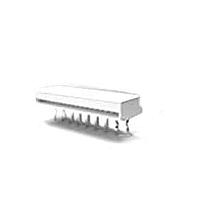
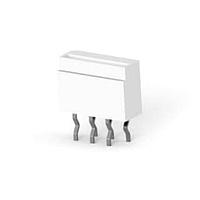
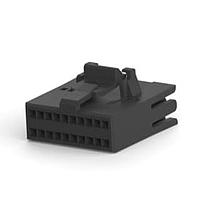
FFC & FPC Connectors
Compact electronics often depend on fine-pitch interconnects that save board space without sacrificing routing density. In these designs, FFC & FPC Connectors play a practical role by linking displays, control boards, sensors, cameras, and other compact modules through flexible cable assemblies. For engineers, buyers, and maintenance teams, choosing the right connector means balancing pitch, mounting style, locking method, and assembly constraints.
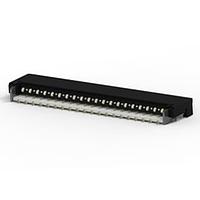
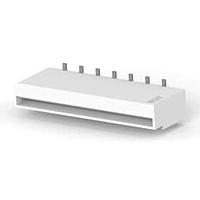
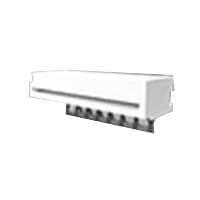
This category focuses on board-level connector solutions for flat flexible cable systems used in modern electronic equipment. Whether the requirement is a low-profile interface for dense assemblies or a more conventional right-angle connector for standard flexible cable routing, the selection typically depends on how the cable enters the connector, how often it will be handled, and how much mechanical retention is needed in the application.
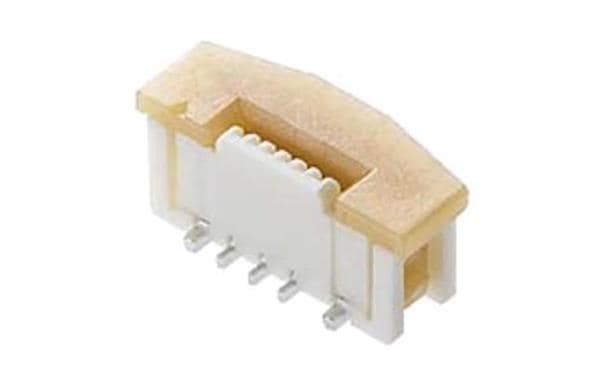
Where FFC and FPC connectors are commonly used
These connectors are widely used wherever a design needs a thin, lightweight interconnect between PCBs or between a PCB and a subassembly. Typical use cases include displays, printer mechanisms, compact industrial controls, embedded devices, operator panels, and other electronics where a round wire harness would consume too much space or complicate assembly.
In many systems, the connector is only one part of the cable interface. Matching the board connector with suitable FFC & FPC jumper cables helps ensure the right cable thickness, contact orientation, and insertion style for the full connection path. That relationship is especially important in serviceable products and space-constrained layouts.
Key connector characteristics that affect selection
One of the first parameters engineers review is pitch, because it influences both circuit density and manufacturing tolerance. Fine-pitch options can support highly compact devices, while larger pitch formats may be easier to handle during assembly and field replacement. The number of positions also matters, especially in signal-heavy applications such as display, touch, and control interfaces.
Another major factor is mounting and cable orientation. Surface-mount right-angle styles are common when cable routing needs to stay close to the PCB, while top-contact or bottom-contact configurations affect which side of the cable traces will mate correctly. Low-profile parts can help reduce enclosure height, but they also require careful alignment during installation.
Retention style is equally important. Many products in this category use ZIF designs with flip-lock or slide-lock actuators, making them suitable for delicate flexible circuits where reduced insertion force helps protect the cable. When repeated access is expected during service or production, the locking mechanism should be selected with usability and cable security in mind.
Examples from leading connector ranges
The product mix in this category includes compact solutions from manufacturers such as Hirose Electric, JAE Electronics, and Amphenol. For example, the Hirose FH19 series appears in several position counts such as FH19-5S-0.5SH(45), FH19-26S-0.5SH(45), FH19-32S-0.5SH(49), and FH19-50S-0.5SH variants, showing how a common connector family can support different circuit requirements while maintaining a similar form factor approach.
For applications demanding very compact geometry, the Hirose Electric FH43B-71S-0.2SHW(10) highlights the kind of ultra-fine-pitch interface often used in dense electronic assemblies. Other examples, such as the Hirose FH33-26S-0.5SH(99), illustrate low-profile FFC/FPC connector options with locking features suited to controlled cable insertion and board-level retention.
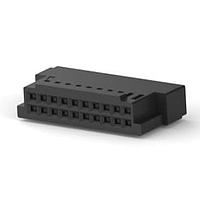
JAE Electronics also contributes representative solutions in this category, including IL-WX-14PB-HF-HD-S-B, IL-FPR-U33S-HF-N1, and IL-402-20S-S1L-SA. These examples show the range of available approaches, from compact fine-pitch board connectors to more standard right-angle socket formats. Amphenol is also represented by products such as the SFV26R-1STE1HLF, which is relevant when evaluating alternative connector families for similar flat cable integration tasks.
How to evaluate fit for your application
A good selection process usually starts with the cable itself. Confirm whether the design uses FFC or FPC, then verify the required pitch, cable thickness, contact orientation, and insertion direction. A mismatch in any of these basics can lead to assembly errors even when the connector appears mechanically similar.
Next, review the mechanical conditions around the connector. Limited vertical space may point toward a low-height connector, while tight routing near the PCB edge may favor a right-angle entry. If the equipment is subject to vibration, operator handling, or repeated maintenance, a more secure locking function can be more important than simply minimizing profile.
Electrical and material considerations should also be checked in context. Rated voltage, current capability, operating temperature range, and insulation materials matter most when they align with the environment and signal load of the final device. In practice, the right choice is the one that fits the cable, the PCB layout, and the service conditions together rather than optimizing only one specification.
Comparing connector families within the category
Not all FFC/FPC connectors solve the same problem. Some are intended for extremely fine-pitch, high-density electronics, while others are better suited to more accessible board layouts with simpler handling during production. Comparing families across insertion style, board height, contact position, and actuator design helps narrow the field faster than comparing part numbers alone.
If you are still evaluating broader options, it can be useful to browse the wider flat flexible connector range to understand how this category fits into the larger ecosystem. That broader view can help when a project may require both cable-side and board-side components or when alternate connector styles are under consideration.
Brand and sourcing considerations for B2B purchasing
For industrial and OEM procurement, consistency matters as much as connector geometry. Established manufacturers such as Hirose Electric, JAE Electronics, and Amphenol are often evaluated for portfolio depth, availability across multiple position counts, and fit with existing approved vendor lists. In design and purchasing workflows, this can simplify qualification and reduce sourcing friction across product variants.
It is also useful to consider whether a chosen series supports future design scaling. A connector family available in several position counts or related mechanical formats can make it easier to extend a platform without redesigning the cable interface from scratch. That is one reason engineers often start by reviewing proven series rather than selecting one-off parts in isolation.
Choosing the right connector with fewer revisions
Early verification of pitch, contact orientation, cable thickness, and locking style can prevent common integration issues later in the project. In many cases, the most time-consuming problems come not from electrical performance, but from installation details such as wrong-side contact alignment or insufficient retention after assembly.
This category is intended to support that selection process with a focused range of board-level flat cable connectors for compact electronic designs. If you are comparing options for a new build or replacement requirement, reviewing connector family style, cable compatibility, and service conditions together will usually lead to a more reliable shortlist and a smoother implementation path.
Get exclusive volume discounts, bulk pricing updates, and new product alerts delivered directly to your inbox.
By subscribing, you agree to our Terms of Service and Privacy Policy.
Direct access to our certified experts