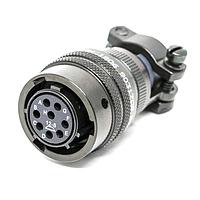
MIL Spec Circular Connectors
Reliable interconnection is a critical part of any harsh-environment electrical system, especially where vibration, moisture, dust, temperature variation, and repeated mating cycles can quickly expose the limits of general-purpose components. In those applications, MIL Spec Circular Connectors are widely selected for their robust mechanical design, secure coupling, and broad suitability across aerospace, defense, transportation, industrial, and mission-critical equipment.
This category is intended for engineers, buyers, and integrators looking for circular connector solutions built around military-style form factors and performance expectations. Whether the priority is signal integrity, power distribution, environmental resistance, or dependable field serviceability, these connector families help support stable electrical connections in demanding operating conditions.
Why circular connector formats remain important in demanding systems
The circular connector format is valued not only for its familiar shape, but for the practical advantages it brings to system design. A circular body distributes mechanical stress effectively, supports reliable shell-to-shell engagement, and allows multiple contacts to be arranged efficiently in compact footprints. This makes it well suited to equipment where installation space, cable routing, and connector durability all matter at the same time.
In military-style and ruggedized environments, connector selection is rarely about one parameter alone. Designers often need to balance contact density, shielding, sealing approach, mating security, and maintainability. Circular interfaces are commonly chosen because they can support that balance in a way that is easier to standardize across platforms, panels, cable assemblies, and field-replaceable subassemblies.
Typical applications for MIL Spec Circular Connectors
These connectors are commonly used in systems exposed to motion, shock, or challenging ambient conditions. Examples include vehicle electronics, avionics subsystems, portable communications equipment, industrial machinery, power and control cabinets, test platforms, and sensor or actuator interconnects. In many of these environments, the connector is expected to continue performing even when installation conditions are less than ideal.
They are also relevant where maintenance teams need clear mating orientation, durable shell construction, and repeatable connection quality over time. For OEM and MRO workflows, a rugged circular interface can simplify replacement planning and help reduce failures caused by loose mating, connector wear, or insufficient environmental protection.
Key selection factors when comparing connector options
Choosing the right part usually starts with the electrical and mechanical requirements of the application. Contact count, current path needs, available panel or cable space, mounting style, and expected mating frequency all influence the final choice. It is also important to consider whether the connector will carry low-level signals, mixed signal and power, or higher-current loads that demand different contact arrangements and materials.
Environmental and integration factors are just as important. Buyers often review sealing needs, cable exit constraints, shell size, locking method, and resistance to vibration or contamination before narrowing the shortlist. In assemblies that must interface with other military-style hardware, compatibility with existing system architecture may be a deciding factor as well.
Where application requirements extend beyond circular interfaces, related categories such as MIL spec rectangular connectors or MIL spec D-Sub connectors can also be useful points of comparison during design selection.
Manufacturer ecosystems and sourcing considerations
This category may include options from established connector suppliers such as Amphenol, along with products from related brands and specialist divisions where available. For many engineering teams, manufacturer choice is tied not only to connector performance, but also to documentation quality, family breadth, and continuity of supply across prototypes, qualification builds, and production volumes.
When sourcing for B2B projects, it is often helpful to review the broader ecosystem behind a connector line. Access to compatible accessories, cable-side and panel-side variants, and adjacent interconnect families can make future expansion easier. Brands such as AMP Connectors - TE Connectivity are frequently considered in this context because buyers may need consistency across multiple interconnect types within the same program.
How MIL-style circular connectors fit into a larger interconnect strategy
In complex equipment, connectors are rarely selected in isolation. A project may use circular connectors for rugged external interfaces, while reserving other formats for board-level, RF, or fiber links. Building a coherent interconnect strategy helps reduce integration risk and can improve serviceability over the full lifecycle of the equipment.
For example, systems that combine power, control, communications, and high-frequency paths may require different connector families for different functions. In those cases, it can be helpful to review adjacent categories such as MIL spec RF connectors when signal transmission requirements go beyond conventional electrical contacts. This broader view supports better architectural decisions than choosing each connector type independently.
What buyers and engineers usually evaluate before purchase
For procurement teams, the decision process often includes availability, configuration fit, and long-term maintainability. Engineers may focus more heavily on mating reliability, shell style, contact layout, and installation constraints, while purchasing teams may prioritize approved brands, lead time, and standardization across platforms. A good category structure helps both groups evaluate options from the same starting point.
It is also common to verify the intended use case early in the project: cable-to-cable, cable-to-panel, or equipment I/O; frequent servicing versus fixed installation; and whether the connector must support field assembly or prebuilt harness workflows. Clarifying those details upfront can save time and help avoid selecting a connector family that is technically compatible but operationally inefficient.
Finding the right fit for your application
The right connector choice depends on more than a single specification. In rugged systems, performance comes from the combination of contact arrangement, coupling security, and suitability for the real operating environment. That is why many teams evaluate circular connector options as part of a broader reliability and integration strategy rather than as a simple commodity purchase.
By comparing application demands, interface style, and supplier ecosystem, buyers can narrow down the most appropriate MIL-style circular solutions with greater confidence. If your project includes harsh-environment interconnect requirements, this category provides a practical starting point for identifying circular connector options aligned with industrial and mission-critical use cases.
Get exclusive volume discounts, bulk pricing updates, and new product alerts delivered directly to your inbox.
By subscribing, you agree to our Terms of Service and Privacy Policy.
Direct access to our certified experts