MIL Spec RF Connectors
Reliable signal transmission in demanding environments depends heavily on connector quality, mechanical stability, and consistency across the full RF path. In defense, aerospace, communications, test systems, and rugged industrial platforms, engineers often look for components built around recognized military-style formats to help simplify specification, maintenance, and long-term integration.
MIL Spec RF Connectors are used where electrical performance and physical durability both matter. This category brings together connector formats commonly used for coaxial interconnection, panel mounting, cable termination, and high-frequency signal routing, with options suited to applications ranging from general-purpose BNC links to higher-frequency SMA, TNC, 2.92 mm, and N-type interfaces.
Where these connectors fit in RF and rugged system design
In many electronic assemblies, the connector is not just a mechanical endpoint. It directly affects impedance control, return loss, insertion performance, shielding continuity, and serviceability. That becomes especially important in systems exposed to vibration, repeated mating cycles, wide temperature ranges, or field maintenance requirements.
Military-style RF interconnects are commonly selected for radios, radar-related subsystems, avionics, portable communications equipment, instrumentation, and bench or rack-level test setups. If your design also includes other rugged interconnect families, related categories such as MIL Spec Circular Connectors or MIL Spec D-Sub Connectors may also be relevant depending on the signal and power architecture.
Common connector families in this category
The product mix in this category reflects several established RF interface types. BNC connectors are widely used for moderate-frequency coaxial connections where quick connect and disconnect is helpful. They are common in communications equipment, lab setups, and legacy or serviceable systems. Examples here include panel and plug styles such as Kings M39012/19-0503 and Kings M39012/16-0014.
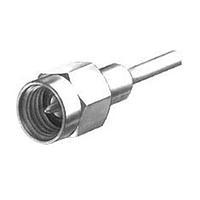
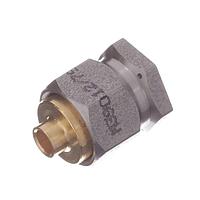
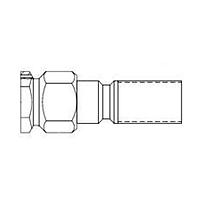
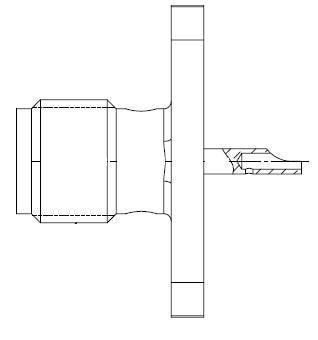
SMA connectors are typically chosen where compact size and higher-frequency capability are important. For example, the Amphenol SV Microwave M39012/60-3002 is a flange-mount SMA jack intended for panel integration, while the M39012/55B3015 is a cable-style SMA male connector for coax termination. For applications requiring even higher microwave performance, 2.92 mm interfaces and related attenuator assemblies are also represented, including Amphenol SV Microwave parts such as M3933/30-27N and M3933/30-31N.
This category also includes N and TNC formats, which are often selected for robust RF connections with good mechanical security. Kings M39012/05-0501 and M39012/05-0503 illustrate right-angle N-type plug options, while Kings M39012/29-0503 represents a TNC panel jack style suitable for panelized equipment designs.
How to choose the right MIL spec RF connector
Selection usually starts with the electrical interface. Impedance must match the system, typically 50 ohms in many RF and microwave applications, although some TNC variants may support different system requirements. Frequency range is also critical: a connector suitable for DC to 4 GHz may be entirely appropriate for many BNC-based links, while microwave test, high-speed communications, or precision signal paths may require SMA or 2.92 mm solutions with much higher frequency capability.
Mechanical format is the next major factor. Engineers should confirm whether the application needs a panel receptacle, bulkhead jack, straight cable plug, or right-angle cable plug. Termination style also matters, especially for field assembly and repeatability. Crimp, solder pot, and other cable or panel terminations each support different assembly workflows and maintenance needs.
It is also worth reviewing orientation, body material, mounting arrangement, and whether the connector will be used in a frequently serviced interface or a semi-permanent installation. In practical terms, a right-angle N plug may help manage cable bend radius in tighter spaces, while a flange-mount SMA jack is more suitable where the enclosure panel itself becomes part of the RF interface structure.
Examples from leading manufacturers in this range
This category includes products from recognized RF interconnect suppliers such as Amphenol SV Microwave and Kings. These manufacturers are often associated with rugged connector formats used in applications where signal integrity and connector durability are both important.
From the available examples, Amphenol SV Microwave products cover compact and higher-frequency connector needs, including SMA panel and cable connectors as well as 2.92 mm attenuator-style components. Kings products in this category illustrate a broader set of classic RF military-style formats, including BNC, N, TNC, and accessories such as the M39012/25-0011 cap and chain, which supports connector protection when an interface is not in active use.
Accessory items should not be overlooked. Protective caps, chains, and related hardware help maintain connector cleanliness and reduce the risk of damage in storage, transport, or field deployment. In rugged systems, these small supporting parts can contribute meaningfully to long-term reliability.
Typical applications and integration considerations
In test and measurement environments, connector repeatability and interface quality directly affect measurement confidence. SMA and 2.92 mm interfaces are often used where tighter RF performance is required, while BNC remains common for practical bench connectivity and broader instrumentation use. Choosing the wrong interface can introduce unnecessary adapters, which may add signal loss, mismatch, and mechanical complexity.
In vehicle, aerospace, and defense electronics, connector choice is often shaped by enclosure layout, cable routing, and service access. A bulkhead jack may simplify front-panel access, while a right-angle plug can reduce strain at the cable exit. For mixed interconnect systems that combine RF with optical links, power, or control wiring, engineers may also need adjacent categories such as MIL Spec Fiber Optic Connectors or MIL Spec Rectangular Connectors.
What to review before ordering
Before final selection, verify the connector series, gender, mounting style, cable compatibility, and orientation against the mating interface and installation space. For cable-mounted parts, the intended coax type and termination method should be confirmed early to avoid assembly issues. For panel-mounted parts, make sure the receptacle style aligns with the panel cutout, fastening method, and enclosure thickness.
It is also useful to check whether the connector is part of a larger RF chain that includes adapters, attenuators, or protective accessories. For example, a connector choice that works electrically may still be suboptimal if it complicates calibration, maintenance, or future replacement. In engineering and procurement workflows, these practical details often determine whether the interconnect remains reliable over the full service life of the system.
Finding the right fit for your RF interconnect requirements
The right connector depends on more than just interface name. Frequency range, impedance, mounting approach, cable termination, physical orientation, and maintenance needs all shape the best choice for a given design. This category helps narrow that selection with military-style RF connector options spanning common formats used in demanding equipment.
Whether you are sourcing a BNC bulkhead jack, an N right-angle plug, an SMA panel receptacle, or a high-frequency 2.92 mm component, focusing on the full installation context will lead to a more dependable result. Reviewing the connector as part of the complete RF path, rather than as a standalone item, is usually the most effective way to choose well.
Get exclusive volume discounts, bulk pricing updates, and new product alerts delivered directly to your inbox.
By subscribing, you agree to our Terms of Service and Privacy Policy.
Direct access to our certified experts