Shunts, Jumpers
In many electrical and test setups, small connection components have a direct impact on signal integrity, current handling, and overall system reliability. That is especially true when selecting Shunts, Jumpers for panel wiring, measurement paths, grounding arrangements, and temporary or permanent bridging between connection points.
On this page, the category covers components used to create controlled electrical links or to support current measurement in demanding environments. Depending on the application, a shunt or jumper may serve as a simple conductive bridge, a removable linking element, or a precision low-resistance part used to observe current flow in test circuits. For engineers, buyers, and maintenance teams, the key is not just finding a compatible part, but choosing the right electrical and mechanical fit for the task.
Where shunts and jumpers are used
These components appear in a wide range of industrial and laboratory contexts. In control cabinets, they can be used to bridge terminals, configure signal paths, or support service access during commissioning and maintenance. In test environments, low-resistance shunt elements are often chosen when current must be measured indirectly by observing the voltage drop across a known resistance.
This makes the category relevant for users working in electronics development, power testing, industrial automation, and electrical integration. In many cases, shunts and jumpers are selected alongside related interconnection items such as cable assemblies or specialized connector hardware, especially when building complete test fixtures or custom wiring solutions.
Understanding the difference between a jumper and a current shunt
A jumper is typically used to connect two points electrically, often for configuration, bypassing, or routing purposes. The priority here is usually mechanical compatibility, secure contact, and ease of installation or removal. In practical terms, jumpers are common wherever flexibility or serviceability matters.
A current shunt, by contrast, is designed around a known, very low resistance. When current flows through it, a proportional voltage drop can be measured and used to calculate current. This approach is widely used in power electronics, pulse testing, and high-current measurement because it can provide a direct and predictable measurement path when correctly matched to the application.
What matters when choosing a shunt or jumper
The right selection depends on more than basic fit. For jumpers, buyers usually need to confirm conductor size, connection format, mounting method, and the operating environment. For shunts used in measurement or current monitoring, the more important factors are current rating, resistance value, thermal behavior, peak current capability, and the frequency content of the signal being observed.
Bandwidth can be particularly important in pulsed or transient applications. A component that works well for steady current may not be suitable when the waveform contains fast edges or short-duration peaks. Likewise, impulse-load capability matters when the circuit may experience surge conditions, repetitive pulses, or high short-time current stress.
Examples from the HILO-test range
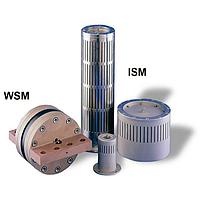
Within this category, products from HILO-test illustrate how current-viewing resistors can span very different operating ranges. Lower-current models such as the HILO-test WSM 100 and WSM 150 are suited to applications where relatively low resistance and high bandwidth are both important, helping engineers observe current behavior with good temporal response.
As current requirements increase, models such as the WSM 400, WSM 1000, and WSM 2500 show the typical trade-off between higher current handling and changing resistance or bandwidth characteristics. At the upper end, parts such as the WSM 6000, WSM 10000, and WSM 15000 are intended for substantially higher current and impulse conditions, which is relevant in high-power test benches, discharge circuits, and specialized pulse applications.
These examples are useful because they show that the category is not limited to simple bridging hardware. It also includes precision low-ohmic devices used as part of a broader measurement chain, where component choice affects both safety margin and data quality.
Selection logic for high-current and measurement applications
When choosing a shunt for measurement, start with the expected continuous current and the highest possible peak or fault current. Then review the resistance level needed to generate a measurable voltage without introducing excessive power loss into the circuit. In general, lower resistance reduces insertion loss, while the measurement system must still be able to resolve the resulting signal accurately.
The physical installation also matters. High-current parts need proper conductor routing, secure mounting, and attention to heat dissipation. In many setups, the surrounding interconnect system is just as important as the shunt itself, which is why users often review related items such as banana and tip connectors or electrical contacts when planning a complete connection path.
Mechanical and integration considerations
Even when the electrical specification looks correct, integration details can determine whether a part performs reliably over time. Contact quality, connection geometry, conductor termination, and vibration resistance all influence long-term stability. In serviceable systems, ease of replacement may also be a factor, especially when jumpers are used for configuration changes or test access.
For precision current-viewing resistors, layout discipline is equally important. Lead length, parasitic inductance, and the way sense points are connected can affect measurement fidelity, especially in fast transient work. That is why procurement and engineering teams should evaluate the component as part of the full measurement loop rather than as an isolated item.
How this category supports industrial sourcing
For B2B buyers, a well-structured shunts and jumpers category helps shorten the path from requirement to shortlist. Instead of treating every part as interchangeable, it becomes easier to compare products by electrical role, current capacity, and integration context. This is useful for OEM design, maintenance spares, lab upgrades, and project-based procurement.
It also helps connect users with adjacent product groups when needed. For example, if a project involves modular wiring or interface build-out, related connector families such as LGH connectors may become relevant in high-voltage or specialized connection environments. Used carefully, these related categories support a more complete sourcing workflow without distracting from the main selection task.
Choosing with confidence
Shunts and jumpers may look like simple components, but their role in current flow, measurement accuracy, and connection reliability is often critical. The best choice depends on how the part will be used: as a removable bridge, a configuration element, or a low-resistance measurement device in a demanding electrical setup.
By comparing current range, resistance, peak handling, bandwidth, and installation requirements, engineers and buyers can narrow the field more effectively. For routine interconnection as well as advanced test applications, this category provides a practical starting point for selecting components that fit both the circuit and the operating conditions.
Get exclusive volume discounts, bulk pricing updates, and new product alerts delivered directly to your inbox.
By subscribing, you agree to our Terms of Service and Privacy Policy.
Direct access to our certified experts