Bumpers / Feet
Small hardware details often make a big difference in equipment durability, stability, and overall finish. In industrial assemblies, enclosures, operator panels, and bench-top devices, Bumpers / Feet help reduce vibration, protect surfaces, improve grip, and create proper spacing between components and the mounting surface.
This category brings together practical hardware used to support, cushion, or isolate products in a wide range of applications. Whether you need adhesive bumpers for light protective contact, rivet-mount feet for more secure attachment, or threaded leveling feet for adjustable support, the right choice can improve both product performance and service life.
Where bumpers and feet are commonly used
These components are widely used across electronics, machinery, cabinets, test fixtures, power supplies, and general industrial products. A soft bumper can prevent scratching on contact surfaces, absorb light impact, and reduce noise when covers, doors, or devices are closed or placed on worktops.
Feet serve a slightly different role. They are often selected to provide stable support, improve clearance underneath equipment, or compensate for uneven mounting surfaces. In many designs, the decision between a bumper and a foot depends on whether the main requirement is cushioning, spacing, anti-slip performance, or load-bearing support.
Common product types in this category
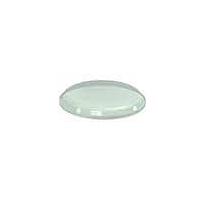
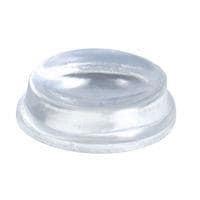
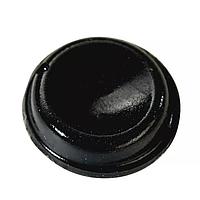
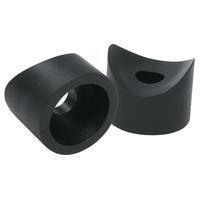
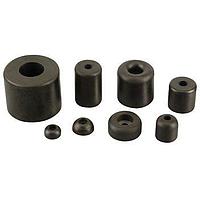
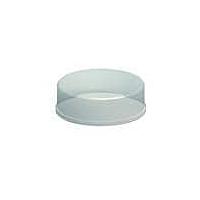
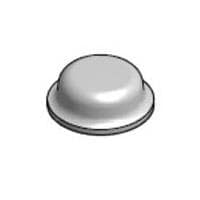
The category includes several mounting and material styles suited to different installation needs. Adhesive bumpers are often chosen for fast application and clean appearance, especially on housings, covers, or light-duty devices. Examples in this range include dome and square polyurethane parts such as the Essentra Components RBS-27 and RBS-37BK, as well as 3M Electronic Specialty options like SJ-5514 and SJ-5705.
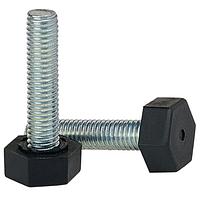
For designs that need stronger mechanical retention, stem-mount or rivet-mount parts can be more appropriate. The Essentra Components BST075C split stem bumper and SFF-018 rivet-mount foot illustrate this approach, where the part is intended to stay in place under repeated handling or vibration. For equipment that must be adjusted for height or leveling, stud-mount feet such as Essentra Components AFM4400B or AFP25110A are typically the better fit.
Materials and form factors that influence performance
Material choice has a direct impact on compression, grip, wear behavior, and environmental suitability. Polyurethane is widely used for resilient bumpers because it offers a good balance of cushioning and abrasion resistance. Nylon and polypropylene are more common in structural feet where rigidity and dimensional stability matter, while Santoprene can be useful where a flexible, durable contact surface is needed.
Shape also matters more than it may seem at first glance. Dome styles tend to provide a neat contact point and controlled compression, while square or tapered profiles can offer broader contact area and different load distribution. Threaded or hex-foot designs are useful when a product requires repeatable mounting and a more secure mechanical interface, rather than simple surface protection.
How to choose the right bumper or foot
A practical selection process starts with the application itself. Consider whether the part must absorb impact, prevent sliding, create spacing, or level a piece of equipment. Then review the mounting method: adhesive is quick and clean, but threaded, stem, or rivet mounting may be preferable in environments with heavier loads, vibration, or repeated movement.
It is also important to compare dimensions such as outside diameter, height, thickness, hole size, or thread size with the available installation space. A larger contact area may improve stability, while a lower-profile bumper may be better for compact electronics. If the part supports equipment weight, the load path and base material should be reviewed carefully rather than selecting by appearance alone.
In assemblies where these parts are only one piece of the mechanical design, it can also help to review related mounting hardware to ensure compatibility between the support method and the surrounding structure.
Representative manufacturers and product examples
Essentra Components is especially relevant in this category, with a broad mix of adhesive bumpers, stem bumpers, rivet-mount feet, and adjustable leveling feet. Products such as RBS-27, RBS-37BK, BST075C, SFF-018, AFM4400B, and AFP25110A show the range from simple protective pads to more functional support hardware.
3M Electronic Specialty is well known for resilient bumper solutions used in equipment protection, spacing, and noise reduction. Models such as SJ-5076, SJ-5514, SJ-5705, and the 3M Bumpon resilient rollstock SJ5832 sample are useful references for applications where adhesive-backed cushioning and clean finishing are priorities.
Some projects also involve supporting hardware around power supplies or enclosure assembly. In those cases, products like the MEAN WELL MHS-014 can sit alongside bumpers and feet as part of the overall mechanical integration, even when the primary need is not cushioning itself.
Typical application considerations in industrial and electronic equipment
In electronic devices, bumpers are often used to protect panels, lids, display assemblies, or housings from direct contact. They can reduce rattling, improve perceived product quality, and prevent cosmetic damage during normal use. For desktop instruments or control boxes, feet also help create airflow clearance underneath the enclosure and improve surface grip.
In light industrial equipment, threaded leveling feet are often selected when floor or frame unevenness needs to be corrected. This can be important for small machines, benches, dispensers, or assembled modules where alignment affects operation. If the design also includes user-interface hardware, related items such as knobs and dials may be part of the same mechanical hardware selection process.
When adhesive, mechanical, or adjustable mounting makes the most sense
Adhesive-mounted parts are typically the fastest to install and are suitable for many enclosure and surface-protection tasks. They work well when loads are light, surfaces are clean and properly prepared, and the goal is cushioning or anti-slip support rather than structural adjustment.
Mechanical mounting options such as split stem, rivet, or threaded stud styles are usually better when retention strength and repeatability matter more. These are common in products exposed to handling, vibration, or higher compression forces. Leveling feet are the natural choice when the support point must be adjustable, whether to compensate for variation in floors, frames, or machine bases.
Building a more complete hardware solution
Bumpers and feet are rarely selected in isolation on well-engineered products. They often work together with enclosure parts, brackets, supports, and fastening elements to achieve the right balance of protection, alignment, and serviceability. In electronic assemblies, they may also complement PCB circuit board hardware when spacing, insulation, or mechanical support is part of the broader design.
Choosing the right part usually comes down to matching the mounting method, material, geometry, and expected load to the real operating environment. A simple bumper may be enough for cosmetic protection, while a threaded foot can be essential for stability and leveling in daily operation.
For buyers, engineers, and maintenance teams, this category provides practical options for both protective finishing and functional support. Reviewing the application carefully will help narrow the choice between adhesive bumpers, secure mechanical feet, and adjustable leveling designs so the final assembly performs as intended over time.
Get exclusive volume discounts, bulk pricing updates, and new product alerts delivered directly to your inbox.
By subscribing, you agree to our Terms of Service and Privacy Policy.
Direct access to our certified experts