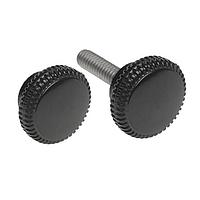
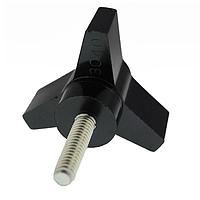
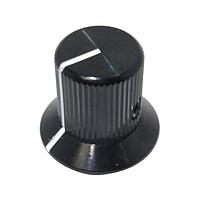
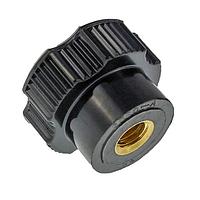
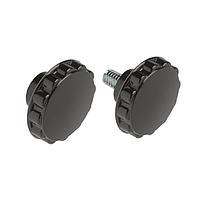
Knobs & Dials
Small interface components often have a bigger impact on usability than they first appear. In control panels, instruments, laboratory equipment, and industrial electronics, the right operating hardware helps users make adjustments accurately, read positions quickly, and maintain consistent control in daily operation.
Knobs & Dials are commonly selected for equipment that relies on manual adjustment, setpoint control, rotary input, or visual indication. Whether the application involves fine tuning, repeated operator interaction, or simple mechanical feedback, this category supports practical panel design with parts that contribute to both function and ergonomics.
Where knobs and dials fit in equipment design
These components are typically used wherever a shaft-driven device needs a human-friendly interface. That can include potentiometers, selector mechanisms, rotary controls, timing adjustments, and instrument settings on production equipment, test benches, and embedded devices.
In many builds, the knob is the part the operator touches most often. For that reason, selection is not only about size or appearance, but also about grip, visibility, and control feel. Dials can add clear reference points for position or setting, helping users interpret adjustment ranges more easily during operation or maintenance.
Common use cases across industrial and electronic applications
Knobs and dials appear in a wide range of B2B environments. They are frequently integrated into HMI-adjacent controls, laboratory instruments, power supplies, telecom equipment, audio electronics, industrial controllers, and custom enclosures where manual input remains important.
For OEMs and panel builders, these parts are especially relevant when users need repeatable adjustment without relying on a touchscreen or software-only interface. In service environments, a clearly marked dial can also simplify calibration, setup, and troubleshooting. When the operating point must be changed by hand, a well-chosen knob often improves speed and reduces handling errors.
Key factors when selecting knobs and dials
The most practical starting point is compatibility with the underlying control element. Buyers typically review shaft style, mounting method, diameter, profile, and whether the part is intended for quick adjustment or more precise manual tuning. The visual indication method also matters, especially when a setpoint must be checked at a glance.
Material and operating environment should also be considered. In industrial settings, exposure to vibration, dust, oils, or frequent cleaning can affect long-term usability. For operator-facing equipment, shape and tactile response can be just as important as fit. A larger knob may offer better leverage, while a compact design may be preferable on dense control panels where space is limited.
When appearance and handling need to work together, related mechanical accessories such as mounting hardware can also influence final assembly quality and panel stability.
Design considerations for panel layout and user interaction
A knob is rarely chosen in isolation. It needs to work within the overall panel layout, including spacing between controls, labeling, enclosure depth, and the expected frequency of use. In high-density assemblies, the right diameter and profile can help avoid accidental contact with neighboring controls while still allowing gloved or quick access when needed.
Dials can also improve readability by giving users a clearer sense of position, direction, or range. This is helpful in equipment where visual confirmation supports repeatable setup. In more tactile designs, the knob may serve as the primary physical cue for operation, complementing switches, indicators, or rotary devices from suppliers such as TE Connectivity, Alps Alpine, or other established component manufacturers represented across industrial electronics.
How this category supports broader hardware integration
Knobs and dials belong to a wider hardware ecosystem used to complete equipment assemblies. They are often specified alongside spacing, fastening, and protective elements to achieve a reliable mechanical interface between the user and the device.
Depending on the application, buyers may also review related categories such as PCB circuit board hardware for internal support structures or bumpers and feet for enclosure stability and protection. Looking at these elements together can help reduce assembly issues and create a more coherent end product.
Manufacturer context and sourcing considerations
This category may be relevant to buyers working across multiple electromechanical brands, especially in projects that combine switches, connectors, control interfaces, and panel hardware. Manufacturers such as Alcoswitch - TE Connectivity, Amphenol, Bourns, Molex, SCHNEIDER, and Square D are often part of broader sourcing strategies where mechanical interface parts must align with electrical and enclosure-level requirements.
For procurement teams, consistency matters. Standardizing on suitable knob and dial styles across a product family can simplify maintenance, improve operator familiarity, and make replacement planning easier over time. For engineering teams, the benefit is often a cleaner balance between usability, available space, and mechanical compatibility.
Choosing the right option for your application
If the application involves frequent adjustment, focus first on handling comfort and clear indication. If panel space is constrained, compact form factors and sensible spacing become more important. Where visual repeatability matters, dial-style solutions or clearly indexed designs can support more predictable operation.
In practice, the best choice depends on how the control will actually be used: by operators on a production floor, technicians during setup, or engineers during testing and calibration. Reviewing the mechanical fit, intended environment, and user interaction pattern usually leads to a more effective selection than choosing on appearance alone.
For industrial electronics and equipment design, knobs and dials are simple parts with a meaningful role. A suitable choice can improve control, readability, and day-to-day operation while fitting cleanly into the broader hardware architecture of the system.
Get exclusive volume discounts, bulk pricing updates, and new product alerts delivered directly to your inbox.
By subscribing, you agree to our Terms of Service and Privacy Policy.
Direct access to our certified experts