Embedded Computing
Choosing the right computing platform is often one of the first decisions in an embedded design. Processing performance, board size, thermal limits, connectivity, long-term integration, and software support all affect how quickly a prototype can become a stable product. This is why Embedded Computing is such a central part of modern industrial electronics, automation systems, smart devices, and connected equipment.
Within this category, engineers and technical buyers can compare compact boards, modular CPU platforms, and application-ready embedded hardware for projects that need reliable operation in space-constrained or performance-sensitive environments. The range is broad enough to support everything from low-power edge devices to more capable systems for HMI, control, data handling, and gateway applications.
Where embedded computing fits in real-world system design
Embedded platforms are used when a product needs dedicated computing resources inside a machine, instrument, kiosk, controller, or connected device. Unlike general-purpose desktop hardware, these solutions are selected with integration in mind: mechanical footprint, I/O availability, power envelope, operating temperature, and lifecycle are all part of the evaluation process.
In practice, embedded computing is rarely isolated. It usually works alongside communications interfaces, sensors, displays, storage, and expansion hardware. For projects that need networked connectivity or protocol handling, related options such as Ethernet and communication modules can help complete the system architecture without redesigning the main compute platform.
Main platform types in this category
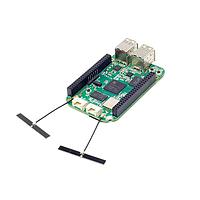
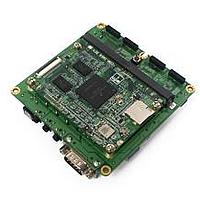
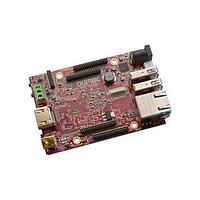
This category covers several common approaches to embedded design. Single board computers provide an all-in-one hardware base that can speed up development, especially when CPU, memory, display, networking, and GPIO are needed on a compact board. They are often chosen for prototyping, edge control, lightweight visualization, and compact embedded applications.
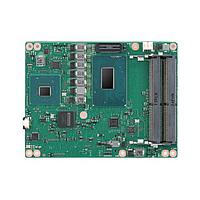
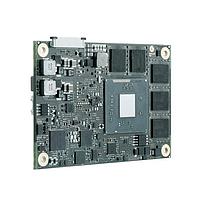
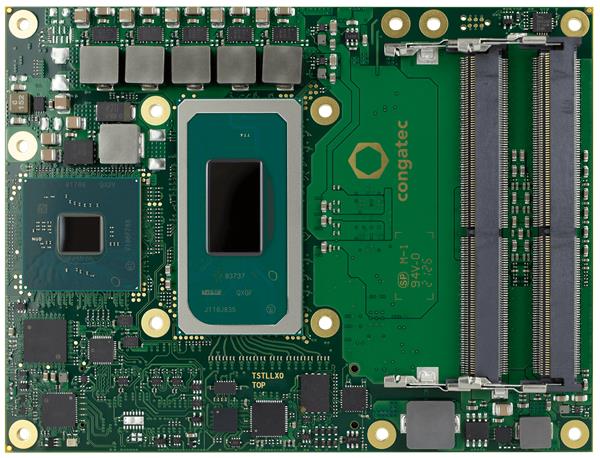
System on Modules and COM-style solutions separate the compute core from the carrier design. That approach can simplify development when teams need a reusable processor platform while keeping application-specific I/O on a custom baseboard. It is a practical option for OEM designs that need flexibility, long-term maintenance, or a migration path across processor generations.
More application-specific embedded hardware may also be used where rugged packaging, display integration, or appliance-style deployment is required. For compute-intensive workloads, some designs also benefit from adjacent technologies such as accelerator cards when standard CPU resources are not enough for the target task.
Representative products and what they show about the range
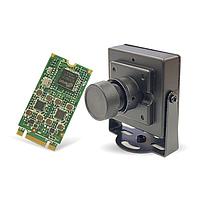
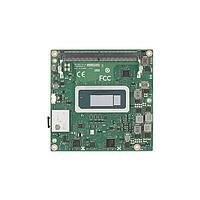
The product mix in this category illustrates how broad embedded computing can be. On the modular side, Advantech offers COM Express and SOM platforms such as the SOM-7565M4-S6A2E and SOM-5890FG-U5B1E, which reflect a typical modular design strategy: compact processor modules with defined form factors for integration into custom systems. These are relevant when engineers want a balance between performance and custom I/O design.
Other examples from Advantech, including the SOM6763D0001E-T, SOM-6760FL-S6A1E, and 96MPXE-2.9-12M13T, reinforce the importance of module-based development in embedded products. Depending on the project, a COM or SOM platform may be preferred over a full SBC because it can reduce redesign effort when the application carrier remains stable but compute requirements evolve.
For board-level deployment, products such as the Advantech MIO-2375C7P-Q4A1, AIMB-232G2Z-U3B1E, and MIO-5373U-U7A1 demonstrate the role of compact SBCs in control, interface, and edge processing tasks. The Arduino TSX00003 also points to use cases where accessible development ecosystems matter, while the ASUS IoT TINKER BOARD 2S/4G/16G shows how ARM-based SBC platforms can serve multimedia, embedded UI, or connected device applications.
How to choose between an SBC, SOM, and COM module
A useful starting point is to decide whether the project needs rapid deployment or deeper hardware customization. If time-to-prototype is critical and the application can work with standard board I/O, an SBC is often the simpler route. It reduces baseboard design work and can shorten validation for proof-of-concept systems, pilot builds, or lower-volume equipment.
If the application has unique interface requirements, strict enclosure constraints, or a long product roadmap, a SOM or COM architecture can be more appropriate. This model lets the processor section remain standardized while the carrier board is tailored to the final machine or device. It can also be a practical way to manage product variants without redesigning the entire computing core.
Performance and environmental conditions also matter. Some listed platforms indicate differences in processor class, memory support, form factor, and operating temperature range, which are all relevant when matching hardware to industrial environments, fanless systems, or thermally restricted installations.
Key technical factors to review before purchasing
Even within the same category, embedded platforms can differ significantly in processor family, storage interfaces, display outputs, network support, USB availability, and expansion capabilities. Buyers should review the intended software stack, required peripherals, and expected data throughput before narrowing down options. A board that looks sufficient on paper may still be limited by connector layout, memory ceiling, or available interface combinations.
Thermal design is another common selection issue. Compact systems often operate in sealed or low-airflow enclosures, so CPU power and operating temperature range should be considered early. For example, some of the listed Advantech modules indicate support for wider temperature conditions than standard commercial boards, which may influence selection in transportation, outdoor, or harsh industrial settings.
It is also wise to consider the broader ecosystem around the compute hardware. Software availability, driver compatibility, development tools, and integration with adjacent categories such as embedded software or data conversion modules can affect total development effort just as much as CPU specifications.
Manufacturer landscape and integration considerations
Several well-known vendors appear within this category, each serving different needs. Advantech is especially prominent here through its range of COM Express modules, SOM platforms, and SBCs aimed at embedded and industrial applications. Arduino and ASUS IoT add context for development-friendly and ARM-based board options that may suit education, prototyping, HMI, gateway, or compact device builds depending on project scope.
When comparing manufacturers, it helps to look beyond headline processing power. Mechanical stability, documentation, accessory compatibility, software support, and product continuity can all influence long-term project success. For OEM and industrial buyers, that broader evaluation is often more important than selecting the fastest board alone.
Typical application scenarios
Embedded computing platforms are commonly used in machine control panels, industrial gateways, digital signage, medical devices, smart retail systems, test equipment, and monitoring stations. In many of these applications, the hardware must do more than simply run code. It has to interface with field devices, handle communication tasks, and operate predictably over time in a defined enclosure or installation environment.
The right platform depends on whether the job emphasizes control, visualization, data aggregation, or device integration. A compact SBC may be suitable for local processing and display tasks, while a modular COM or SOM solution may be better for custom-built equipment where maintainability and design flexibility are priorities.
Finding the right fit for your project
This category supports a wide range of embedded design strategies, from development-oriented boards to modular compute building blocks for custom systems. Whether the requirement is a compact single board platform, a COM Express module, or a scalable system-on-module approach, the most effective choice usually comes from aligning hardware architecture with the real needs of the application rather than focusing on processor speed alone.
By reviewing form factor, integration model, connectivity, thermal behavior, and software needs together, buyers can narrow the field more effectively and choose a platform that fits both the immediate build and the long-term product plan.
Get exclusive volume discounts, bulk pricing updates, and new product alerts delivered directly to your inbox.
By subscribing, you agree to our Terms of Service and Privacy Policy.
Direct access to our certified experts