SubGHz Modules
Long-range wireless design often comes down to a practical balance between coverage, power consumption, network topology, and deployment cost. In industrial sensing, smart metering, remote monitoring, and distributed control, SubGHz Modules are widely used when signals need to travel farther than many short-range radio options while still fitting into compact embedded systems.
This category brings together modules and related wireless building blocks for applications that operate in sub-GHz frequency bands. These solutions are relevant for OEM product development, industrial gateways, remote I/O, field devices, and specialized RF transport systems where reliable communication over distance is a key design requirement.
Where sub-GHz wireless fits in embedded and industrial systems
Sub-GHz communication is commonly selected for environments where range, building penetration, and low-power operation matter more than very high data throughput. Typical use cases include sensor networks across facilities, utility infrastructure, agricultural monitoring, machine status reporting, and wireless links between field devices and supervisory systems.
Compared with some other wireless approaches, sub-GHz platforms are often chosen to support long-range, low-data-rate communication. Depending on the module and protocol, they may be used for LoRa, LoRaWAN, Wi-SUN, proprietary links, industrial multihop networks, or sub-GHz 802.15.4 implementations. If a project also requires satellite positioning or timing support, it may be useful to review related GNSS/GPS module options alongside the radio design.
Common product types found in this category
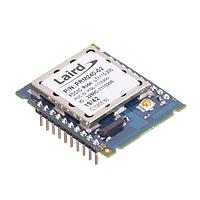
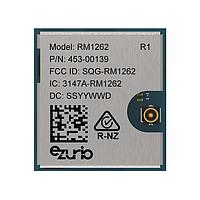
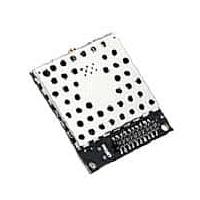
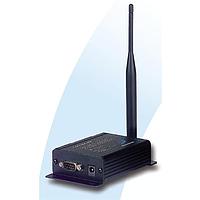
This category is not limited to one single form factor. Some products are compact SMT or embedded radio modules intended for board-level integration, while others are industrial wireless I/O devices or more specialized RF transport units designed for infrastructure and system-level deployment.
For example, the Microchip Technology RN2903A-I/RM103 is a LoRa transceiver module for 915 MHz designs, while the Murata Electronics CMWX1ZZABZ-078 and Murata Electronics LBAA0QB1SJ-296 illustrate highly integrated LoRaWAN-oriented module options for embedded development. On the industrial device side, the Advantech WISE-4610P-NA shows how sub-GHz wireless can be packaged into an I/O-oriented platform with LoRa/LoRaWAN and GPS context for field applications.
There are also products that serve supporting roles in a broader solution. The Omron Automation and Safety V530-BATLION is a battery component rather than a complete radio endpoint, and specialized items from HUBER+SUHNER highlight how RF-over-fiber transmission can be part of certain advanced wireless infrastructures.
How to choose the right sub-GHz module
Selecting the right module starts with the network and application architecture. A simple point-to-point or point-to-multipoint design may need a different module type than a LoRaWAN deployment connected to gateways, or a mesh-style field network used in industrial automation. Early decisions about topology help narrow the choices quickly.
Frequency band and regional deployment are also essential. Products in this category may target 868 MHz, 915 MHz, 923 MHz, 900 MHz, or wider sub-GHz ranges, so engineers should align the selected device with the intended market and radio design requirements. Interface preferences such as UART, SPI, I2C, USB, RS-485, or serial connectivity also affect integration effort at both board and system levels.
Power budget, environmental conditions, antenna approach, and package style are equally important. Small SMT modules suit embedded devices with tight space constraints, while larger industrial units may be more appropriate for cabinet, field, or outdoor installations. In many designs, radio performance also depends heavily on the matching antenna system, so it can be helpful to review suitable antenna components at the same time.
Examples of technologies and use cases in the range
Several leading manufacturers are represented here, including Advantech, Microchip Technology, Murata Electronics, Renesas Electronics, Banner Engineering, Omron Automation and Safety, and HUBER+SUHNER. The mix of products reflects the reality of industrial wireless design: some applications need a low-power embedded transceiver, others require a ruggedized field node, and some involve infrastructure-level RF signal transport.
The Renesas Electronics R9A06G062GNP#AC1 is an example of a sub-GHz / Wi-SUN radio transceiver approach, while the Microchip Technology ATSAMR30M18AT-I/RM100 combines MCU and sub-GHz 802.15.4 radio functionality in one module. For industrial wireless networking, the Banner Engineering SG-R70-DR9M represents a 900 MHz wireless segment suited to multi-node field communication scenarios. These examples show that this category supports both embedded product development and operational industrial deployment.
Integration considerations beyond the radio itself
Successful wireless implementation depends on more than the radio module alone. Engineers typically need to consider antenna placement, enclosure effects, power supply stability, host interface design, firmware support, and the operating environment. Even a capable module can underperform if the surrounding hardware or installation conditions are not aligned with the communication objective.
It is also important to distinguish between sub-GHz modules and other wireless paths that may better fit different bandwidth or mobility requirements. For instance, projects needing carrier connectivity may be better served by cellular modules, while very short-range cable replacement or peripheral connectivity may call for Bluetooth-based solutions. The best choice depends on coverage expectations, power availability, and network ownership.
Why this category matters for industrial B2B sourcing
For B2B buyers, this category is useful because it brings together products that support a broad span of wireless design tasks, from embedded integration to industrial field deployment. Instead of treating all RF parts the same, it helps narrow the search toward sub-GHz solutions where longer range, lower power, and robust coverage are central requirements.
The product mix also supports different stages of development. Design teams may start with compact modules such as the Murata or Microchip Technology devices for prototyping and embedded integration, then expand into field hardware such as the Advantech WISE-4610P-NA or Banner Engineering wireless components when building a complete system. That makes the category relevant to OEMs, panel builders, automation integrators, and industrial device manufacturers alike.
Finding a practical fit for your application
Choosing among sub-GHz solutions is usually less about finding a generic “best” product and more about matching the radio, interface, protocol, and packaging to the actual deployment. A compact LoRaWAN modem, an industrial wireless I/O device, a Wi-SUN transceiver, or a specialized RF transport unit can all be the right answer in different contexts.
By comparing frequency support, integration method, protocol alignment, operating conditions, and supporting hardware requirements, buyers can shortlist the options that best fit their design goals. For teams building long-range wireless systems with real-world industrial constraints, this category provides a focused starting point for selecting the right sub-GHz platform.
Get exclusive volume discounts, bulk pricing updates, and new product alerts delivered directly to your inbox.
By subscribing, you agree to our Terms of Service and Privacy Policy.
Direct access to our certified experts