Enclosures
Protecting electronics is rarely just about putting them in a box. In industrial systems, embedded computing, lab setups, and infrastructure racks, the right Enclosures help manage space, support thermal and mechanical stability, improve service access, and reduce the risk of accidental damage during operation or maintenance.
This category brings together enclosure solutions used across control hardware, single-board computing, rack equipment, and general-purpose protective housings. Whether you are building a compact embedded device, organizing equipment in a cabinet, or adding finishing elements such as protective feet and bumpers, choosing the right form factor can make installation cleaner and long-term use more reliable.
Where enclosures fit in modern electronic and industrial projects
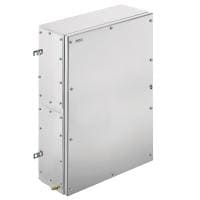
Enclosures are used wherever electronics need a defined mechanical structure. That may include housing a motherboard, protecting a small controller, mounting a display-console assembly in a rack, or supporting a storage subsystem in an industrial environment. In practice, the enclosure often becomes the interface between the electronics and the real operating environment.
For B2B buyers, this means enclosure selection is usually tied to more than appearance. Mounting method, internal volume, compatibility with other hardware, cable routing, maintenance access, and surrounding components such as connectors or protective accessories all influence the final decision.
Common enclosure types in this category
The scope of this category covers several enclosure approaches rather than a single product style. Some solutions are designed for embedded computing, where the chassis must support compact SBC-based systems. Others are intended for rack integration, where the enclosure must fit standardized equipment layouts and work alongside console or KVM-related hardware.
There are also general-purpose boxes and cases for electronics protection, storage-oriented chassis, and supporting accessories such as rubber feet or bumpers. These smaller parts may seem secondary, but they are often important for vibration damping, spacing, surface protection, or keeping an assembly stable on benches and workstations.
Representative products and practical use cases
Several products in this category illustrate the range of applications. For embedded systems, the Advantech 96MPCM-1.3F4-5K4T and Advantech 96MPPM-1.6F4-1M4T are examples of chassis intended for 3.5 inch biscuit SBC deployments, while the Advantech IPC-610MB-00XFCE represents a 4U IPC chassis approach for motherboard-based systems. In higher-capacity infrastructure builds, the Advantech ASR-1400-24A1E shows how enclosure design can extend into storage-oriented hardware.
For rack environments, products such as the American Power Conversion AP5717G, American Power Conversion AP5017, and Belkin F1DC101H reflect the enclosure role in housing operator-facing rack console hardware. At the accessory level, 3M SJ5780S, 3M SJ-5008 GRAY, and Adafruit 550 bumper feet support finishing and protection tasks that help complete an assembly properly rather than leaving it mechanically exposed.
Brands commonly specified for enclosure-related applications
Buyers often look for enclosure solutions from manufacturers already trusted in their wider equipment stack. In this category, Advantech is especially relevant for industrial computing chassis and embedded hardware formats, while American Power Conversion appears in rack-oriented console and KVM-related equipment. Belkin also has a place in rack console setups, particularly where compact equipment access is required.
Accessory-focused applications may also point engineers toward 3M for protective bumpers and surface-contact elements, while Adafruit can be relevant for compact cases and maker-to-industrial prototype workflows. The right brand depends less on name recognition alone and more on whether the enclosure must support embedded computing, rack integration, or simple device protection.
Key selection criteria before you buy
A good enclosure choice starts with the actual hardware being installed. First, confirm the form factor: board size, rack height, chassis depth, and mounting points should match the intended system. If the project involves a console, IPC motherboard, or storage assembly, mechanical compatibility should be verified before considering secondary features.
Next, review the operating context. Industrial and technical users should consider cable entry, serviceability, airflow, physical protection, and how the enclosure interacts with adjacent items such as circuit protection devices or power-related hardware. For benchtop and portable builds, smaller details like anti-slip feet, shock reduction, and surface protection can also affect usability.
It is also worth looking at expansion and maintenance needs. A chassis that works for today’s build but leaves no room for future changes may create avoidable redesign work later. In many cases, the best option is not the largest enclosure, but the one that provides a balanced combination of access, protection, and integration flexibility.
Enclosures as part of a broader system design
Enclosures should be evaluated as part of the full assembly, not as a standalone shell. A well-chosen housing supports cable management, allows safe operator interaction, and helps create a more organized installation. This is especially important in industrial automation, server-adjacent deployments, embedded edge systems, and test environments where space and uptime both matter.
In practical sourcing workflows, enclosure decisions often connect to other component categories. Teams may source external interfaces, power elements, and assembly aids alongside the mechanical housing itself. For prototype and maintenance-oriented work, related items under kits and tools may also be useful when preparing, mounting, or modifying an enclosure-based build.
Choosing the right enclosure for your application
If your priority is compact computing, an embedded chassis designed around SBC or motherboard formats will usually be the most efficient path. If your environment is a cabinet or equipment rack, rack-compatible console and chassis options are often more appropriate. For smaller devices and finishing tasks, a simple case or protective accessory may be all that is needed to improve durability and handling.
Across all of these use cases, the goal is the same: create a safer, cleaner, and more maintainable hardware installation. Browsing this Enclosures category can help narrow the choice by application type, mechanical format, and supporting ecosystem, so the final solution fits both the electronics and the way the system will actually be used.
Get exclusive volume discounts, bulk pricing updates, and new product alerts delivered directly to your inbox.
By subscribing, you agree to our Terms of Service and Privacy Policy.
Direct access to our certified experts