Multiprotocol Development Tools
Wireless product development often starts long before final hardware is locked in. Engineers need a practical way to evaluate connectivity options, test firmware, verify interfaces, and reduce integration risk across Wi-Fi, Bluetooth, BLE, and other short-range protocols. Multiprotocol Development Tools help bridge that gap by giving teams a faster path from concept validation to embedded design decisions.
In this category, you will find development boards, evaluation kits, adapter boards, and module kits designed to support different wireless chipsets and embedded platforms. These tools are especially useful when a project must balance several communication standards, interface requirements, and host processor options within the same design cycle.
Where multiprotocol tools fit in a wireless design workflow
Unlike highly specialized evaluation hardware focused on a single radio technology, multiprotocol platforms are commonly used when developers need broader flexibility. They support early-stage experimentation with connectivity stacks, embedded software, sensor integration, and host communications before moving to production-ready hardware.
These tools are relevant in use cases such as connected sensors, industrial gateways, portable devices, human-machine interfaces, and smart control products. Depending on the platform, teams may evaluate combinations of Wi-Fi and Bluetooth, BLE-based low-power connectivity, or wireless modules that communicate through common embedded interfaces such as SPI, UART, I2C, SDIO, or USB.
Typical product types in this category
This category includes several hardware formats, each serving a different role in development. Full-featured boards are often chosen for rapid prototyping, while evaluation kits and module kits are better suited for radio testing, firmware bring-up, or reference design comparison. Adapter boards can also be important when engineers need to connect wireless modules to processor platforms such as i.MX 6 or i.MX RT during validation.
For example, the Murata Electronics LBEE0ZZ2WF-uSD-M2 adapter kit is aimed at module-to-platform evaluation rather than end-product deployment. In contrast, boards such as the Arduino ABX00087 Uno Rev4 WiFi or compact Adafruit ESP32-based platforms can be useful when software teams need a ready-to-use environment for application-level testing, peripheral access, and connectivity proof-of-concept work.
Representative platforms and manufacturers
Several established vendors are represented in this range, including Adafruit, Arduino, Murata Electronics, Microchip Technology, Infineon, Nordic Semiconductor, and PANASONIC. Each tends to support a different point in the development process, from accessible prototyping boards to module-specific evaluation hardware for embedded OEM designs.
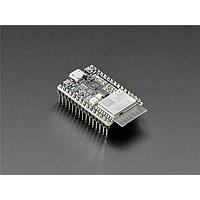
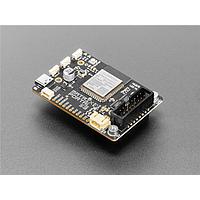
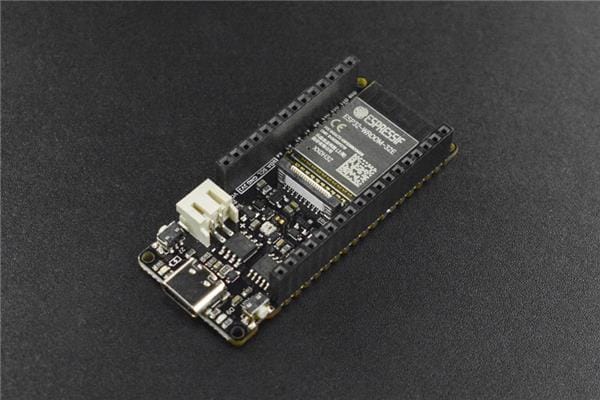
Examples from the category illustrate that diversity well. The Adafruit 5400 ESP32 Feather V2 and Adafruit 5700 QT Py S3 are compact boards suited to embedded application development with integrated wireless capability. The Microchip Technology ATWINC3400-XPRO focuses on evaluation around the ATWINC3400 platform, while the Infineon CYBLE-343072-EVAL module kit supports hands-on assessment of a wireless module environment. For cellular-oriented prototyping that also benefits from broader embedded and sensor evaluation, the Nordic Semiconductor nRF6943 tool adds another useful development path.
How to choose the right development tool
The best fit usually depends on interface compatibility, target protocol mix, and the stage of your project. If the goal is quick firmware prototyping, a developer-friendly board with onboard USB, common peripheral access, and strong community software support may be the most efficient option. If your team is validating a specific wireless module or chipset for integration into custom hardware, a dedicated evaluation kit is often the better choice.
It is also worth checking how the board connects to the host system. Some tools expose UART and USB for straightforward setup, while others rely on SPI, SDIO, or I2C to mirror real embedded integration conditions. For products that must combine low-power operation, compact design, and wireless coexistence, reviewing supported interfaces and the intended target device is more useful than comparing boards only by form factor.
Another practical factor is the software workflow. Some platforms are attractive because they simplify access to rapid prototyping ecosystems, while others are valuable because they map closely to the final module or radio component planned for production. In B2B development, that distinction matters: a fast proof of concept is helpful, but alignment with the eventual hardware architecture can save time later in certification, PCB layout, and firmware migration.
Common development scenarios
Multiprotocol hardware is often used when teams need to evaluate wireless behavior alongside application logic. A board such as TinyPICO ESP32 Development Board with USB-C may suit compact IoT prototyping, while the Arduino Uno Rev4 WiFi can support broader experimentation with connected control, peripheral communications, and embedded software development. In another scenario, a Murata evaluation board may be selected specifically to assess WLAN and Bluetooth integration on a processor platform.
These tools can also support sensor-rich prototypes, edge data collection, and power/performance trade-off studies. The Nordic Semiconductor nRF6943 multiple sensor tool is a good example of a platform that helps developers explore radio functionality together with sensor data handling and embedded interfaces. That kind of setup is valuable when a project must move from functional prototype to field-oriented validation without changing development direction too early.
Related categories that may help narrow your selection
Not every project needs a general-purpose multiprotocol platform. If your application is centered on a single wireless standard, a more focused category may help you find evaluation hardware faster. Teams working on BLE-centric products may want to review Bluetooth development tools, while projects involving modem and wide-area connectivity can benefit from browsing cellular development tools.
For designs where RF performance and antenna integration are central concerns, antenna development tools can provide a more relevant starting point. Using the right category early helps reduce evaluation time and makes comparison across toolchains more meaningful.
What matters beyond the board itself
When selecting a development platform, the hardware is only one part of the decision. Engineers should also consider how well the tool supports debugging, firmware iteration, peripheral expansion, and transition toward a custom design. A smaller board may be ideal for embedded proof of concept, but a module-specific evaluation kit may deliver better insight into real-world integration constraints.
Protocol support, available interfaces, target chipset alignment, and development environment convenience all affect project speed. For purchasing teams and technical buyers, this category is most useful when viewed as part of a broader design workflow: prototype quickly, validate communications, confirm host compatibility, and then narrow the shortlist to the platforms that best match production intent.
Finding the right starting point for your project
This selection of multiprotocol development tools supports a wide range of wireless evaluation needs, from compact ESP32-based prototyping to module-oriented kits for platform validation. Whether the priority is application development, interface testing, or early wireless architecture assessment, the right tool can shorten iteration cycles and improve design confidence.
If you are comparing options, start with the target radio platform, required host interfaces, and the communication standards your design must support. That approach makes it easier to identify a board or kit that fits both immediate development needs and the longer-term path toward deployment.
Get exclusive volume discounts, bulk pricing updates, and new product alerts delivered directly to your inbox.
By subscribing, you agree to our Terms of Service and Privacy Policy.
Direct access to our certified experts