RF / Wireless Development Tools
Bringing a wireless concept from evaluation to prototype usually starts with the right hardware platform. Whether the goal is validating an RF signal chain, testing Bluetooth or Wi-Fi connectivity, or shortening the path to embedded integration, RF / Wireless Development Tools help engineering teams work faster and with fewer design iterations.
This category covers practical platforms used for lab evaluation, proof-of-concept work, and pre-production development across radio, connectivity, and high-frequency applications. It is especially useful for engineers comparing device behavior, checking interoperability, and building reference designs before committing to a full custom board.
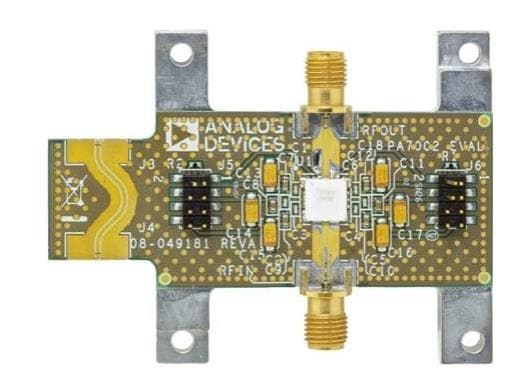
Where RF and wireless development tools fit in the design process
In many projects, development boards and evaluation modules are used to reduce uncertainty early in the design cycle. They give teams a faster way to assess front-end performance, interface behavior, frequency coverage, and integration complexity before investing in a production-ready layout.
Within this category, users may be working on short-range wireless links, broadband communication, or specialized RF signal processing tasks. If your project also extends into broader connectivity platforms, it can be useful to review related communication development tools for adjacent interfaces and protocol evaluation.
Typical product types in this category
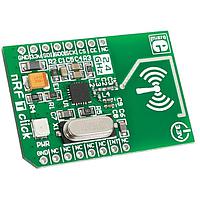
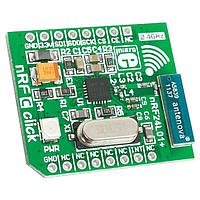
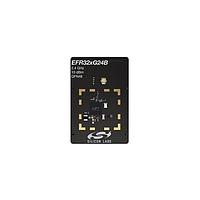
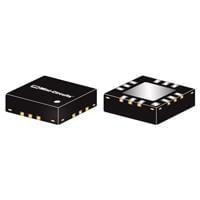
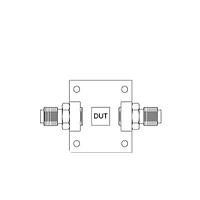
The scope of this category includes much more than simple starter boards. Some tools are intended to evaluate a specific RF amplifier, modulator, detector, or converter, while others provide module-level access to wireless connectivity for embedded development.
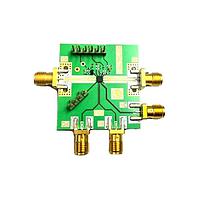
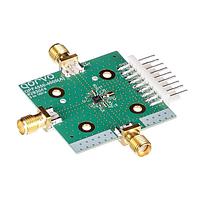
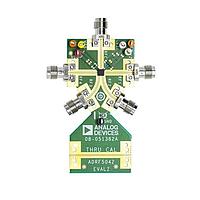
For example, evaluation boards such as the Analog Devices ADPA7006-EVALZ, ADL5375-05-EVALZ, and ADL5507-EVALZ are used to examine how a particular RF building block behaves in a realistic test setup. At the module level, parts such as the Broadcom BCM53347A0IFSBLG Bluetooth Modules and Broadcom BCM943362WCD4 Module 802.11 2400MHz 20000Kbps illustrate how development can move from protocol testing toward system integration.
Common engineering use cases
Wireless prototyping is one of the most common reasons engineers browse this category. Teams may need to validate Bluetooth communication, assess Wi-Fi connectivity, or explore how an RF subsystem behaves under expected operating conditions without building a custom board from scratch.
Another major use case is RF chain characterization. Boards such as the Analog Devices EVAL01-HMC996LP4E RF amplifier evaluation board, EV1HMC7912LP5 I/Q up converter evaluation PCB assembly, and AD6674-750EBZ RF development tool can support bench testing around amplification, upconversion, detection, or signal acquisition. This kind of development work is often part of a broader ecosystem that includes dedicated RF development tools for more focused signal-path evaluation.
How to choose the right platform
The best starting point is the actual engineering objective. If the priority is protocol or connectivity testing, module-based tools may be more appropriate. If the project is centered on signal conditioning, frequency conversion, gain stages, or power detection, a device-specific evaluation board is usually the better fit.
It also helps to look at the intended frequency range, supply requirements, and whether the board is designed for measurement, demonstration, or direct application development. Some products in this category are clearly aimed at component evaluation in the RF lab, while others are intended to help developers integrate wireless capability into a wider embedded system.
When projects branch into specific standards, related subcategories may be more efficient than browsing broadly. For instance, engineers focused on WLAN implementation can continue with Wi-Fi development tools, while teams centered on embedded short-range links may prefer dedicated Bluetooth-focused options.
Representative manufacturers and product ecosystems
Several established suppliers appear naturally in this category, depending on whether the work is RF-centric or connectivity-centric. Analog Devices is especially relevant for evaluation hardware around amplifiers, modulators, detectors, up-converters, and related signal-chain functions, making it a strong fit for engineers doing performance analysis or front-end development.
Broadcom is also relevant where integrated wireless modules are part of the design path, particularly for Bluetooth and Wi-Fi related development. Other manufacturers listed in the broader ecosystem may be useful depending on platform preference, embedded architecture, or lab workflow, but the most suitable choice still depends on the target protocol, measurement need, and level of integration required.
Why these tools matter before full production design
Evaluation hardware helps reduce risk in RF and wireless projects, where board layout, interference, matching, and signal quality can all affect final performance. Using a proven development platform allows engineers to isolate variables and understand device behavior before these challenges become expensive.
This is particularly important in B2B environments where timelines, compliance planning, and prototype reliability all influence purchasing decisions. A good development setup can support faster debugging, clearer component selection, and better coordination between RF, hardware, firmware, and test teams.
Building a more complete development workflow
RF design rarely happens in isolation. Depending on the application, developers may also need camera-related hardware for vision-enabled devices, memory tools for supporting processing subsystems, or communication platforms for adjacent interfaces. The right workflow often combines several tool types rather than relying on a single board.
For projects that move from radio validation into full embedded prototyping, this category serves as a practical bridge between device evaluation and application-level design. It supports engineers who need to compare architectures, test assumptions in the lab, and move toward a more robust wireless implementation with better confidence.
Final considerations
Choosing from a large range of RF and wireless platforms is easier when the selection is tied to a clear technical goal: protocol testing, signal-chain evaluation, module integration, or system prototyping. This category brings those paths together in one place, helping buyers and engineers identify development hardware that matches the stage and scope of their project.
If you are comparing options, start by narrowing the intended wireless standard, operating range, and evaluation purpose. That approach makes it easier to shortlist the right tools and build a more efficient path from concept to validated design.
Get exclusive volume discounts, bulk pricing updates, and new product alerts delivered directly to your inbox.
By subscribing, you agree to our Terms of Service and Privacy Policy.
Direct access to our certified experts