
Sub - GHz Development Tools
When a wireless design needs longer range, lower power consumption, or more reliable propagation through obstacles, engineers often move below the 1 GHz band. Sub - GHz Development Tools support that work by providing evaluation boards, daughter cards, gateway kits, and reference platforms used to validate RF performance, protocol behavior, and system integration before a product reaches production.
This category is especially relevant for teams developing ISM-band devices, proprietary sub-GHz links, and LoRa or LoRaWAN-based systems. Instead of relying only on datasheets, developers can use these tools to assess frequency coverage, interface options, matching approaches, and platform compatibility in a more practical lab environment.
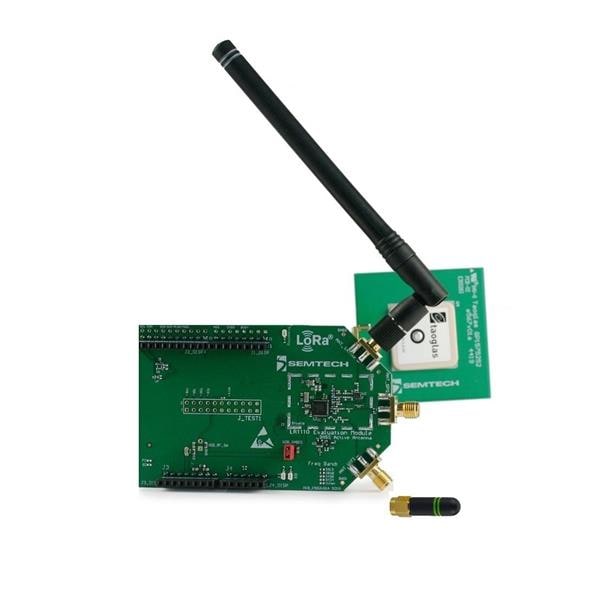
Where sub-GHz development tools fit in an RF workflow
In many RF projects, early validation is less about final enclosure design and more about proving the radio path, confirming link budget assumptions, and testing coexistence in a real operating environment. Development tools in this category help engineers move from concept to bench testing with less risk, whether the goal is a simple point-to-point radio, an ISM-band module, or a multi-node network.
Compared with other wireless platforms, sub-GHz solutions are often selected for applications that prioritize range and power efficiency. They are commonly used in industrial telemetry, remote sensing, smart infrastructure, and embedded control systems where signal penetration and battery life matter as much as throughput.
Common product types in this category
This selection includes more than one kind of hardware, which is important when building or evaluating a complete RF chain. Some tools are full evaluation kits designed around a target IC, while others are daughter boards intended to plug into a motherboard or base evaluation platform for focused testing of a specific frequency range or transceiver variant.
For example, several Analog Devices platforms in this category are designed for targeted RF evaluation across different bands, including boards for the ADF7020, ADF7020-1, ADF7023-J, and ADF7030-1 device families. There are also broader system-oriented options such as the Adafruit Feather M0 with RFM95 LoRa Radio and the 8 Channel LoRa Gateway Kit, which are useful when developers need to prototype both end nodes and gateway-side behavior.
Representative tools and what they help you evaluate
Some products are intended for narrow device-level validation. The Analog Devices MAX7037EVKIT868# evaluation kit, tuned to 868 MHz, is a good example of a platform used to examine how a specific receiver-related solution behaves in the intended regional band. Likewise, the EV-ADF70301-460BZ daughter board and EVAL-ADF7020DBZ1 module support focused work in 450-470 MHz and 902-928 MHz environments respectively.
Other tools support architecture exploration at a higher level. The Adafruit 3232 LoRa FeatherWing RFM95W 433 MHz and Adafruit 3178 Feather M0 with RFM95 LoRa Radio - 900MHz make it easier to prototype embedded LoRa endpoints with SPI-connected radio functionality. For gateway-side experimentation, the Adafruit 5198 8 Channel LoRa Gateway Kit with GPS helps teams evaluate network aggregation and timing in a more complete LoRaWAN-style setup.
There are also tools that support RF signal-chain development rather than a full radio node. The Mini-Circuits K-PD Design Kit, built around phase detector evaluation, illustrates how some sub-GHz development work can involve supporting analog and RF building blocks instead of only complete transceiver boards.
How to choose the right sub-GHz platform
The first consideration is the target frequency band. This category spans multiple regions and use cases, from 128-142 MHz and 433 MHz to 868 MHz, 902-928 MHz, 915 MHz, and higher sub-GHz evaluation ranges. Selection should align with the intended operating geography, permitted spectrum, and the actual IC or module being evaluated.
The second factor is the level of integration you need. If the goal is chipset characterization, daughter boards and dedicated evaluation kits are often the most efficient route. If the objective is fast application prototyping, a developer-friendly board with onboard radio and common interfaces may be more suitable. USB, USB Type-C, SPI, and serial connectivity can all influence how quickly a tool fits into your existing test setup.
It is also worth considering whether your work focuses on a proprietary sub-GHz link, ISM operation, or LoRa/LoRaWAN development. Tools built for protocol evaluation can save time when compared with adapting a generic RF board for network-level testing. Teams working across multiple wireless standards may also want to compare options in multiprotocol development tools when application requirements are still evolving.
Applications and engineering use cases
Sub-GHz development hardware is widely used in industrial and embedded applications where communication distance and robustness are important. Typical scenarios include remote monitoring nodes, metering systems, agricultural sensing, asset tracking infrastructure, building automation, and wireless control links in electrically noisy environments.
These tools are also useful for validating antenna and front-end decisions. In practice, radio performance depends not only on the transceiver but also on matching networks, power amplification, low-noise receive paths, and antenna behavior. If your project requires deeper work on the radiating side of the design, related antenna development tools can help extend the evaluation process beyond the base radio board.
Brand and ecosystem considerations
Different suppliers in this category support different design approaches. Adafruit is often relevant when teams want accessible prototyping hardware for embedded radio experimentation, especially around LoRa-based endpoints and gateways. Analog Devices appears more strongly in device-specific RF evaluation, with multiple daughter boards and kits covering distinct sub-GHz operating bands and transceiver families.
NXP is also represented with a reference design board for MRFX1K80N in the 87.5-108 MHz range, which can be useful for specialized RF power and circuit evaluation tasks. Meanwhile, vendors such as Mini-Circuits contribute tools that support measurement and signal-conditioning work, which can be critical in a lab workflow even when they are not the final radio platform.
Related categories worth exploring
Sub-GHz platforms often sit beside other wireless development technologies in real projects. If your design includes positioning features, adding GNSS/ GPS development tools may be relevant for location-aware tracking or timing-sensitive gateway applications. In the same way, teams building hybrid communication systems may review cellular or Bluetooth options depending on deployment architecture.
The right development environment is rarely defined by a single board alone. Engineers typically combine radio evaluation hardware, antenna tuning resources, firmware platforms, and test instrumentation to reduce design iterations and shorten the path to field validation.
Choosing with confidence
A well-matched sub-GHz development platform can make early RF decisions more measurable and less speculative. Whether you need a compact LoRa prototyping board, a gateway-oriented setup, or a dedicated daughter board for a specific transceiver family, the most useful choice is the one that aligns with your target band, protocol, interface needs, and evaluation depth.
By comparing the tools in this category through the lens of application, frequency, and integration level, engineering teams can build a more efficient path from feasibility testing to product design. That makes this category a practical starting point for anyone developing reliable low-power wireless systems below 1 GHz.
Get exclusive volume discounts, bulk pricing updates, and new product alerts delivered directly to your inbox.
By subscribing, you agree to our Terms of Service and Privacy Policy.
Direct access to our certified experts
