
Zigbee Development Tools - 802.15.4
Wireless product development often moves fastest when engineers can validate network behavior, firmware, and interfaces on proven hardware before committing to a final design. For teams building sensor nodes, gateways, smart lighting, building controls, or industrial monitoring systems, Zigbee Development Tools - 802.15.4 provide a practical starting point for evaluation, prototyping, and early integration work.
This category brings together boards, starter kits, and programming tools used to explore Zigbee and related low-power wireless implementations. Whether the goal is testing a specific SoC, bringing up an XBee-based design, or comparing different wireless ecosystems, these tools help shorten development cycles and make lab validation more predictable.
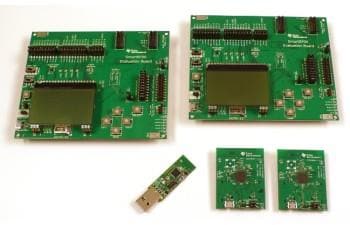
Where Zigbee development tools fit in a design workflow
In many embedded projects, the first challenge is not only choosing a radio technology, but also verifying how it behaves in a real application. Development tools in this category are typically used for protocol evaluation, firmware development, interface testing, and network bring-up. They are useful in both proof-of-concept stages and more structured engineering validation.
Zigbee remains relevant in applications that need low-power mesh networking, stable device-to-device communication, and support for distributed node architectures. Compared with broader wireless evaluation paths such as multiprotocol development tools, this category is especially useful when the project already points toward 802.15.4-based networking and the team wants hardware focused on that direction.
Typical products you will find in this category
The range usually includes development kits for specific wireless SoCs, ready-to-use starter kits for module families, interface boards, and programming accessories that support production or pre-production workflows. Some tools are intended for software and network experimentation, while others are designed to simplify module flashing, repeated test cycles, or deployment preparation.
Examples from this category illustrate that variety well. The Texas Instruments CC2538DK Development Kits CC2538 DEV KIT is positioned as a complete test and software development platform for CC2538 evaluation, while the NXP USB-KW41Z Development Tools KW41Z USB supports work around KW41Z-based wireless development. For module-oriented projects, the DIGI XK-B11-SK-W Starter Kits Drop-in Networking - Starter Kit ZNet 2.5 and DIGI XBEE-MP-SMT / XBEE-MP-TH programmers show how the ecosystem can extend beyond evaluation boards into configuration and programming support.
Common selection criteria for engineers and technical buyers
Choosing the right tool depends on how far along the project is and what needs to be validated first. A team evaluating a radio IC may prioritize the target device supported by the kit, available host interfaces such as USB, UART, SPI, or I2C, and how easily the platform fits into an existing embedded software environment. For network-level testing, developers may care more about supported frequency bands, protocol compatibility, and the ability to build small test networks quickly.
It is also important to distinguish between a board for evaluation and prototyping and a tool intended for repetitive engineering tasks. For example, a development kit such as the Texas Instruments CC2538DK or the NXP 1323XNSK-BDM is suited to early design exploration, whereas a programmer such as the DIGI XBEE-MP-TH may be more relevant when a workflow requires handling multiple XBee devices efficiently.
Examples from leading manufacturers
Several well-known vendors appear in this category, each aligned with different design approaches. Texas Instruments and NXP are often considered when engineers are evaluating wireless SoCs and embedded platform integration. Their tools are commonly used when the project starts from the chipset level and the development team wants direct control over firmware, interfaces, and network behavior.
Silicon Labs and CEL are relevant when module and ecosystem support are key considerations. The Silicon Labs RBK-ZW500-U2 Development Kits and CEL ZMXM-400-KIT-2 or ZFSM-101-KIT-1 offer examples of kit-based evaluation paths for wireless designs that need practical bench testing. DIGI and SparkFun are also useful in cases where XBee-based development or rapid prototyping is part of the workflow, including platforms such as the SparkFun WRL-21636 XBee Development Board and the SparkFun Thing Plus - XBee3 Micro (UFL).
Understanding the difference between Zigbee, XBee, and adjacent wireless platforms
One reason buyers compare products carefully in this category is that the hardware ecosystem can include both protocol-specific and platform-specific tools. Zigbee refers to a protocol stack built on IEEE 802.15.4, while XBee is a hardware platform family that may be used in Zigbee-oriented or related wireless development depending on the device and use case. That is why some products here are clearly identified for Zigbee evaluation, while others are centered on XBee hardware integration and configuration.
For projects still weighing alternatives, adjacent categories may also be relevant. If the application may move toward short-range point-to-point or mobile-connected designs, teams often compare with Bluetooth development tools or cellular development tools. That comparison can be useful when power profile, topology, bandwidth, and deployment environment are still under review.
Use cases across industrial and embedded applications
Zigbee development hardware is commonly used in projects where low data throughput, distributed nodes, and energy efficiency matter more than high-bandwidth communication. Typical engineering applications include environmental sensing, smart building infrastructure, connected lighting, remote I/O, metering concepts, and wireless control nodes. In these scenarios, a development kit helps teams validate not only radio performance but also overall system interaction with sensors, host processors, and gateway devices.
The interface options found on many tools in this category also support broader embedded integration work. Boards exposing USB, UART, SPI, I2C, Ethernet, or RS-232 can be easier to integrate into test benches, PC-based evaluation setups, or custom firmware workflows. That makes them useful for both design engineers and technical procurement teams who need development hardware that fits established lab processes.
How to narrow down the right option
A practical way to shortlist products is to start with the device family or module ecosystem already defined in the project. If the design centers on CC2538, a dedicated development platform is the logical choice. If the application is based on KW41Z, an evaluation tool built for that target will usually reduce setup time and improve software relevance. If the project is built around XBee modules, then starter kits, add-on boards, and programmers may be the better fit than a generic radio evaluation board.
It also helps to think one step beyond the demo stage. Some teams only need a single bench kit for protocol learning, while others need tools that support repeated firmware loading, multiple-node testing, or migration toward pilot builds. Looking at interfaces, target device support, and the role of each item in the workflow can prevent overbuying or choosing hardware that is helpful in a lab demo but less useful in day-to-day engineering.
Final considerations
A strong wireless development workflow depends on having the right hardware at the right stage, from first evaluation through integration and repeated testing. This selection of Zigbee and 802.15.4 tools supports that process with platforms for SoC evaluation, module-based prototyping, and programming support across several established manufacturers.
If you are comparing options, focus on the target chipset or module family, required interfaces, and the type of validation your team needs to perform next. That approach makes it easier to choose development tools that support real engineering progress rather than just initial experimentation.
Get exclusive volume discounts, bulk pricing updates, and new product alerts delivered directly to your inbox.
By subscribing, you agree to our Terms of Service and Privacy Policy.
Direct access to our certified experts