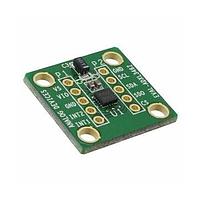
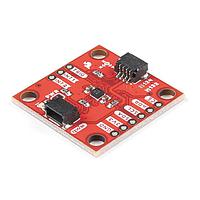
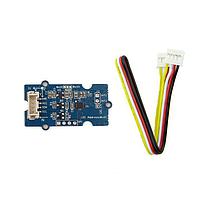
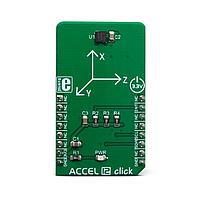
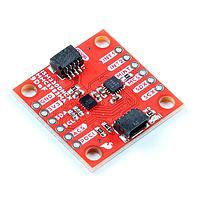
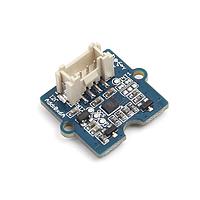
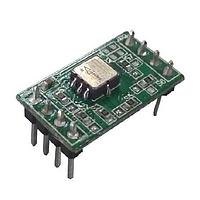
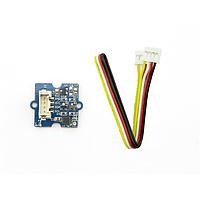
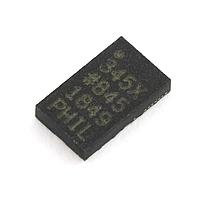
Acceleration Sensor Development Tools
When teams need to evaluate motion sensing quickly, the right development hardware can save significant time in prototyping, validation, and interface testing. Acceleration Sensor Development Tools help engineers work with MEMS accelerometers, vibration sensors, and motion devices before a design moves into production, making it easier to compare sensing ranges, signal behavior, and integration options in a real application environment.
These tools are commonly used in embedded design, industrial monitoring, condition-based maintenance, portable devices, and motion-aware systems. Instead of building a test platform from scratch, engineers can start with dedicated evaluation boards, breakout boards, and development kits that are already matched to specific sensor families and intended use cases.
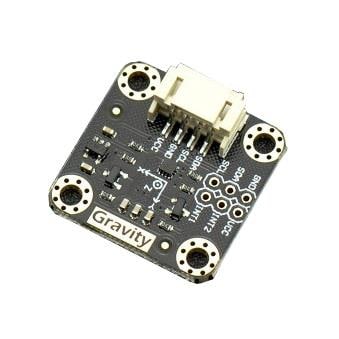
What this category is designed for
This category brings together hardware used to evaluate accelerometer-based sensing in a practical way. Depending on the device, that may include testing 3-axis acceleration measurement, reviewing digital or analog output behavior, examining low-power operation, or validating sensor response under shock and vibration.
For early-stage design work, these tools are useful for checking communication interfaces such as I2C, SPI, or analog outputs, as well as confirming whether a sensor’s measurement range fits the application. For example, one project may require fine low-g motion detection, while another may need a wider range for industrial vibration or dynamic movement analysis. If your design also involves broader sensing needs, it can be helpful to compare options alongside multiple function sensor development tools in mixed-sensor prototypes.
Common types of acceleration sensor development hardware
Not every development tool serves the same purpose. Some boards are built for straightforward evaluation of a single accelerometer, while others are intended for deeper work such as algorithm development, breakout access, or combined inertial sensing with both accelerometer and gyroscope functions.
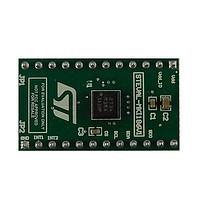
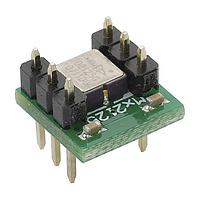
Evaluation boards like the Analog Devices EVAL-ADXL355Z or EVAL-ADXL362Z-DB are typically used to assess device performance, interface compatibility, and power-related behavior. Breakout-style solutions such as the Analog Devices ADIS16ACL1/PCBZ can make bench testing easier when engineers need quicker access to sensor signals and supporting circuitry. For more integrated motion sensing, the STMicroelectronics STEVAL-MKI227KA combines a 3-axis accelerometer and 3-axis gyroscope, which is useful when acceleration data must be interpreted alongside angular movement.
Examples from leading manufacturers
This category includes development hardware from established sensor suppliers, with strong representation from Analog Devices, STMicroelectronics, ROHM Semiconductor, TDK InvenSense, and PICO. Each vendor approaches evaluation somewhat differently, so the best fit depends on whether your priority is low power, vibration measurement, inertial sensing, or fast lab integration.
Examples in this range include the STMicroelectronics STEVAL-MKI015V1 for evaluating a 3-axis analog MEMS accelerometer, the TDK InvenSense EV_IAM-20680HP for acceleration sensor development, and the ROHM Semiconductor KX132-1211-EVK-001 evaluation board. For vibration-oriented work, the Analog Devices EVAL-CN0532-EBZ MEMS IEPE vibration sensor platform and the PICO TA095 accelerometer are especially relevant in test setups where motion data is tied to condition monitoring or oscilloscope-based analysis.
How to choose the right tool
A good starting point is the required measurement range. Some applications focus on relatively low acceleration levels for tilt, orientation, or gentle motion detection, while others need higher-g capability for impact sensing, machine dynamics, or vibration studies. Products in this category span different operating ranges, from low-g 3-axis evaluation boards to higher-range devices such as the Analog Devices EVAL-ADXL357Z.
Next, review the interface and development workflow. If your target design uses SPI or I2C, it makes sense to begin with a tool that exposes the same communication path. The Analog Devices EVAL-ADXL362Z-DB, for instance, is suited to low-power digital evaluation, while boards such as the ROHM Semiconductor EVAL-KXSD9-1026 support I2C-based testing. For engineers comparing motion sensing against related technologies in a larger prototype, adjacent categories such as magnetic sensor development tools may also be relevant.
Use cases in engineering and industrial development
Acceleration sensing appears in a wide range of practical systems. In embedded electronics, developers may use these tools to validate orientation detection, movement-triggered wake-up behavior, handheld motion measurement, or user-interface gestures. In industrial environments, the same category supports testing for vibration monitoring, rotating equipment analysis, and event detection in machinery or structures.
Development platforms also help reduce uncertainty before PCB design. Engineers can evaluate signal stability, noise behavior, and mounting considerations under real conditions instead of relying only on datasheet assumptions. Where the application includes broader machine health monitoring, acceleration tools are often considered alongside current sensor development tools to correlate electrical load and mechanical behavior.
Single-sensor evaluation vs. broader motion platforms
Some projects only need a simple board to verify whether one accelerometer meets the core sensing requirement. In those cases, a focused evaluation board is often the fastest path. Examples include the Analog Devices EVAL-ADXL355-PMDZ or EVAL-ADXL355Z, both aimed at bringing up a specific sensor family with minimal setup complexity.
Other applications benefit from a more complete inertial sensing platform. The STMicroelectronics STEVAL-MKI227KA is a good example of a kit intended for motion analysis that extends beyond pure acceleration data. Choosing between these two approaches depends on whether your immediate goal is component qualification or broader algorithm and system development.
Why development tools matter before production selection
Using dedicated acceleration sensor development hardware early in the design cycle helps teams compare device behavior under actual operating conditions. That is particularly useful when the application has strict requirements for power consumption, sensitivity, temperature range, axis configuration, or digital integration. A sensor that looks suitable on paper may behave differently once mounted, sampled, and processed in a real system.
These tools also make collaboration easier between hardware, firmware, and test engineers. Bench evaluation can begin immediately, data can be captured sooner, and design decisions become more evidence-based. For B2B buyers and engineering teams, that translates into faster screening of candidate sensors and a smoother path toward production-ready motion sensing hardware.
Final considerations
Choosing from this category is less about finding a generic board and more about matching the tool to the sensing task, interface, and development stage. Whether the goal is low-power MEMS evaluation, high-range acceleration testing, combined accelerometer and gyroscope analysis, or vibration measurement, a well-chosen platform makes validation more efficient and more reliable.
As you compare available options, focus on sensing range, axis count, interface type, and the evaluation objective itself. That approach will help narrow the selection to development tools that genuinely support your design workflow rather than adding unnecessary complexity.
Get exclusive volume discounts, bulk pricing updates, and new product alerts delivered directly to your inbox.
By subscribing, you agree to our Terms of Service and Privacy Policy.
Direct access to our certified experts