Multiple Function Sensor Development Tools
When a sensing project spans more than one variable, choosing the right development platform becomes just as important as selecting the sensor itself. Teams working on embedded products, industrial monitoring, smart devices, or proof-of-concept systems often need a practical way to evaluate combined sensing functions before moving into hardware integration. That is where Multiple Function Sensor Development Tools help streamline validation, firmware testing, and system-level design decisions.
Why multi-function sensor development tools matter
Single-parameter testing is useful in early engineering work, but many real applications depend on several inputs at once. Environmental monitoring, condition-based maintenance, occupancy detection, motion tracking, and equipment diagnostics often combine different sensing methods within the same design workflow. Development tools in this category support that broader process by helping engineers assess how sensors behave alongside interfaces, controllers, and software.
Instead of treating each signal in isolation, these tools are useful for checking sensor interaction, response behavior, data acquisition, and prototype readiness. They can shorten evaluation time when a project includes motion, gas, radar, optical, or general-purpose sensing elements in one development path.
Typical use cases in engineering and embedded design
Multiple-function sensor platforms are relevant when design requirements are still evolving or when the final product must combine several detection methods. This is common in industrial electronics, smart building systems, portable devices, and edge processing applications where one board or kit may be used to test different sensing strategies.
For example, a team may evaluate motion and vibration behavior for predictive maintenance, then compare that with gas or CO2 measurement for environmental safety. In another case, a developer may explore radar-based presence sensing alongside standard embedded expansion hardware. Because the category is broad, it is especially useful for engineers who need evaluation flexibility rather than a narrowly defined test setup.
Examples of tools found in this category
The product mix in this category reflects that flexibility. Some items are dedicated evaluation kits for advanced sensing concepts, while others support integration, cable management, or signal handling within a broader development environment. That makes the category useful not only for testing sensors themselves, but also for building a workable lab setup around them.
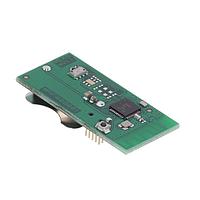
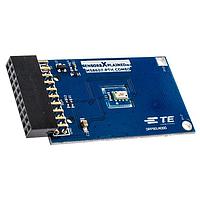
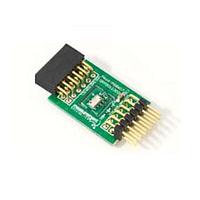
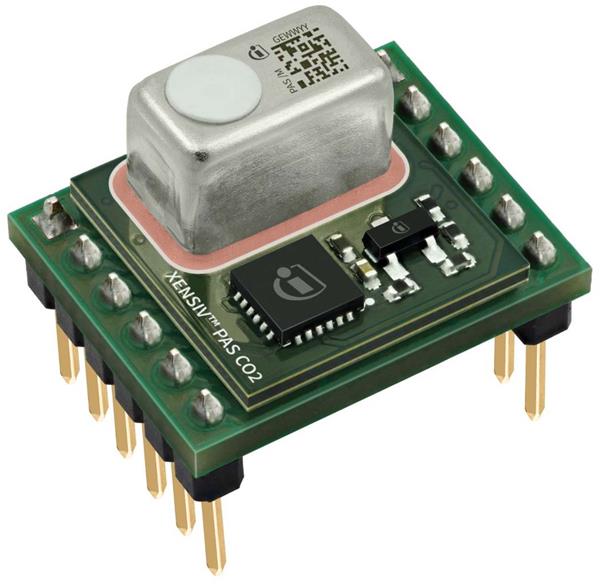
Representative examples include the ams OSRAM NANOUSB2.2 Sensor Development & Evaluation Kits, the Infineon EVALCO25VMINIBOARDTOBO1 for PAS CO2 sensor evaluation, and the Infineon DEMOBGT60LTR11AIPTOBO1 radar sensor demo board. For vibration and condition monitoring workflows, tools such as the Analog Devices EVAL-CN0540-ARDZ and EVAL-CN0533-EBZ help engineers assess data capture and sensing behavior in practical test conditions.
There are also supporting components such as the HellermannTyton cable shield range, including 901-00033, 901-00031, VOG20, and VOG16. These are not sensor evaluation boards in the same way as electronic kits, but they can play a useful role in protecting cable routing and supporting cleaner installation practices in development or test environments.
How to choose the right tool for your application
A good starting point is to define whether your immediate goal is sensor characterization, firmware development, interface validation, or application-level prototyping. If you need to study a specific sensing method, a focused evaluation board may be the better fit. If the project requires combining several signals or comparing multiple approaches, a more versatile development setup can be more efficient.
It also helps to look at interface requirements and system compatibility. Some tools are intended for straightforward bench evaluation, while others are better suited for integration into microcontroller-based workflows, PMOD-style expansion, or SPI-connected systems. For projects with broader embedded design requirements, related options such as acceleration sensor development tools or distance sensor development tools may also be relevant when narrowing the sensing architecture.
Leading manufacturers and ecosystem compatibility
This category includes solutions from well-known sensor and semiconductor suppliers with established development ecosystems. Analog Devices appears prominently in evaluation platforms for vibration, toxic gas, and condition-monitoring related development. Infineon contributes tools for CO2 sensing, radar evaluation, and expansion-oriented sensor development, which is useful for teams building proof-of-concept systems around embedded processing.
ams OSRAM is also relevant for optical and sensor evaluation workflows, while other manufacturers in the wider sensor ecosystem can support adjacent project needs depending on the architecture being explored. In practice, manufacturer choice often depends less on brand preference alone and more on the availability of documentation, software support, interface compatibility, and how closely a tool matches the intended end application.
From proof of concept to system integration
One of the main advantages of this category is that it supports the transition from early testing to more realistic integration work. Engineers can start with a board that validates sensing performance, then move into data processing, communication, enclosure constraints, and cable management as the design matures. That progression is particularly important in industrial and commercial projects where sensing hardware must perform reliably outside the lab.
Multi-function development tools are also valuable when procurement teams and design engineers need a practical shortlist for evaluation. Rather than committing immediately to a final bill of materials, they can compare platforms, assess development effort, and identify which sensing functions deserve deeper validation. If your project is expanding toward mixed-signal or broader embedded sensing, it may also be useful to review magnetic sensor development tools for related evaluation paths.
What to look for before ordering
Before selecting a tool, review the intended sensor type, supported interface, power requirements, and how the kit fits your lab workflow. A compact board may be ideal for quick evaluation, while a more application-oriented platform can be better for data logging or system demonstrations. For accessories and shielding components, installation method and cable compatibility matter just as much as the core electronics.
It is also worth considering whether the development tool will be used by firmware engineers, hardware designers, or application engineers, because that affects the importance of software examples, expansion support, and test accessibility. Choosing with the full workflow in mind usually leads to faster evaluation and fewer redesign steps later.
Final thoughts
Multiple-function sensor development work is rarely limited to one signal path or one board. The value of this category lies in giving engineering teams a practical way to compare sensing approaches, validate interfaces, and support integration from early concept through application testing. Whether you are evaluating vibration, gas, radar, optical, or mixed sensing behavior, the right toolset can make development more structured and easier to scale into the next design stage.
Get exclusive volume discounts, bulk pricing updates, and new product alerts delivered directly to your inbox.
By subscribing, you agree to our Terms of Service and Privacy Policy.
Direct access to our certified experts