Position Sensor Development Tools
Choosing the right development platform can shorten evaluation time, reduce integration risk, and make it easier to validate motion or displacement feedback before a design moves into production. For engineers working with rotary, linear, or motion-aware systems, Position Sensor Development Tools provide a practical starting point for testing interfaces, firmware behavior, signal handling, and system-level control strategies.
This category is relevant for design teams building industrial controls, motor-driven equipment, embedded electronics, and intelligent machines where position feedback influences accuracy, responsiveness, or safety. Instead of jumping straight to a custom board, developers often begin with demonstration boards, MCU cards, adapter modules, and programming accessories that support faster prototyping and more reliable design decisions.
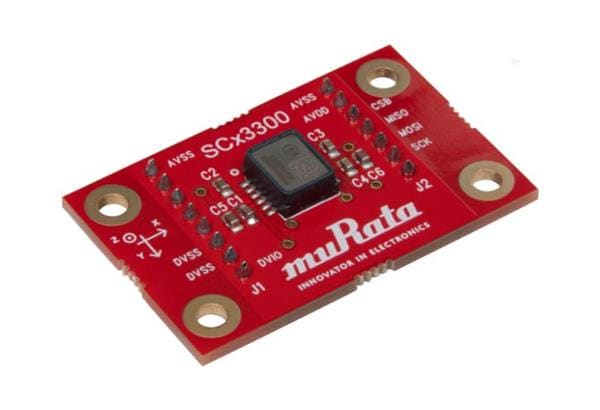
Where position sensor development tools fit in the design process
Position sensing is rarely an isolated function. In real applications, sensor feedback is typically part of a wider control loop that may include a microcontroller, communication interface, power stage, motor drive, or diagnostic layer. Development tools in this category help engineers verify that the sensing path works correctly within that broader embedded system.
Depending on the project, the focus may be on signal acquisition, control response, firmware testing, or hardware compatibility. Some tools are used to explore proof-of-concept ideas, while others support a more advanced stage such as device programming, package adaptation, or subsystem validation. If your application also combines positional feedback with speed or motion analysis, it can be useful to review related multiple function sensor development tools for broader evaluation options.
Typical tool types found in this category
This category may include several forms of hardware used during development rather than final deployment. Demonstration boards are common when teams need a quick way to evaluate processing capability, interface support, and example workflows. Adapter modules are often used when device programming or package-specific evaluation requires a compatible intermediary platform.
Programming accessories and socket cards also play an important role, especially when working with programmable logic or device families that need dedicated handling during development. These tools are not substitutes for the end sensor itself; instead, they help engineers test how a sensing concept can be read, controlled, interpreted, or integrated into the target system.
Representative Microchip tools for embedded evaluation
Among the products highlighted in this category, Microchip is a notable example for teams building embedded control and signal-processing workflows around sensor feedback. The Microchip EV02G02A dsPIC33AK128MC106 General Purpose Dual In-Line Module Demonstration Board is suited to general embedded evaluation, while the EV67K87A Digital Power Plug-In Module Demonstration Board is relevant when position feedback is part of a power-control environment.
For motion-oriented development, the Microchip EV68M17A dsPIC33AK128MC106 Motor Control Dual In-Line Module Demonstration Board and the AC320208 ATSAME54 Motor Control MCU Card are useful examples of platforms that support testing within motor control architectures. In many practical systems, position feedback is tightly linked to motor commutation, speed regulation, and control-loop tuning, so these kinds of boards can be highly relevant even when the sensing element is not the only focus.
This category also includes support hardware such as the DSC-PROG-5032 socket card and several adapter modules, including SMPA-256FG-ACTEL-1, SM175PG-ACTEL, SM3F-132QN-ACTEL, SM3F-48QN-ACTEL, and SM144TQ-ACTEL. These are especially useful in workflows that require device programming, package adaptation, or FPGA and antifuse device handling as part of a broader development environment.
How to select the right platform for your project
The most important selection factor is the stage of development. If the goal is early concept validation, a general-purpose demonstration board may be enough to explore communication interfaces, firmware structure, and signal acquisition. If the project is already moving toward hardware-specific testing, adapter modules or socket-based tools may be more appropriate because they align better with package, programming, or target-device requirements.
It is also helpful to consider the surrounding application context. A position-sensing design used in servo systems or electromechanical assemblies may need close alignment with motor control resources, while a compact embedded project may prioritize interface simplicity and rapid firmware iteration. Where the design also depends on magnetic field interpretation, related magnetic sensor development tools can provide useful context during platform comparison.
Common application areas
Position feedback is used across a wide range of industrial and embedded systems. Typical examples include motor control platforms, actuator positioning, robotics subsystems, smart mechanisms, and closed-loop control assemblies. In these environments, development tools help teams verify whether sensing data can be captured consistently and processed in a way that matches the intended response of the system.
In some projects, position information works alongside current monitoring, acceleration data, or distance measurement. That is especially common in automation, predictive maintenance, and motion analysis applications. If your evaluation involves electrical load behavior as well as positional change, related current sensor development tools may support a more complete test setup.
Why development tools matter before final hardware design
Using the right evaluation hardware early in the project can reveal issues that are difficult to fix later, such as interface mismatches, control-loop instability, firmware timing constraints, or packaging limitations. Development boards and adapter modules make it easier to isolate these risks while the design is still flexible.
They also support collaboration across hardware, firmware, and application teams. A board that exposes standard interfaces such as I2C, QSPI, UART, or USB can simplify test workflows, data capture, and debugging, especially when the sensing function must interact with other subsystems. This is one reason engineers often treat development hardware as a bridge between the sensor concept and the final production architecture.
Building a broader sensor evaluation workflow
Many engineering teams do not evaluate position sensing in isolation. A realistic prototype may combine several sensing methods to improve reliability, context awareness, or control accuracy. For example, a motion system may use positional data together with acceleration or proximity information to refine behavior across different operating states.
That broader workflow is why category-level selection matters. Choosing the right development tools here can help create a smoother path toward integrated testing across embedded processing, communications, and sensor fusion strategies. Teams exploring motion-centric designs may also find value in adjacent categories such as acceleration sensor development tools when expanding prototype scope.
Conclusion
For engineers developing motion-aware and control-oriented systems, this category brings together practical hardware that supports evaluation, programming, and integration work around positional feedback. From general-purpose demonstration boards to motor-control platforms and adapter modules, these tools help reduce uncertainty during prototyping and system validation.
If you are comparing options, focus on the actual development task at hand: concept testing, firmware bring-up, package adaptation, or application-specific control evaluation. That approach makes it easier to choose a platform that supports your workflow today while keeping the design path open for future refinement.
Get exclusive volume discounts, bulk pricing updates, and new product alerts delivered directly to your inbox.
By subscribing, you agree to our Terms of Service and Privacy Policy.
Direct access to our certified experts