Pressure Sensor Development Tools
When you need to validate pressure measurement quickly, the right development platform can save a significant amount of design time. Evaluation boards, breakout boards, and sensor shields make it easier to test signal behavior, compare interfaces, and confirm how a device will perform in real application conditions before moving into a full hardware design.
Pressure Sensor Development Tools are used by engineers, embedded developers, and prototype teams to explore pressure sensing for industrial control, environmental monitoring, medical-adjacent concepts, fluid handling, wearable ideas, and general embedded system development. This category brings together practical hardware for sensor evaluation, interface testing, and rapid proof-of-concept work across I2C, SPI, and mixed-platform environments.

What these tools are used for in development work
Unlike a bare sensor component, a development tool is designed to help teams get started faster. It may include a ready-to-use interface, onboard conditioning, convenient connectors, or compatibility with common MCU and prototyping ecosystems. That makes early-stage testing more efficient, especially when engineers need to verify pressure response, communication stability, and software integration.
In practice, these tools support tasks such as firmware development, functional comparison between sensor families, calibration studies, and application feasibility checks. They are also useful for teams building broader sensing platforms alongside related categories such as multiple function sensor development tools when pressure is only one part of the sensing stack.
Common formats in this category
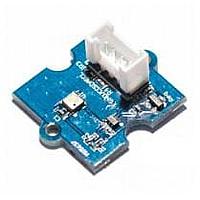
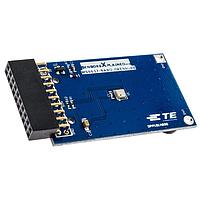
This category includes several hardware styles because development needs vary by project stage. Evaluation boards are often chosen for first-pass testing because they provide a straightforward path to powering the device and reading measurements. Breakout boards are helpful when compact integration into a breadboard or custom prototype is the priority, while sensor shields can simplify work with existing development platforms.
Examples in this range illustrate that variety well. The Honeywell MPRLS0300YG00001BB evaluation board is aimed at evaluation use with an I2C interface, while the Honeywell MPRLS0015PA0000SAB breakout board supports compact integration during prototyping. For platform-oriented work, NXP options such as the FRDMSTBCDP5004 and FRDMSTBC-P3115 sensor shield boards are relevant where a broader development ecosystem is already in place.
Interface and integration considerations
One of the first filters when selecting a pressure sensor tool is the communication interface. Many engineers prefer I2C for fast setup and lower pin count, especially in compact MCU-based systems. In this category, I2C appears on boards such as the Mitsumi MMR920C04 I2C Board Sensor and the Infineon KITDPS3102GOTOBO1, making them suitable for rapid embedded evaluation.
Some projects need more flexibility, especially when sharing buses or optimizing throughput. Boards with I2C and SPI support, such as Adafruit 4414 and Adafruit 4258, can help teams compare integration approaches before finalizing the design. If your development workflow also involves motion or position feedback, it may be useful to review acceleration sensor development tools in parallel for multi-sensor prototyping.
Application-focused selection: gauge, barometric, water-resistant, and force-based options
Pressure sensing is not a single use case, and development boards reflect that diversity. Some tools are better suited for gauge pressure experiments, while others are used for absolute or barometric-style measurement concepts. There are also solutions intended for more specialized prototyping conditions, including water-resistant designs and force-sensitive input devices.
For example, the Mitsumi MMR920C04 board is positioned around gauge pressure evaluation, while Adafruit 4414 and Adafruit 4258 are built around water-resistant pressure sensing devices. The Adafruit 1075 Square Force Sensitive Resistor represents a different pressure-related approach, where applied force detection may be more relevant than fluid or air pressure measurement. This distinction matters because the right tool depends on what the system is actually measuring and how the sensing element will be used.
Representative manufacturers in this category
Several established suppliers appear prominently in this range of development tools. Honeywell is a common choice when engineers need accessible evaluation and breakout formats for pressure sensing. Infineon is also well represented with development boards for DPS-series evaluation, offering a practical route for embedded pressure measurement studies.
Adafruit is relevant for fast prototyping and maker-friendly integration, especially where STEMMA QT connectivity and compact board formats are helpful. NXP appears more strongly in ecosystem-based development through shield and breakout options for specific sensor families, while Mitsumi contributes board-level tools that can support direct interface testing and Arduino-adjacent experimentation through products such as its sensor shield.
How to choose the right pressure sensor development tool
A good starting point is to define the measurement context clearly. Consider whether you are working with air, liquid, altitude-related pressure estimation, touch/force input, or differential/gauge sensing. Then match that need against the tool format, interface type, target supply voltage, and the platform you want to develop around.
It is also useful to think about the next step after evaluation. If the goal is firmware validation, a simple breakout may be enough. If the goal is broader system prototyping, a board that fits into a larger embedded workflow can be more efficient. Teams comparing pressure with other physical variables may also benefit from browsing current sensor development tools or distance sensor development tools when building a more complete sensing architecture.
Typical engineering use cases
Pressure sensor development tools are commonly used in proof-of-concept builds, embedded firmware bring-up, lab validation, and educational or R&D environments. They help reduce uncertainty early in the project by providing a faster way to observe pressure readings, test bus communication, and identify integration issues before layout and production decisions are locked in.
They are also valuable for comparing multiple sensing approaches side by side. An engineer might evaluate a compact I2C board for a low-power design, compare it with a water-resistant option for harsher environments, and then move to a shield-based setup for software stack development. This staged approach is often more efficient than selecting a production sensor too early without practical testing.
Final thoughts
Choosing from this category is less about finding a generic board and more about selecting the right path for evaluation. Interface compatibility, board format, target application, and development workflow all influence which tool will be most useful in the lab.
Whether you are testing a compact breakout, an evaluation board, or a sensor shield for a larger embedded platform, these pressure sensing tools help shorten the path from concept to validated design. A focused selection process will make it easier to compare devices, build firmware sooner, and move into the next design stage with better technical confidence.
Get exclusive volume discounts, bulk pricing updates, and new product alerts delivered directly to your inbox.
By subscribing, you agree to our Terms of Service and Privacy Policy.
Direct access to our certified experts