Photoresistors
Light-dependent sensing is still a practical choice in many electronic designs, especially when a circuit needs a simple, analog response to changing illumination. Photoresistors, also known as LDRs or CdS photocells, are widely used for light level detection, switching, dimming, and general-purpose sensing where cost, simplicity, and broad light response matter more than ultra-fast signal processing.
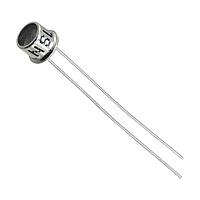
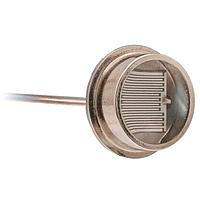
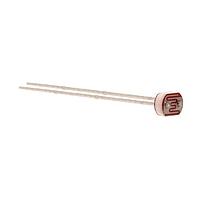
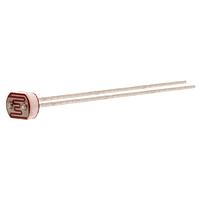
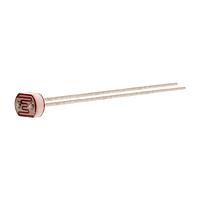
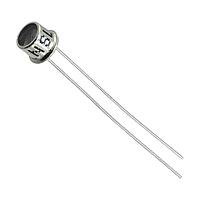
In this category, you can explore photoresistor devices suited to OEM development, repair work, embedded control, and industrial electronics. The range includes ceramic and hermetic photocells, through-hole parts, and wire-lead styles, with options from Advanced Photonix for different mechanical and electrical requirements.
How photoresistors are used in electronic systems
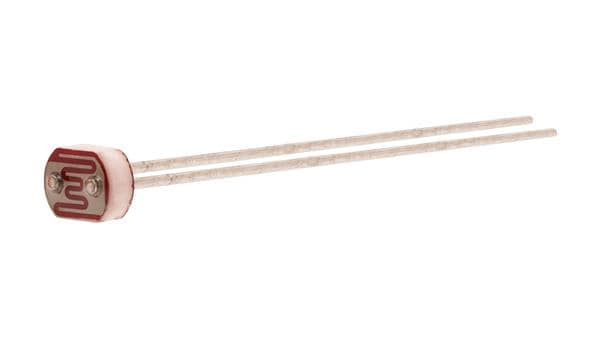
A photoresistor changes resistance according to the amount of incident light. In darker conditions, resistance is typically higher; as illumination increases, resistance drops. This behavior makes the device useful in circuits that need a direct relationship between ambient light and electrical response without complex signal conditioning.
Common use cases include light-activated switching, display and panel brightness control, basic exposure detection, indicator dimming, and educational or prototyping circuits. For applications that require a different sensing principle, you may also want to compare related technologies such as photodiodes or phototransistors, which are often selected when faster response or different output characteristics are needed.
What to consider when selecting a photoresistor
The right part depends on how the sensor will be integrated into the circuit and operating environment. Engineers usually review parameters such as spectral response, voltage rating, power dissipation, mounting style, and usable temperature range. These factors help determine whether a part is better suited to indoor light sensing, equipment panels, embedded boards, or more protected assemblies.
Spectral sensitivity is especially important because not all light sources behave the same way. Some photoresistors in this category are specified around visible wavelengths such as 520 nm, 550 nm, or 570 nm, which can be relevant when matching the sensor to LEDs, ambient lighting, or application-specific optical conditions. Mechanical packaging also matters, particularly where board space, sealing, or lead format affects installation.
Examples from the available product range
The category includes multiple established part families from Advanced Photonix. Models such as the PDV-P9002, PDV-P9008, and PDV-P9103 illustrate typical CdS photocell options for general light-sensing designs, with through-hole configurations that fit traditional PCB assembly and prototyping workflows.
Other parts help address more specific packaging needs. The NORPS-12 and NSL-5112 are ceramic photocell examples, while the NSL-4140 provides a hermetic photocell option for designs where package protection may be more important. For broader design comparison, the lineup also includes devices such as the PDV-P7002, PDV-P5001, PDV-P9200, PDV-P9005, and PDV-P8107, giving buyers a useful spread of electrical and mechanical characteristics within one category.
Packaging, mounting, and environmental fit
When selecting a photoresistor for production or maintenance, packaging is often just as important as the sensing curve. Through-hole devices remain common in industrial electronics, legacy boards, test fixtures, and low-volume assemblies because they are easy to handle and integrate. Wire-lead versions can also be useful when sensor placement must be separated from the main board or aligned with a specific light path.
Operating temperature and power handling should also be reviewed in context. Several listed parts are designed for typical electronic environments with temperature ranges extending below freezing and up to elevated operating conditions, which can support use in control panels, instruments, and enclosed equipment. If the application is mainly intended to measure surrounding illumination rather than act as a resistive light element in a custom circuit, ambient light sensors may be worth reviewing as a complementary category.
Photoresistors compared with other optical detectors
Photoresistors are valued for their simplicity and intuitive analog behavior, but they are not the right answer for every optical design. A designer choosing among optical detector types should think about required response time, signal linearity, interface electronics, and light intensity range. In many practical systems, the best component is the one that matches the circuit architecture rather than the one with the most advanced specification.
Photoresistors are often chosen when a straightforward resistance change is enough for the design. By contrast, photodiodes and phototransistors are frequently used where faster reaction or more defined semiconductor output behavior is preferred. This is why category-level comparison is useful early in component selection, especially for OEMs building repeatable sensing assemblies.
Typical B2B buying considerations
For engineering teams, contract manufacturers, and maintenance buyers, component selection usually goes beyond nominal function. It is important to verify whether the chosen photoresistor aligns with assembly method, enclosure layout, expected light source, and long-term replacement strategy. Consistency in package style and electrical behavior can simplify qualification and reduce redesign work later.
Buyers also often shortlist several part numbers rather than relying on a single option immediately. Comparing models like PDV-P9002-1, PDV-P9002, PDV-P9008, and NSL-4140 can help clarify whether the priority is mounting convenience, package type, environmental fit, or sensitivity behavior. This category structure supports that evaluation process by grouping relevant photocell options in one place.
Finding the right photoresistor for your design
Whether you are sourcing for a new board design, replacing a legacy light-sensitive component, or evaluating sensing options for industrial electronics, this category provides a focused starting point. The available range covers common LDR and CdS photocell formats used in practical light-detection circuits, with representative options from Advanced Photonix across several package styles.
A good selection process starts with the actual application: light source, circuit topology, mounting constraints, and environmental conditions. Reviewing those factors first will make it easier to narrow down the most suitable photoresistor and decide when an alternative optical detector technology may be a better fit.
Get exclusive volume discounts, bulk pricing updates, and new product alerts delivered directly to your inbox.
By subscribing, you agree to our Terms of Service and Privacy Policy.
Direct access to our certified experts