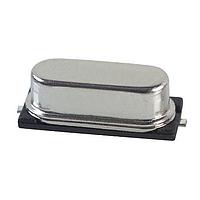
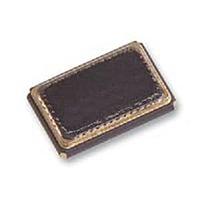
Frequency Control & Timing Devices
Stable timing is a small detail that has a large impact on electronic design. From clock generation in digital circuits to signal synchronization in communication hardware, Frequency Control & Timing Devices help keep systems accurate, repeatable, and dependable across a wide range of operating conditions.
On this category page, buyers and design engineers can explore timing components used to define, maintain, or distribute frequency references in embedded systems, industrial electronics, measurement equipment, and connected devices. Whether the requirement is a basic crystal reference or a programmable oscillator for more flexible clock design, the right component choice supports both performance and long-term product stability.
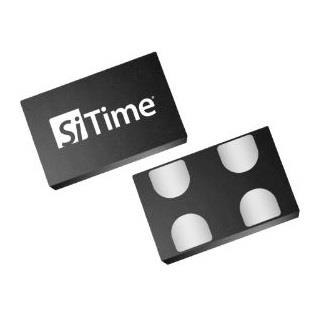
Where timing devices fit in an electronic system
Many circuits rely on a known frequency source to operate correctly. Microcontrollers, communication interfaces, processors, sensor modules, and data conversion circuits all depend on a timing reference to sequence operations, manage data transfer, and maintain synchronization between subsystems.
In practical design work, timing components are rarely selected in isolation. They are typically considered alongside supporting capacitor options, signal-conditioning elements such as filters, and the electrical characteristics of the full board-level design. This broader context helps ensure that the selected device performs consistently in the intended application.
Typical product types in this category
This category covers components used to establish and control frequency references, including crystal-based devices and oscillator solutions. In broad terms, crystals are often used as precision resonant elements, while oscillators provide an active clock output that can simplify implementation in digital systems.
For teams comparing architectures, the difference usually comes down to integration level, startup behavior, output format, and design flexibility. A simple crystal may suit a compact, cost-conscious design when paired with the right circuitry, while a programmable oscillator can be useful when a specific output frequency is required without redesigning the timing stage.
Examples from the available range
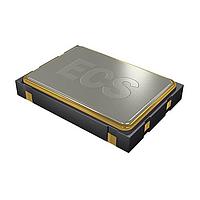
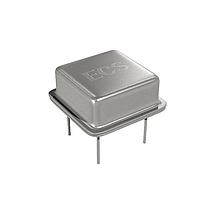
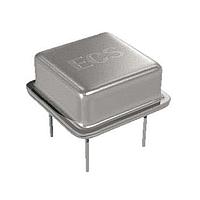
The product selection in this category includes several Epson timing devices that illustrate the range of common design needs. Examples such as the Epson SG-8002CE 23.04000MHZ PHC Programmable oscillator, Epson SG-8002CA 62.18750MHZ SHC Programmable oscillator, and Epson SG-8101CB 50.3033M-TBGSA0 Programmable oscillator show how programmable clock sources can support application-specific frequency planning.
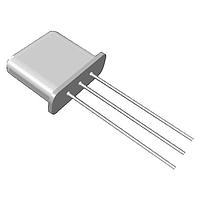
There are also standard crystal oscillator and crystal references for designs that need stable fixed-frequency operation. Parts such as the Epson SG-8018CE 91.8750M-TJHSA0 Crystal Oscillators, Epson SG-210SED 75.000000MHZ L Crystal Oscillators, and Epson TCO-7087D1A1 10.0000M3 Crystal demonstrate how different timing components can serve different roles depending on circuit topology, voltage rail, package constraints, and target environment.
How to choose the right timing component
Selection usually starts with the required frequency and the type of signal the downstream circuit expects. Designers should also review supply voltage, output logic compatibility, startup requirements, operating temperature, footprint, and whether the design needs a passive resonant element or an active clock source.
Another important point is system tolerance. In many industrial and embedded applications, timing accuracy influences communication reliability, conversion timing, and overall control behavior. A component that looks suitable by nominal frequency alone may not be the best choice if the design also requires tight stability over temperature or predictable operation during standby and power transitions.
When a project needs greater sourcing flexibility or simplified clock-tree design, programmable oscillator families can be especially useful. For fixed-reference needs, a crystal-based option may still be appropriate, provided the surrounding circuit is designed to support it correctly.
Manufacturer coverage and sourcing context
This category includes products from recognized electronic component manufacturers, with Epson standing out in the current featured range. Epson timing devices are commonly specified in designs that need dependable frequency references across embedded, communication, and control applications.
Depending on sourcing strategy and design platform, buyers may also review component ecosystems from manufacturers such as CITIZEN, Analog Devices, and Infineon where relevant to the wider electronics design stack. The exact choice will depend on the target function, qualification process, and whether the requirement is centered on timing, signal processing, or integrated subsystem design.
Applications across industrial and embedded electronics
Frequency control components are used in a wide variety of end products, including controllers, gateways, communication modules, monitoring equipment, and compact digital devices. In these systems, the timing element contributes to clock stability for processors, interfaces, and synchronized data handling.
They also work closely with other passive and RF-related building blocks. For example, designs involving wireless connectivity may combine timing components with an antenna solution, while power-sensitive or noise-sensitive boards may require careful coordination with surrounding passive networks to maintain signal integrity and startup reliability.
Why category-level comparison matters
For B2B purchasing and engineering teams, evaluating this category at a broader level can save time before narrowing down to individual part numbers. Instead of filtering by frequency alone, it is often more effective to compare device types, output behavior, packaging considerations, and how each option fits the intended production environment.
This is especially useful when moving from prototype to production, where lead time, approved vendor lists, and second-source planning may influence final component selection. Reviewing the category as a whole helps identify whether a design should stay with a fixed crystal approach or move toward a more flexible oscillator-based solution.
Supporting a more reliable design process
A well-chosen timing component supports more than basic clock generation. It can affect startup consistency, communication stability, power behavior, and the margin available in the full system design. That is why frequency selection should be aligned with the electrical and functional needs of the complete application, not just a single schematic block.
As you review the available frequency control products, it helps to compare device type, intended use case, and integration requirements side by side. For applications that also depend heavily on signal conditioning and passive network behavior, related categories such as inductors may also be relevant during the broader design process.
Choosing from the Frequency Control & Timing Devices range is ultimately about matching timing architecture to system requirements. By comparing crystals, oscillators, and programmable options in context, engineering and procurement teams can move toward components that support stable operation, cleaner integration, and a more efficient path from design to deployment.
Get exclusive volume discounts, bulk pricing updates, and new product alerts delivered directly to your inbox.
By subscribing, you agree to our Terms of Service and Privacy Policy.
Direct access to our certified experts