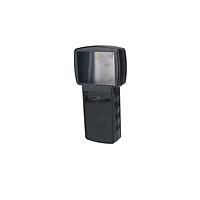
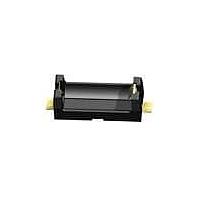
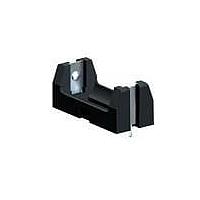
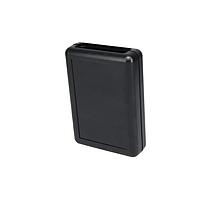
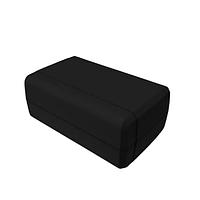
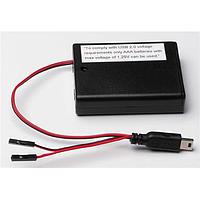
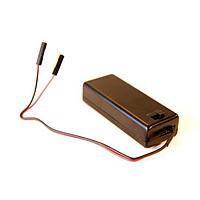
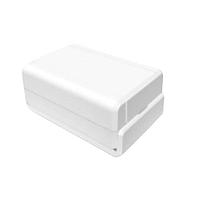
Battery Enclosures
Reliable portable power starts with more than the battery itself. In many electronic assemblies, a well-matched battery enclosure helps protect cells, organize wiring, simplify installation, and support safer day-to-day handling in prototypes, embedded devices, service tools, and low-voltage equipment.
On this page, Battery Enclosures are presented as a practical category for designers, maintenance teams, and OEM buyers who need a secure way to mount and connect batteries inside a product or standalone housing. The right choice depends on battery format, mechanical constraints, access requirements, and the overall environment in which the device will operate.
Why battery enclosures matter in real applications
Battery enclosures do more than hold cells in place. They help reduce movement, protect terminals from accidental contact, and create a cleaner integration point for power inside electronic equipment. In compact systems, that mechanical stability can also improve serviceability by making battery replacement faster and more predictable.
For industrial, commercial, and engineering use, enclosure selection often affects assembly efficiency just as much as electrical compatibility. A suitable housing can support cable routing, cover retention, panel mounting, or general equipment organization, especially when the battery system needs to be accessed without disturbing surrounding components.
Typical selection factors for battery enclosure projects
When comparing options in this category, the first consideration is usually the battery type and cell configuration. The enclosure needs to match the intended battery format and provide enough internal space for secure retention without creating unnecessary bulk. Fit is especially important in devices with limited panel or internal cabinet space.
Mechanical design is the next key factor. Buyers typically review mounting style, overall dimensions, opening and closing method, lead exit arrangement, and how easily the battery can be replaced during maintenance. In some builds, it is also useful to review related parts such as battery contacts when the power assembly requires a more customized internal connection approach.
Environmental exposure may also influence the decision. Even for relatively simple battery-powered products, vibration, handling frequency, dust, and general wear can affect enclosure longevity. A more robust housing design can help maintain reliable battery positioning over time in portable instruments, control accessories, and field service devices.
How battery enclosures fit into a broader battery accessory setup
In many projects, a battery enclosure is just one part of the complete power interface. Depending on the design, engineers may also need snaps, contacts, holders, or accessory parts that support different battery formats and connection methods. Looking at the surrounding power architecture early can prevent rework later in the build process.
For example, compact electronics using small backup or memory power sources may be better served by dedicated coin cell battery holders, while rectangular battery formats may call for separate 9V snaps and contacts instead of a larger enclosure-based solution. This is why enclosure selection should be tied to the actual battery format and service model of the final device.
Common use cases across engineering and industrial builds
Battery enclosures are widely used in handheld electronics, alarm and monitoring devices, portable control units, test fixtures, embedded computing projects, and custom control panels. They are also relevant in development environments where teams need a clean, repeatable method for adding battery power during prototyping or pilot production.
In B2B purchasing, these products are often selected not only for function but also for consistency across multiple builds. Standardizing enclosure style within a product family can make assembly instructions clearer, reduce maintenance confusion, and simplify replacement planning for service teams. That can be especially valuable in low-volume industrial products and custom machine subsystems.
Manufacturer context and ecosystem considerations
Buyers in this category may already be sourcing related electrical or enclosure components from established brands. Depending on the project, that can make it useful to review broader product ecosystems from suppliers such as Hammond Manufacturing for enclosure-related hardware, or PHOENIX CONTACT when the battery-powered assembly connects into a larger control or interface system.
Other recognized manufacturers in the wider sourcing context of this category include Eaton, SCHNEIDER, Bud Industries, Bulgin, BOPLA, 3M Electronic Specialty, CCS, and Microchip Technology. The best fit will depend less on brand name alone and more on how the enclosure supports the intended battery arrangement, available installation space, and the maintenance needs of the finished product.
Choosing for serviceability, safety, and long-term integration
A good battery enclosure should be easy to work with throughout the full product lifecycle. That includes initial assembly, wiring, inspection, battery replacement, and general handling in operation. Designs that make polarity orientation clear and battery access straightforward can help reduce avoidable errors during service.
It is also worth considering how the enclosure interacts with the rest of the device mechanically. Clearance around covers, cable exits, fasteners, and nearby boards or terminals can affect both manufacturability and usability. In many cases, a slightly better enclosure choice upfront helps avoid downstream issues in field maintenance or retrofit work.
Finding the right battery enclosure for your application
This category is most useful when approached as part of the overall power packaging decision, not as an isolated accessory purchase. Matching the enclosure to the battery format, installation method, replacement frequency, and surrounding mechanical layout will usually lead to a more reliable and easier-to-service design.
Whether you are supporting a prototype, an industrial device, or a repeat-order OEM build, the right battery enclosure can help create a cleaner and more dependable power assembly. If your design also requires supporting accessories, reviewing adjacent battery connection and holder options can help complete the system with fewer compatibility surprises later on.
Get exclusive volume discounts, bulk pricing updates, and new product alerts delivered directly to your inbox.
By subscribing, you agree to our Terms of Service and Privacy Policy.
Direct access to our certified experts