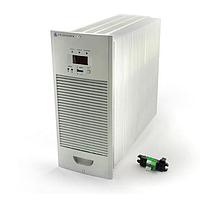
Battery charger
Keeping batteries ready is a basic requirement in many technical environments, from handheld test instruments and cordless tools to portable thermal cameras and field service kits. The right charger helps maintain uptime, supports safe charging routines, and makes it easier to manage different battery platforms across maintenance, inspection, and industrial work.
This Battery charger category brings together charging solutions for several common use cases, including power tool batteries, rechargeable consumer cells, and accessory batteries used with professional equipment. Whether you are replacing an existing unit or standardizing charging hardware for a team, it is worth looking beyond simple voltage matching and considering charging current, battery chemistry, compatibility, and operating context.

Where battery chargers fit in a technical workflow
In B2B purchasing, a charger is rarely an isolated item. It is part of a broader power ecosystem that includes battery packs, portable devices, spare batteries, and site power access. For service teams, installation crews, and inspection personnel, charging speed and battery turnaround can directly affect how long equipment stays available in the field.
Battery chargers are used across many routines: recharging cordless tool batteries between shifts, maintaining spare packs for thermal imaging devices, or charging AA and AAA cells for smaller accessories. If you are also reviewing adjacent power components, related ranges such as power supplies or power cords may be useful depending on the installation setup.
Typical charger types found in this category
This category includes chargers designed for different battery formats and application levels. Some models are intended for cordless tool battery platforms, where charger compatibility is tied to a specific voltage family. Others support smaller removable cells such as AA or AAA batteries, which are common in portable accessories and lower-power devices.
There are also accessory batteries and battery-related items for specialized equipment. For example, the FLIR T301003ACC battery is relevant in the context of portable thermal imaging workflows, where spare power sources help avoid interruptions during inspection or diagnostics. In practice, selecting the right charger often means understanding both the battery form factor and the operational role of the device it supports.
Examples from leading manufacturers
Several recognized brands appear in this range, including BOSCH, DEWALT, Energizer, and FLIR. These manufacturers serve different charging needs, from workshop and installation tasks to portable instrumentation and general rechargeable battery management.
For cordless tools, examples such as the BOSCH GAL 1880 CV Fast Charger, BOSCH GAL 18V-20 II, BOSCH GAL 12V-20, and BOSCH GAL 18V-20 illustrate the importance of matching charger output and supported battery voltage. The DEWALT DCB112-B1 Charger serves a similar role in its own battery ecosystem. For smaller everyday rechargeable cells, the Energizer E3.CHPRO Charger addresses AA and AAA charging requirements, which can be practical for support equipment and accessories used around industrial sites.
How to choose the right battery charger
The first checkpoint is battery compatibility. A charger must match the battery system it is designed for, especially for branded tool batteries and device-specific battery packs. Voltage range is important, but it is not the only factor; connector format, charging logic, and battery family also matter.
The second factor is charging performance. A fast charger can reduce downtime, which is useful when batteries are rotated throughout the day. For example, a model with higher output current may better suit teams that rely on continuous tool availability, while a lower-current charger may be sufficient for backup inventory or less frequent use.
It is also worth considering the working environment. In a mobile service context, compact size and manageable weight may be helpful. In a bench or workshop environment, buyers may prioritize consistency, easy battery swapping, and compatibility with existing stock. If charging is part of a wider energy storage or mobility project, exploring related areas such as e-mobility solutions can provide additional context.
Why charging current and voltage matter
Two of the most visible charger specifications are output current and supported charging voltage. These values influence how the charger interacts with the battery pack and how quickly charging can be completed under the intended conditions. In general terms, chargers designed for higher throughput are often chosen where battery turnaround is operationally important.
Examples in this category show the range of practical use cases. The BOSCH GAL 1880 CV Fast Charger is positioned for 14.4 to 18 V batteries with higher output current, while the BOSCH GAL 12V-20 is intended for 10.8 V and 12 V batteries. This kind of distinction helps buyers avoid mismatches and makes it easier to align the charger with the battery platform already in use.
Battery chargers in maintenance, service, and inspection applications
Battery charging is especially relevant wherever portable equipment supports maintenance and troubleshooting tasks. Cordless drills, drivers, and other site tools depend on reliable charging to stay ready for installation and repair work. Portable inspection devices also benefit from spare charged batteries, reducing the need to interrupt a route or return equipment to base.
In diagnostic environments, battery-related accessories can be just as important as the instrument itself. A spare battery such as the FLIR T301003ACC Battery For The IR Camera supports continuity during thermal inspection jobs, particularly when teams work across multiple assets or large facilities. This makes chargers and battery accessories part of a broader reliability strategy rather than a simple convenience purchase.
Buying considerations for business and procurement teams
For individual users, selecting a charger may be straightforward. For businesses, the process is broader: procurement teams often need to support multiple departments, standardize approved brands, and reduce confusion between battery systems. Choosing chargers that align with the installed base of tools and portable devices can simplify stock management and lower the risk of ordering incompatible items.
It can also be useful to evaluate whether the requirement is for a single replacement charger, several chargers for distributed teams, or a combination of chargers and spare batteries. Where the charging setup is part of a larger power infrastructure, the wider battery charging range can be reviewed alongside other supporting power products to create a more consistent purchasing plan.
Final thoughts
A well-matched charger helps protect battery investment, supports daily productivity, and reduces unnecessary interruptions in the field or workshop. The most suitable choice depends on the battery platform, charging speed required, and the type of equipment your team relies on.
When comparing products in this category, focus on compatibility, intended application, and practical charging requirements rather than choosing by part name alone. That approach makes it easier to identify a charger that fits your workflow today and remains useful as your equipment fleet grows.
Get exclusive volume discounts, bulk pricing updates, and new product alerts delivered directly to your inbox.
By subscribing, you agree to our Terms of Service and Privacy Policy.
Direct access to our certified experts