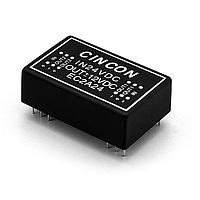
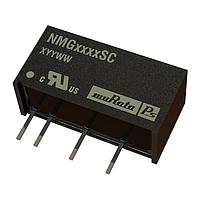
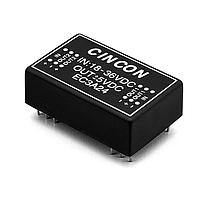
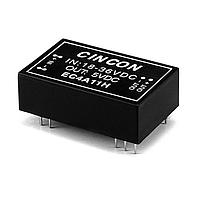
Isolated DC/DC Converters
Reliable power conversion is a basic requirement in industrial electronics, embedded control, test systems, and sensitive measurement equipment. When circuits need electrical separation between input and output, Isolated DC/DC Converters help improve safety, reduce noise coupling, and support stable operation across mixed-voltage designs.
This category is relevant for engineers and buyers working with control cabinets, instrumentation, telecom equipment, automation assemblies, and custom electronic systems. Whether the goal is signal integrity, protection of downstream electronics, or simplified power domain management, isolated conversion is often a practical part of the power architecture.
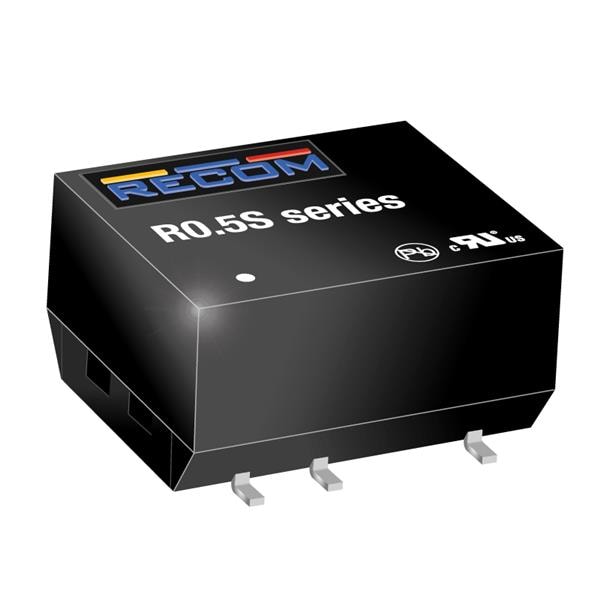
Why isolation matters in DC/DC power design
An isolated converter transfers energy from one DC voltage level to another while maintaining a galvanic isolation barrier between the input and output. In real-world systems, that separation can help protect low-voltage electronics, reduce ground loop issues, and support cleaner integration between subsystems with different grounding requirements.
This is especially useful in industrial and B2B environments where sensors, controllers, communication interfaces, and actuator circuits may operate under different electrical conditions. Compared with non-isolated DC/DC converters, isolated designs are often selected when safety, noise immunity, or system partitioning is a more important design priority than minimum size or basic point-of-load conversion.
Typical applications for isolated DC/DC converters
These converters are widely used in factory automation, process control, data acquisition, embedded computing, and communication hardware. They can supply isolated rails for analog front ends, fieldbus interfaces, control logic, and I/O modules where separation between power domains helps maintain signal quality and system robustness.
In measurement and test environments, isolation is also valuable when protecting precision circuits from disturbances originating in higher-power sections of the system. Designers may use isolated conversion in distributed architectures, board-level subsystems, or enclosure-mounted equipment depending on the installation method and overall power budget.
How to choose the right converter for your system
Selection usually starts with the required input range and output voltage, then moves to power level, mounting style, and environmental constraints. Engineers also review whether the converter needs to support particularly sensitive electronics, compact PCB integration, or more rugged system-level installation.
Beyond the basic electrical conversion task, buyers should consider the isolation requirement in the context of the entire power tree. If the application only needs straightforward voltage step-down without separation, non-isolated solutions may be sufficient. If electrical separation is part of the design intent, browsing the wider isolated converter range can help narrow down the best format for the build.
Examples from the available product range
This category includes converter modules suited to different power and integration needs. Examples from Advanced Energy include the 1/4A24-N20-I10-F-M-H, 6A12-N4-I5-F-E, and 12C24-P250-I10-H-Z11 DC to DC Converter Modules, which illustrate how isolated conversion products are offered across different performance classes and system requirements.
Other listed models such as the Advanced Energy 25C24-N60-I5-AQ-DA-H, 20A24-N30-I5-H-1, and 4LE24-P30-10PPM-DAF-BNC show that this category supports both compact and more specialized module-level implementations. The presence of ams OSRAM 20A24-P30-I5-E-1 further indicates that buyers may compare options across manufacturers when selecting a fit for a specific design or replacement need.
Manufacturer context and sourcing considerations
For many procurement teams, continuity of supply and product consistency matter as much as electrical performance. Advanced Energy is prominently represented in this category, making it a useful reference point for projects that require module-based DC/DC conversion in industrial or embedded applications.
When sourcing isolated converter modules, it is also worth checking whether the preferred manufacturer aligns with internal qualification practices, mechanical constraints, and lifecycle expectations. In some projects, standardizing around a known supplier can simplify maintenance, documentation, and future redesign work.
Isolated versus non-isolated converter categories
Although both product groups perform DC voltage conversion, they solve different design problems. A non-isolated converter is generally chosen for efficient voltage regulation within the same electrical domain, while an isolated converter is selected when the circuit must maintain separation between source and load.
That distinction becomes important in industrial control panels, communication gateways, and mixed-signal systems where grounding strategy directly affects reliability. If your project involves simpler point-of-load regulation, the non-isolated DC/DC category may be worth comparing. If the design must prevent direct electrical continuity between stages, this isolated range is the more relevant place to start.
What buyers and engineers usually compare on this page
On a category page like this, the goal is often to shortlist products that match a target architecture rather than make a decision from model name alone. Typical comparisons include input/output compatibility, integration style, expected operating environment, and whether the converter is intended for board-level use or broader equipment integration.
For replacement purchases, checking the exact model reference is important, especially when working with established designs. For new builds, it is often more useful to define the electrical and mechanical requirements first, then compare available isolated modules that fit the intended subsystem.
Finding the right isolated DC/DC converter
Choosing the right converter usually comes down to balancing electrical isolation, power requirements, installation constraints, and long-term sourcing needs. This category supports that process by bringing together module-based options for applications where separated power domains are a design requirement rather than an extra feature.
If your system depends on clean power boundaries, reduced coupling between circuits, or safer integration across subsystems, isolated DC/DC converters are a practical starting point. Reviewing the available module range and comparing it with your input, output, and mounting needs will help narrow the selection to the most suitable option for your application.
Get exclusive volume discounts, bulk pricing updates, and new product alerts delivered directly to your inbox.
By subscribing, you agree to our Terms of Service and Privacy Policy.
Direct access to our certified experts