Other Isolated DC/DC Converters
Designers often end up here when a standard package style is not the only factor in the power architecture. In many industrial, embedded, and control systems, the priority is stable voltage conversion with galvanic isolation, while mechanical format, mounting approach, or application constraints vary from project to project. This is where Other Isolated DC/DC Converters becomes a practical category for comparing solutions beyond a single form factor.
These products are used to transfer power between different DC voltage domains while helping separate sensitive circuits, reduce ground loop issues, and improve system robustness. Depending on the design, isolated converters can support control electronics, communication interfaces, sensors, and distributed power rails inside machines, cabinets, and embedded platforms.
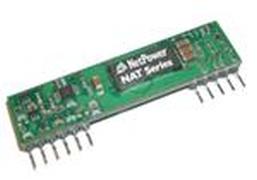
Where this category fits in a power design workflow
Not every isolated converter selection starts with a fixed preference for chassis, SMD, or through-hole mounting. Many engineers begin with electrical requirements first: input range, output voltage, isolation needs, available board space, and whether the converter will power analog, digital, or mixed-signal sections. This category helps cover products that may not fit neatly into one narrow mechanical subset but are still highly relevant for real-world power conversion tasks.
For projects that already have a preferred installation style, it can also be useful to compare adjacent options such as chassis mount isolated DC/DC converters or through-hole converter ranges. That broader view often helps teams balance electrical performance, assembly method, and long-term serviceability.
Why isolation matters in industrial and embedded systems
An isolated DC/DC converter does more than change one DC voltage to another. It creates an electrical barrier between input and output, which can be important when subsystems operate at different ground potentials or when noise-sensitive circuits need separation from higher-energy stages. In control panels, data acquisition equipment, factory automation, and communication interfaces, this isolation can improve signal integrity and protect downstream electronics.
Isolation is also valuable when powering interface circuits that connect to external devices, field wiring, or remote sensors. In these cases, the converter becomes part of a wider reliability strategy alongside proper grounding, filtering, and protection design. The exact benefit depends on the application, but the selection logic is usually tied to safety margin, noise control, and system stability rather than output power alone.
Typical product profiles found in this category
The range represented here includes both compact low-power modules and higher-power solutions for more demanding systems. For example, the TDK-Lambda portfolio in this category illustrates how isolated conversion can span from small board-level modules such as PP1R5-12-15, PC1R5-24-12, PP3-24-12, and PP6-12-12 to larger solutions like the RDS60A-48-5 or RM30-48-5/TEL. This kind of spread is useful when one project contains multiple isolated rails with different load levels.
There are also products intended for broader system integration, such as the Advantech 96PS-AT-400W-TP and 96PSRM-A1K2WCRPA, which point to use cases where isolated conversion supports industrial computing or platform-level power distribution. In another role entirely, the Bel Power Solutions FRONTP.MOUNTING HZZ00899 shows that accessories and mounting-related parts can also be relevant within the converter ecosystem, especially when mechanical integration matters as much as electrical performance.
How to choose the right converter
The first checkpoint is the input voltage range. A converter designed for 8 V to 16.5 V addresses a very different source environment than one intended for 36 V to 72 V. Matching the converter to the actual bus voltage, expected variation, and transient behavior is essential before looking at footprint or price.
Next, confirm output requirements carefully: single or dual output, regulated voltage, and load current. A product such as TDK-Lambda PCD3-48-1212, with dual ±12 V outputs, fits a different application profile than a single-output module such as PP3-24-12 or PC1R5-24-12. Engineers working with analog front ends, interface circuits, or bipolar rails often need this distinction early in the design phase.
Power level and thermal conditions should also be reviewed together. Small modules in the 1.5 W to 6 W class can be well suited for isolated signaling, sensor support, or local bias rails, while higher-power parts like the 60 W RDS60A-48-5 are more appropriate for heavier loads. If the project is space-constrained at board level, it may also be worth reviewing SMD isolated DC/DC converters for alternatives optimized around assembly density.
Common application scenarios
In industrial automation, isolated converters are frequently used to power PLC-related I/O sections, communication modules, sensor interfaces, and signal conditioning stages. They help separate noisy field-side circuits from logic-level electronics, particularly where multiple subsystems share the same enclosure but not the same grounding conditions.
In embedded systems and industrial computing, they may support distributed rails for processing boards, peripheral modules, and interface cards. Products from Advantech in this category are relevant to buyers looking at system-level power components for computing platforms, while board-level modules from TDK-Lambda are often considered when designers need compact isolated conversion close to the load.
Comparing format, integration, and ecosystem fit
One advantage of browsing this category is that it encourages a more functional view of the power subsystem. Instead of filtering too early by package style alone, buyers can compare converters based on how they fit the wider architecture: source voltage, control board layout, heat dissipation strategy, and maintenance access. That is especially helpful in B2B procurement where the final device must align with assembly processes and field service requirements.
It is also useful to think beyond the converter itself. Mounting hardware, wiring strategy, enclosure constraints, and adjacent power components all affect the final selection. If a design later becomes more standardized around a specific installation method, moving into a more focused subcategory can simplify final product comparison.
What to review before placing an order
Before ordering, verify the electrical window of the source bus, the required output under real load conditions, and whether the application needs single or dual rails. Also confirm the intended mounting approach, especially when evaluating modules and accessories together. A converter that is electrically suitable may still be inconvenient if it does not fit the mechanical layout or service approach of the finished equipment.
For multi-stage systems, it is good practice to review how the isolated converter interacts with upstream protection and downstream loads. This helps avoid surprises related to startup behavior, current demand, or rail stability during normal operation. When the requirements are clearly defined, this category becomes a useful starting point for finding parts that support both electrical isolation and practical integration.
Final considerations
Choosing from Other Isolated DC/DC Converters is often less about finding a generic power block and more about matching isolation, voltage conversion, and integration needs to the realities of the system. Whether you are sourcing a compact low-power module, evaluating a higher-power unit, or looking at supporting accessories, the best choice is usually the one that fits the full design context rather than a single headline specification.
By comparing input range, output structure, power level, and installation needs together, engineers and buyers can narrow the shortlist more effectively. That leads to a cleaner power architecture, fewer integration compromises, and a converter selection that supports long-term reliability in industrial and embedded applications.
Get exclusive volume discounts, bulk pricing updates, and new product alerts delivered directly to your inbox.
By subscribing, you agree to our Terms of Service and Privacy Policy.
Direct access to our certified experts