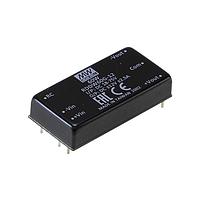
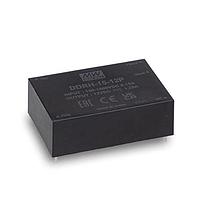
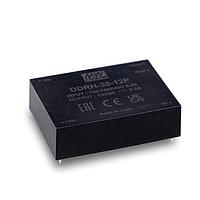
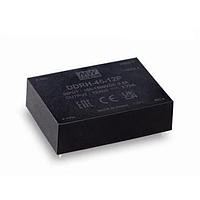
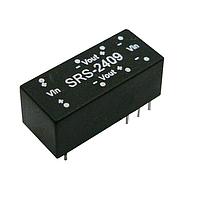
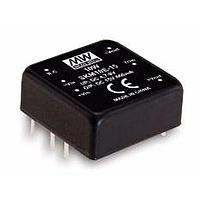
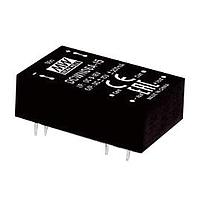
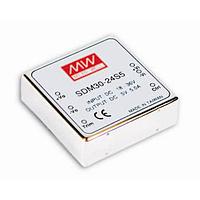
Through Hole Isolated DC/DC Converters
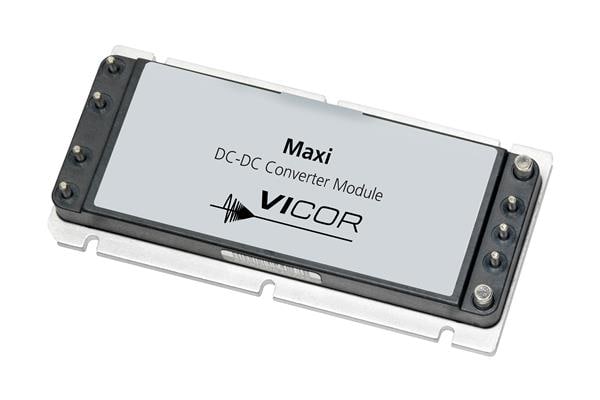
Power conversion choices often come down to one practical question: how do you deliver stable DC power to sensitive circuits while keeping different parts of a system electrically separated? In many industrial, embedded, and instrumentation designs, that answer points to Through Hole Isolated DC/DC Converters, especially when mechanical robustness, serviceability, and dependable board-level mounting matter.
These converters are widely used in applications where isolation helps protect low-voltage control electronics from noise, ground loops, and voltage differences between subsystems. For engineers building control boards, test equipment, communication interfaces, or mixed-signal systems, through-hole packages remain relevant because they combine straightforward assembly with reliable performance in demanding environments.
Why through-hole isolated converters are still widely specified
A through-hole form factor is often selected when a design needs stronger solder joint integrity, easier manual installation, or compatibility with legacy and long-life platforms. In industrial electronics, repairable systems and lower-volume assemblies still benefit from this package style, particularly where vibration resistance or secure board attachment is a concern.
The galvanic isolation built into these DC/DC converters adds another layer of value. It helps separate input and output grounds, supports safer signal interfacing, and reduces the risk that disturbances on one side of the system propagate into sensitive control or measurement circuitry. That makes them useful in automation panels, interface modules, medical-adjacent electronics design, telecom hardware, and test systems where clean power domains are important.
Typical applications and integration context
Through-hole isolated DC/DC converters are commonly used to power analog front ends, sensors, communication transceivers, gate-drive sections, and isolated interface circuits. In many systems, the converter is not the “main” power stage, but a supporting power block that creates a protected rail for a specific function. This is especially common in PLC-related electronics, industrial I/O, embedded control boards, and laboratory instrumentation.
When the installation calls for different mounting or packaging priorities, related categories may be more suitable. Compact layouts may benefit from SMD isolated converter options, while larger enclosed assemblies may align better with chassis-mount isolated DC/DC converters.
How to choose the right module for your design
The first step is to match the converter to your required input bus and regulated output rail. From there, engineers usually evaluate isolation needs, available board space, thermal limits, permitted noise level, and how the converter will interact with downstream analog or digital loads. It is also important to consider startup behavior, expected operating conditions, and whether the module supports the reliability goals of the broader system.
Package style alone should not drive the decision. A through-hole converter may be attractive for assembly reasons, but the better choice depends on the complete electrical context: input tolerance, output stability, isolation strategy, EMC considerations, and the role of the converter inside the power architecture. For designs that fall outside standard package expectations, it can also be useful to review other isolated DC/DC converter formats.
Representative products in this category
This category includes a range of module types suitable for different power design scenarios. Examples from Advanced Energy include the 1/4A24-N20-I10-F-M-H, 6A12-N4-I5-F-E, 12C24-P250-I10-H-Z11, and 20C24-N125-I10-AQ DC to DC Converter Modules. These references illustrate the variety typically available within through-hole isolated power solutions, from lower-power board support functions to more application-specific isolated rails.
Another example listed here is the ams OSRAM 20A24-P30-I5-E-1 DC to DC Converter Module. Rather than treating model names as a checklist, it is more useful to view them as part of a broader selection landscape: different modules can support different isolation schemes, board layouts, and subsystem power roles depending on the end application.
What engineers usually look for beyond basic conversion
In real projects, buyers rarely search for a converter based only on input and output voltage. They also need confidence in isolation performance, integration simplicity, long-term availability, and compatibility with the rest of the board design. Through-hole parts are often favored in projects where maintainability and predictable assembly matter just as much as electrical efficiency.
Design teams also pay attention to system-level behavior. For example, an isolated converter may be chosen to reduce ground-related measurement errors, separate noisy power domains, or help protect communication interfaces. In this sense, the converter supports not just power delivery but also signal integrity, safety-oriented design practice, and more stable operation across the full equipment lifecycle.
Through-hole versus other board-mount options
Compared with surface-mount alternatives, through-hole isolated modules can be easier to handle in prototyping, service replacement, and mixed manufacturing environments. They remain a practical fit where assembly includes manual soldering, selective soldering, or products with relatively long revision cycles. This is one reason they continue to appear in industrial and specialized electronics even as miniaturization trends push many designs toward smaller packages.
That said, no single package style is universally better. The right choice depends on board density, automation level, environmental stress, and service expectations. If the design brief emphasizes compactness first, a surface-mount path may be more appropriate; if board retention strength and practical installation matter more, through-hole modules can remain the better fit.
Finding a suitable converter for industrial and embedded projects
For procurement teams and design engineers, the most efficient approach is to start with the operating requirement, then narrow by mounting style and application constraints. Looking at representative modules in this category can help identify whether the design needs a compact low-power isolated rail, a dedicated converter for interface isolation, or a more specialized board-mount module for a demanding subsystem.
Used thoughtfully, through-hole isolated DC/DC converters can simplify power partitioning and support more robust electronic designs. Whether the priority is isolation between control and field-side electronics, cleaner power for sensitive circuitry, or a mechanically secure board-mount solution, this category provides a practical starting point for selecting the right isolated converter format.
Get exclusive volume discounts, bulk pricing updates, and new product alerts delivered directly to your inbox.
By subscribing, you agree to our Terms of Service and Privacy Policy.
Direct access to our certified experts