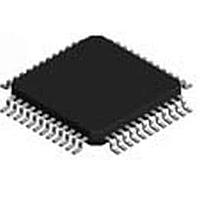
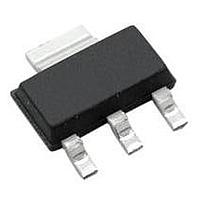
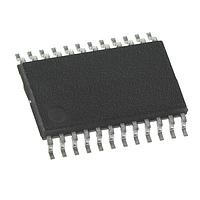
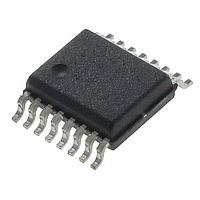
Hot Swap Voltage Controllers
In systems where live boards, power rails, and field-replaceable modules need to be connected without damaging upstream supplies or downstream loads, the choice of protection and inrush management circuitry matters. Hot Swap Voltage Controllers are used to control startup conditions, limit surge current, and help keep power distribution stable during insertion, removal, or fault events in embedded, industrial, telecom, and high-availability electronics.
This category brings together devices used to manage controlled power-up and board-level protection in designs where reliability is a priority. Depending on the application, that can include classic hot swap control, digital power monitoring, load switching, and OR-ing support for redundant power paths.
Where hot swap controllers are used
Hot swap control is commonly applied in equipment that cannot tolerate uncontrolled inrush current or sudden bus disturbance when a board is connected to a live backplane. Typical examples include server and communications hardware, industrial control racks, modular power distribution, and serviceable embedded platforms.
In these environments, a controller helps sequence the connection of supply voltage to the load more safely. By managing the external MOSFET or integrated switching path, the device can reduce stress on connectors, capacitors, and sensitive downstream circuitry while improving system uptime.
What these devices do in a power design
The main role of a hot swap controller is to support controlled startup and fault handling. Instead of allowing a large instantaneous current spike, the controller ramps or limits current as input capacitance charges. Many solutions also supervise overcurrent, undervoltage, or fault timing so a short circuit or abnormal load does not propagate across the system.
Some parts in this category extend beyond basic insertion protection. Devices such as the Analog Devices ADM1275-3ARQZ-R7 combine hot swap control with digital power monitoring, which is useful when designers need both protection and visibility into board-level current and power behavior. For applications focused on redundancy, OR controllers may also be relevant alongside hot swap functions.
Examples from this category
The product mix here includes several approaches to power-path management. Infineon parts such as BTS949E3062ANTMA1, BTS949E3062ANT, and BTS949E3043NK are power switch devices suited to designs that need protected low-side switching behavior. These are often considered when the switching element and protection function need to be closely integrated.
For dedicated hot swap control, examples include Infineon ITS4141DBUMA1, Microchip Technology MIC2085-MBQS, MIC2586-2YM, and Maxim Integrated MAX5919AEEE+T. The MAX40203ANS+T is an OR controller, illustrating how this category often sits within a broader power-path protection strategy rather than as an isolated function.
How to choose the right hot swap solution
A practical selection process starts with the system voltage and current profile. Designers typically check the operating rail, expected inrush current, fault thresholds, and whether the application uses a positive high-voltage architecture or a lower-voltage board supply. Package style, thermal behavior, and available board space also affect the final choice.
It is also important to decide whether the design requires only basic hot swap protection or a broader feature set. If the application benefits from telemetry, it may make sense to review related current and power monitoring devices. If the power source is battery-backed or part of a portable system, battery management functions may also become part of the wider architecture.
Manufacturer coverage and design ecosystem
This category includes solutions associated with recognized power IC suppliers such as Infineon, Maxim Integrated, Microchip Technology, and Analog Devices. Each manufacturer may address hot swap requirements from a slightly different angle, including integrated power switches, dedicated controllers, or devices that combine protection with monitoring.
That variety is useful for B2B sourcing and engineering comparison because not every design needs the same level of integration. Some projects prioritize compact protection circuitry, while others need configurability, telemetry, or compatibility with a larger regulated power subsystem.
Relationship to other power management categories
Hot swap controllers are typically part of a wider power management IC strategy. In many systems, they work alongside converters, supervisors, current monitors, and feedback control devices to create a stable power tree from input source to end load. Looking at the surrounding architecture often helps narrow down the best part family more effectively than evaluating insertion protection alone.
If the design also involves front-end conversion, it can be useful to explore AC/DC converters for the upstream stage. In regulated rails with closed-loop tuning requirements, feedback-oriented control devices may also become relevant during the overall design process.
What buyers and engineers usually compare
For engineering teams, common comparison points include startup behavior, fault response, monitoring capability, package type, and fit with the target bus architecture. Procurement teams often look at manufacturer continuity, application fit, and whether a part supports a broader platform strategy across multiple assemblies or serviceable modules.
Because these devices are often selected for reliability-sensitive designs, it helps to evaluate them in the context of the complete power path rather than by headline current rating alone. A part that aligns with the protection philosophy, monitoring needs, and service model of the equipment will usually be a better fit than a device chosen only on a single electrical parameter.
Supporting safer power-path design
Whether you are protecting a live backplane connection, managing startup into large capacitive loads, or building redundancy into a supply rail, this category provides components for more predictable power behavior. From dedicated controllers to integrated switch-based approaches, the available options support a wide range of board-level protection strategies.
Review the products in this category based on your operating voltage, fault-management needs, and monitoring requirements. A careful match between controller type and application environment can help improve robustness, simplify serviceability, and support more stable system operation over time.
Get exclusive volume discounts, bulk pricing updates, and new product alerts delivered directly to your inbox.
By subscribing, you agree to our Terms of Service and Privacy Policy.
Direct access to our certified experts